Gilang Kharisma · · 3 min read
How Certis builds employee trust to scale security bots
This article summarizes a fireside chat from the Tech in Asia Conference 2026 featuring Tian Beng Ng, President and Group CEO of Certis.
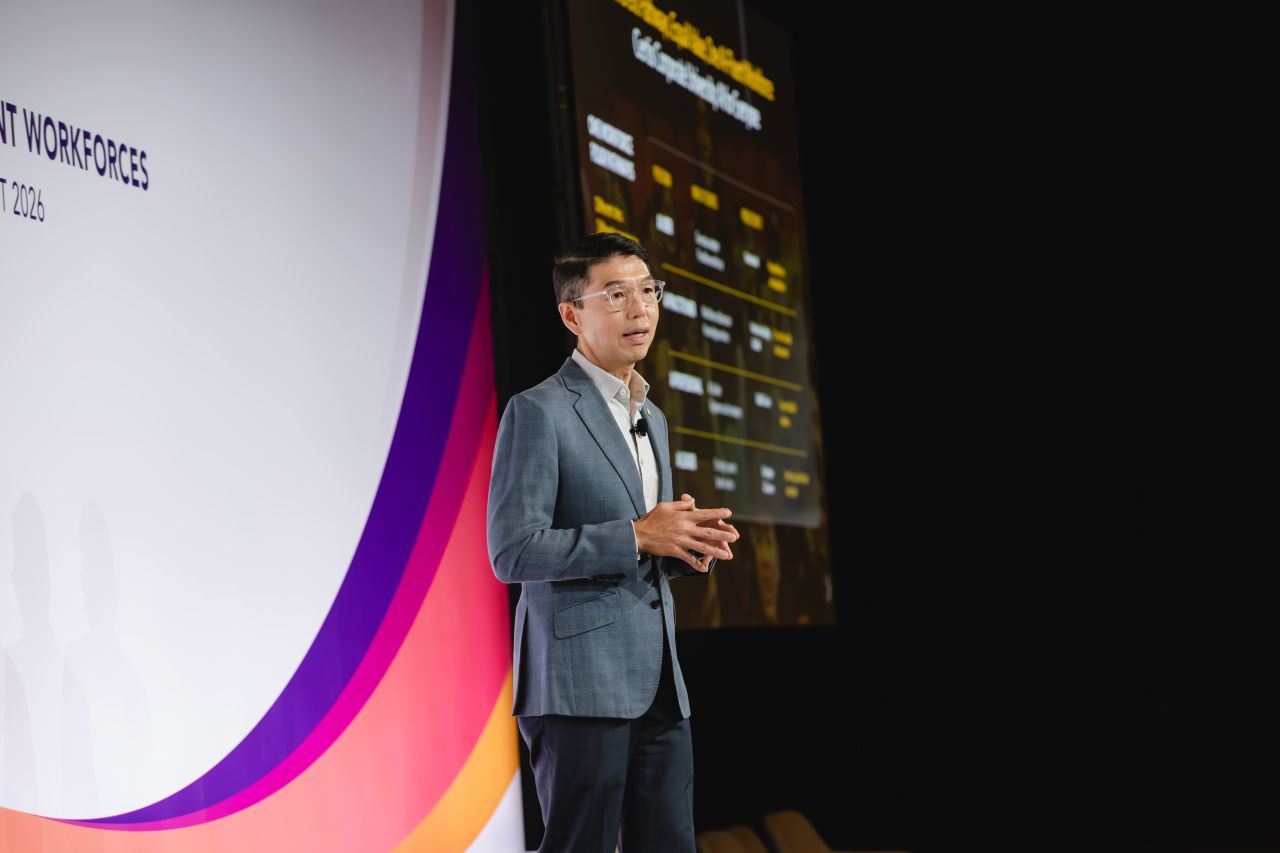
Tian Beng Ng, CEO and president of Certis Group / Photo credit: Tian Beng Ng
Fast automated choices only help security teams if a real person is accountable for every machine suggestion.
Tian Beng Ng, CEO of Certis Group, solves the problem of balancing speed and safety by keeping humans in charge of automated tasks. He does this by changing how staff are trained and treating AI agents like real workers with clear digital identities.
AI speed requires human accountability
Balancing automation with customer safety demands a rigid division between machine proposition and human execution. Ng explains that “our strategy is what we call AI-led but human-first.”
Structuring this workflow allows personnel to make faster decisions by relying on AI for initial processing:
- AI agents scan live camera feeds and draft incident reports.
- Systems automatically close non-critical cases to reduce human alert fatigue.
- Human operators receive pre-organized data to evaluate urgent situations.
Trust and education drive workforce adoption
Making these faster decisions only works if employees trust the new tools. Securing these gains requires support, as operators will only leverage systems they understand. Certis treats technological integration as a management discipline rather than an IT project.
The company relies on deployment strategies to prepare teams for shifting responsibilities:
- Targeted role training: Workers are categorized as AI users, practitioners, professionals, or leaders to receive specific instruction.
- Transparent communication: Leaders explain deployment reasoning to prevent fears regarding job displacement.
- Job redesign: Roles shift focus away from repetitive monitoring toward tasks requiring empathy and judgment.
Ng views employee confidence as the catalyst for success, noting that “if they don’t trust what the company is trying to do with the AI transformation, a lot of your people actually won’t adopt AI.”
Digital employees demand strict governance
Integrating these technologies safely requires applying standard employment rules to automated systems to prevent rogue behavior:
- Assign digital identities. Every AI agent receives a specific employee ID to prevent automated actions from hiding under shared accounts.
- Restrict task access. Systems only hold the permissions required to execute their assigned duties.
- Require official channels. Agents use recognized company email addresses so employees can identify approved systems quickly.
- Appoint human owners. Specific personnel hold the authority to suspend risky actions immediately if performance drops.
Ng explains that “we actually treat AI like a digital employee,” with strict identity and access controls applied to every automated entity.





Stay updated on the go with our mobile app.
Get latest insights with smoother, more personalized experience through TIA mobile app.






📅 Upcoming Events
22 October 2026
Payoneer x CSPN Summit 2026