C. Custer · · 2 min read
‘Danger Maps’ Invites You to Map China’s Polluted Areas via New Open-Platform Maps
Late last year, I wrote about Danger Maps, a Chinese web service that had tracked and mapped reports of different types of pollution and contamination in China in the hopes of helping people figure out where it’s safe to live. At the time, the team behind Danger Maps — a nonprofit group called the IT Engineers for Environmental Protection Association (ITEPA) — had culled together its maps from public data released by China’s EPA and regional environmental bureaus, but team member Tian Yu told me that the group was hoping to create an open platform in addition to their regular map so that other NGOs and users could contribute their own reports and data.
Now, after months of work, the team has finally achieved this reality and created a series of open-platform maps that any private user or NGO can set up an account on and use to post very detailed reports that can include photos, GPS coordinates, and lots of other information about the pollution or environmental hazard that’s being reported. At present, these maps are separate from the old Danger Maps that use officially reported data only, and not all of China is covered yet in the open-platform maps. On the open platform maps’ official site, two cities currently have open platform maps (Shanghai and Shaoxing), although ITEPA is obviously planning to expand this as time goes on.
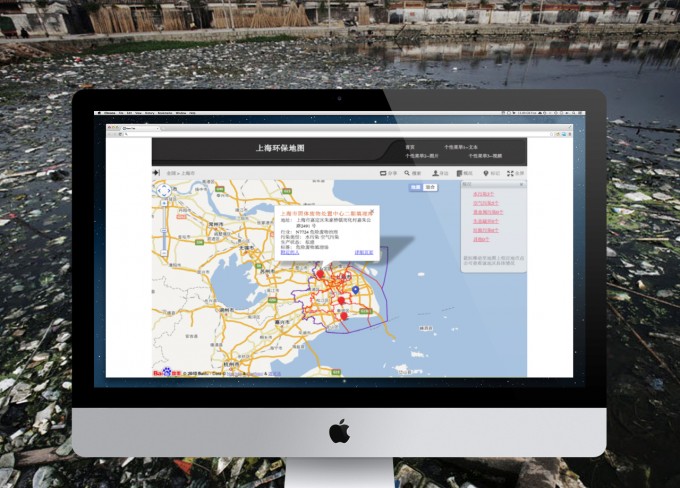
At present, a lot of what’s been reported in those cities is water and air pollution. That shouldn’t come as a surprise given the recent focus on water pollution on Chinese social media sites sparked by Deng Fei’s river photo campaign on Weibo, not to mention the high-profile air quality problems all over the country. Neither city has more than a couple dozen listings at the moment, but over time as more users become aware of the site and as more city maps are added to the open platform, these maps might become an even more valuable resource than the Danger Maps that launched last fall.
And of course, for those who are addicted to China’s latest social media craze, the ITEPA team has also set up an official WeChat account for Danger Maps. Users who are interested can scan the QR code on the Danger Maps open platform page to start following it.





Stay updated on the go with our mobile app.
Get latest insights with smoother, more personalized experience through TIA mobile app.