 Adinda Pryanka · · 3 min read
How brain-computer interfaces aid severe stroke recovery
This article is a part of Startup Spotlight, a series that features young, up-and-coming startups.
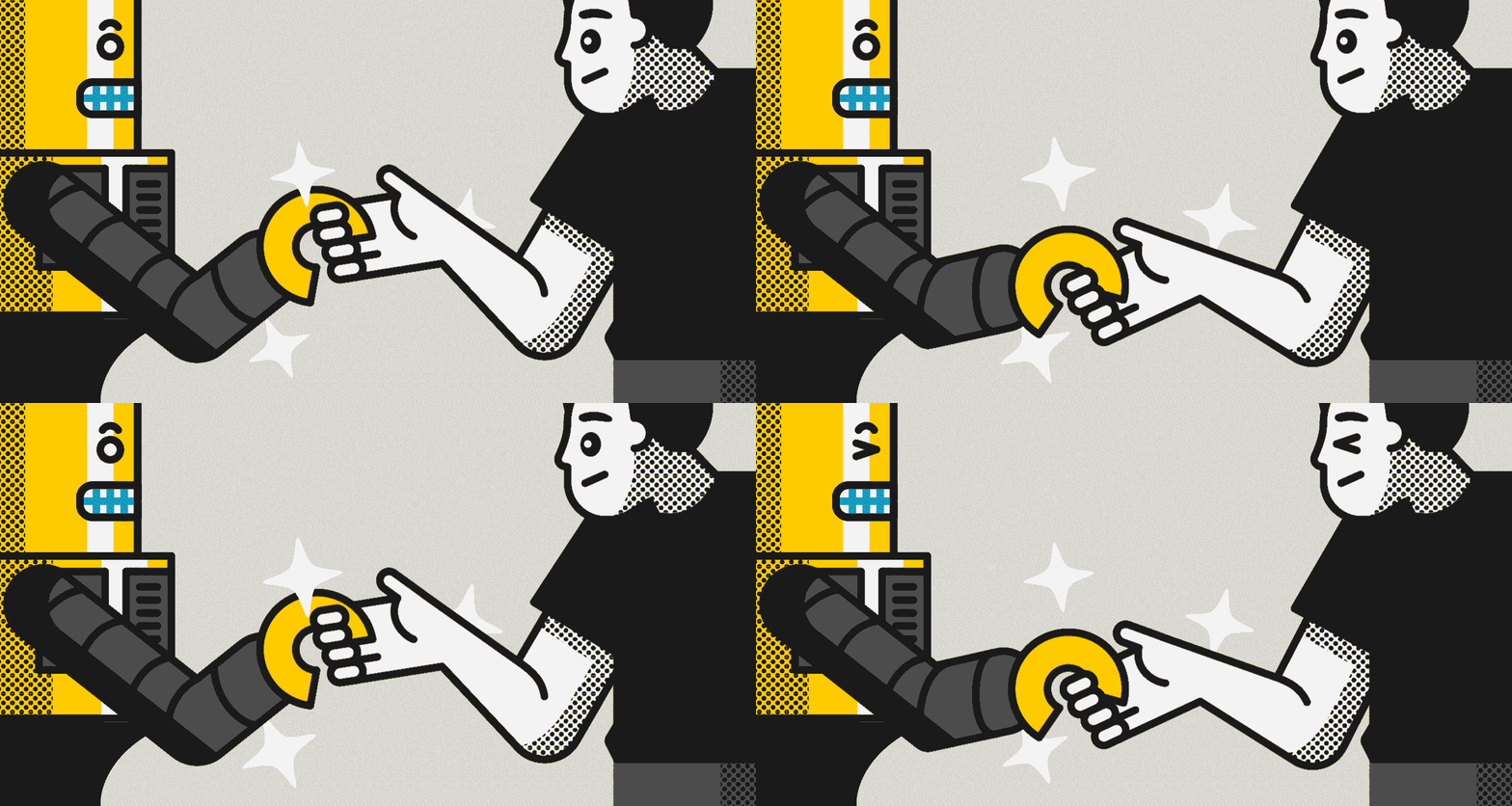
Image credit: Timmy Loen
Lifescapes Inc. was founded to translate years of neuroscience and rehabilitation research into clinical practice. Led by Keio University professor Junichi Ushiba, the startup develops brain-computer interface technology to help patients recover movement after severe strokes and spinal cord injuries.
😟 Problem
The World Health Organization recorded 93.8 million people living globally with strokes in 2021. Severe hand paralysis patients face limited treatment options because conventional rehabilitation requires existing voluntary movement. This impairment prevents severely affected patients from performing daily activities.
💡 Solution
The startup builds medical brain-computer interface technology to turn movement intention into actual hand movement. It delivers this through a non-invasive rehabilitation system comprising three integrated technologies:
- A wearable brain sensor reads patient brain activity.
- Software analyzes signals to detect attempts to move paralyzed hands.
- A robotic device and electrical stimulation activate muscles to complete intended movements.
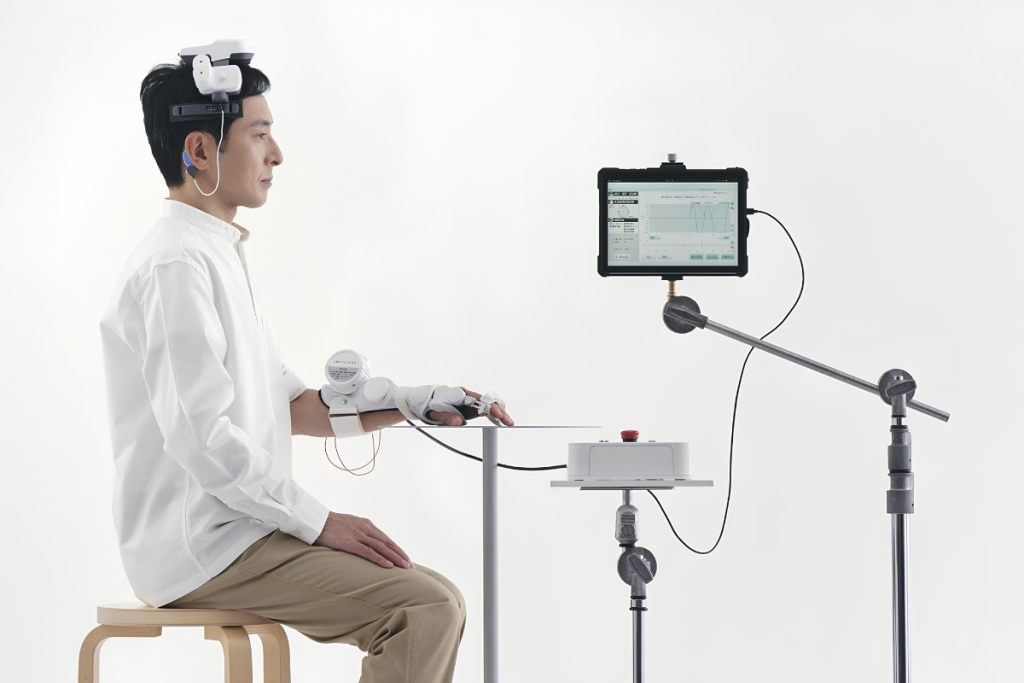
Image credit: Lifescrapes
📊 Market size
Stroke treatment creates a significant economic burden, with global direct and indirect costs estimated at US$900 billion annually. Southeast Asia is home to around 8,000 rehabilitation facilities serving an estimated 9 million stroke survivors.
🤝 Team
- Junichi Ushiba. Founder and CEO. He is a professor at Keio University specializing in brain-computer interfaces and rehabilitation engineering.
- Masaaki Hayashi. Vice president. He leads the company’s business development and clinical implementation efforts.
- Ryotaro Hirose. Director of business strategy. He oversees clinical development, regulatory strategy, and international expansion.
🚀 Traction
- Adopted by more than 180 hospitals and rehabilitation centers in Japan.
- Used in over 1,000 stroke and spinal cord injury cases.
- Sold more than 70 units across Japanese and Asian markets.
- Secured regulatory approval in one Southeast Asian market and deployed units at a major government rehabilitation institution.
- Won the CHISEL Healthcare InnoMatch program in Singapore.
- Participated in the SusHi Tech Challenge 2026 Pitch Contest.
🏆 Competition
Competitors include manufacturers of robotic rehabilitation devices and brain-controlled assistive technologies.
The startup differentiates itself by targeting severe paralysis where visible hand movement is minimal. Patients using the system often demonstrate clinical improvement within a few weeks of training.
💰 Financials
The startup generates revenue through medical device sales combined with recurring service fees. It has raised 1.76 billion yen (US$10.9 million) in equity financing to date, including a 600 million yen (US$3.7 million) funding round completed in June 2026.
🚩 Risks





Stay updated on the go with our mobile app.
Get latest insights with smoother, more personalized experience through TIA mobile app.









📅 Upcoming Events
22 October 2026
Payoneer x CSPN Summit 2026