- Premium Content It takes our newsroom weeks - if not months - to investigate and produce stories for our premium content. You can’t find them anywhere else.
 Megan Cheah · · 6 min read
Temasek-backed biotech firm helps startups enter genomics space
When the Covid-19 pandemic broke out, countries scrambled for a way to quickly detect the disease.
This brought public attention to the field of genomics, a branch of molecular biology concerned with the structure and function of the genome – the genetic information of an organism – and can be used to identify the presence of the virus.
Among companies in this field is London-listed Oxford Nanopore Technologies, which was spotlighted for providing Covid-19 test kits to the UK’s National Health Service. An offshoot of Oxford University, its sequencing technology was used by researchers to characterize the genome of the SARS-CoV-2 virus to identify and track variants.
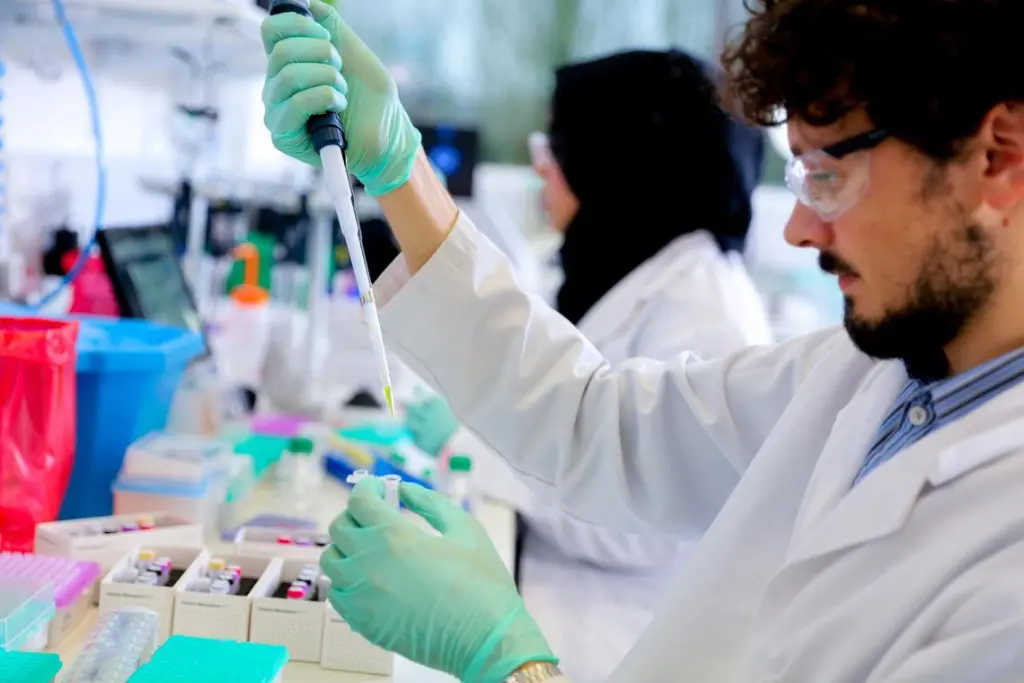
Partner companies can create a clinical application out of Oxford Nanopore’s technology, designing a diagnostic test that would be usable in a healthcare setting/ Photo credit: Oxford Nanopore Technologies
Post-Covid, the company is leveraging the portability of its products to further precision medicine, which aims to understand how genomic and other factors contribute to the health of individuals – basically tailoring treatment to people who have a similar genetic make-up.
“We’re interested in the source code of all these living systems … It’s a real-time, interactive understanding of our biology,” says Gordon Sanghera, CEO of Oxford Nanopore.
In August, the company announced that it would be working on a project with Singapore’s National Precision Medicine program, led by Precision Health Research, Singapore (Precise). The program aims to develop a genetic catalogue representing three major ethnic groups in the country – Chinese, Malay, and Indian.
Oxford Nanopore will be sequencing 10,000 multi-ancestry genomes representing Singapore’s population under the Precise-SG100K research program led by the Ministry of Health. The project, announced in 2022, will involve the complete set of genes for 100,000 Singaporeans in total.
Kathleen Barnes, Oxford Nanopore’s senior vice president of population health and precision medicine, says characterizing genomes of different ancestry groups is important as it would enable people to understand what mutations may exist within these genomes, as well as the risks within them.
“Eighty-five percent of what [DNA] has been sequenced in the world today are of European-ancestry populations. We’re trying to catch up in other groups,” explains Barnes.
She adds that Southeast Asia is potentially the most underrepresented and diverse population when it comes to DNA sequencing.
“So to create that equity in healthcare and develop precision medicine tools that are going to change the lives of patients in this part of the world, we have to have that reference genome – that library, if you will – of variation,” she says. “There’s much that hasn’t been identified in this part of the world.”
To reach out to the Asia-Pacific region, Oxford Nanopore established its regional headquarters in Singapore in 2018, says Sanghera. It also uses Singapore as a distribution center for its regional customers.
See also: Singapore’s biotech sector is more successful than people think
Tech on the go
Growing the ecosystem
Stay ahead in Asia’s tech landscape
This is premium content. Subscribe to read the full story.
Oxford Nanopore offers genomics technology that allows startups to build their own solutions.
We know this is not ideal. ⌛ Sign up in 20 seconds. Cancel anytime.
Our subscriber community includes professionals from these companies:





Stay updated on the go with our mobile app.
Get latest insights with smoother, more personalized experience through TIA mobile app.