Sign up for the Daily Newsletter, sent exclusively to our premium subscribers. We break down the big and messy topics of Asia’s tech and startup community. Get the newsletter in your inbox everyday with a premium subscription.
Hi there,
A couple of months ago, I heard from a friend that one of our former classmates is an owner of a Bored Ape Yacht Club NFT. Apparently, he’d minted one when the project first came out and safe to say, he’s probably in a good place right now.
The same friend also explained to me that it wasn’t as simple as just selling the NFT and capitalizing on the proceeds. In fact, just owning the NFT would give you so many perks that it would be more worth it to keep the token and reap the rewards instead.
That struck me. Imagine winning the lottery and then getting continuously rewarded for it. I know, I know, choosing the right project to mint and invest into isn’t the same as blindly gambling your money away. But still, most people would be hard-pressed to find a trustworthy project that can actually go “to the moon” given today’s precarious climate of rug pulls and scams.
Perhaps it might be better to just start off being rich instead – easier said than done – and then buy into an established NFT membership club, such as the ones we look at in today’s story.
If only it were that easy… sigh
Today we look at:
- Whether or not NFT-based private clubs are the next big thing.
- New funds for a South Korean fintech startup.
- Other newsy highlights such as FinAccel’s new board of directors appointee and a Singapore-based property platform’s potential US listing.
Premium summary
Club can’t handle me
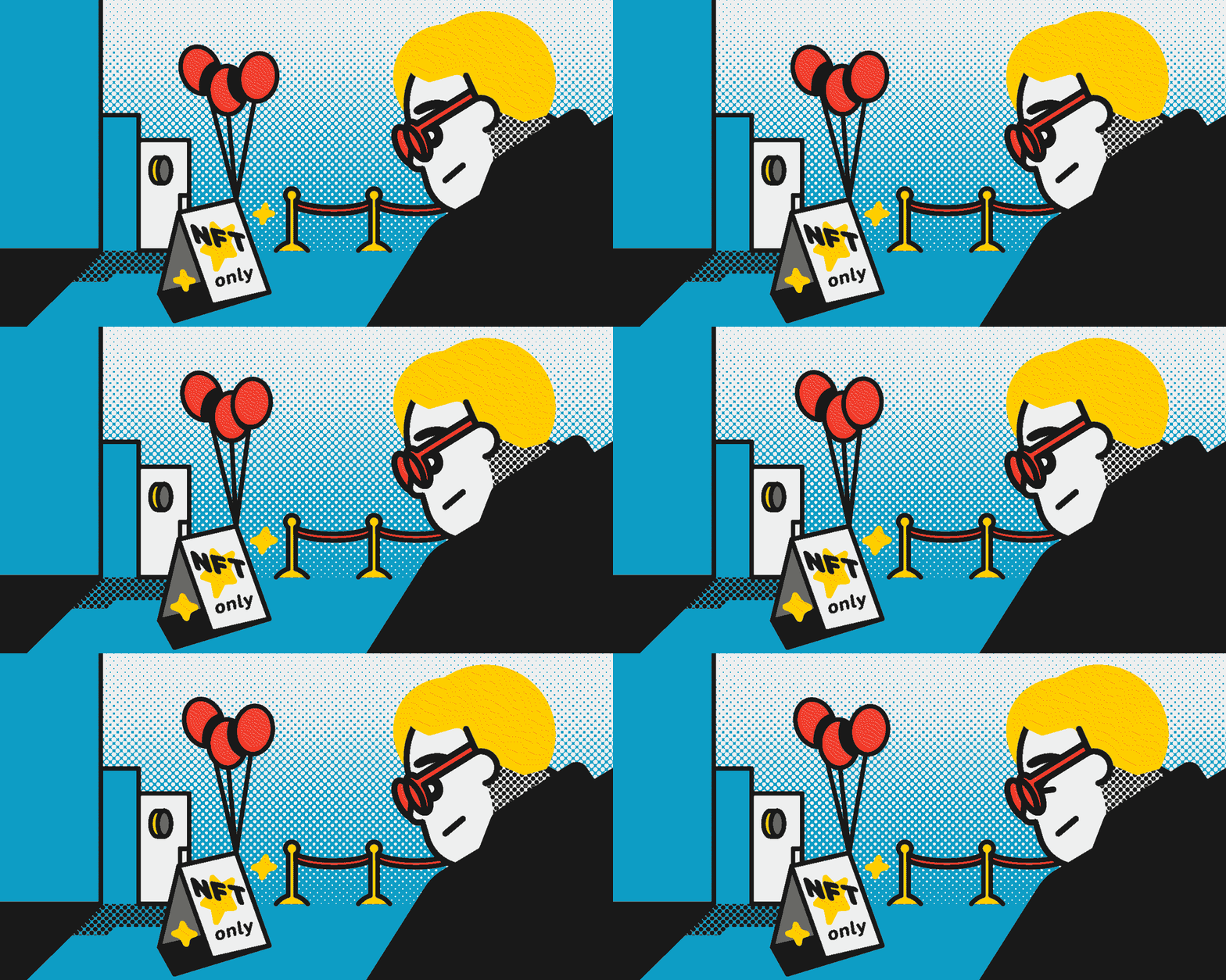
Image credit: Timmy Loen
Clubs sound really exclusive and cool, but for a socially anxious person like me, I’d probably feel like melting away into the background if I ever had the chance to attend one of these super atas meetups. That said, it’s easy to see why someone would want to be part of them – these memberships often come with great benefits and services. And that also holds true for the NFT-based private clubs that have been popping up around Asia recently.
- Hit the dance floor: Mandala Club is an NFT club owned by Singapore-based real estate and events firm Mandala Group. Members get various benefits such as early access to events as well as an exclusive Discord server. The club also holds talks, dance lessons, art tours, wellness sessions, and other types of events.
-
Cough it up: Or for people like me, I’d probably just choke on the amount. Arc, an NFT club co-founded by popstar JJ Lin, has several membership tiers, with the most expensive requiring users to own a Stellar token – which can be purchased for around US$3,800. Meanwhile, the NFT-based membership that Mandala Club offers costs around US$11,000 with a monthly fee of about US$150.
-
Free and flexible: Not really free, per se, but you get the point. Members of these NFT clubs are usually free to trade their membership tokens on the open market. This gives them a chance to make a profit and provides them with a lot of flexibility in terms of how and when they want to leave.
Read more: Can NFT-based private clubs disrupt a centuries-old model?
Startup spotlight
Mo’ money, less problems

Image credit: Timmy Loen
South Korea-based Akros Technologies has secured US$2.3 million in a strategic funding round. This should be good news for the fintech firm’s subsequent funding plans, given that it has already scheduled a series A round for next year.
- Machines making money: Akros Technologies manages its own exchange-traded funds (ETFs) powered by machine learning models. In May, it launched MPAY, a monthly payout ETF with a 7% annualized target rate.
-
PM(aa)S: Companies can also build their own investment products using Akros Technologies’ infrastructure. The firm calls this offering “portfolio management as a service (PMaaS).”
AD. Remove this ad space by registering for a free basic account. Enjoy an ad-free experience when you're logged in. -
More technologies: Following this fundraise, Akros Technologies aims to scale its investment offerings and get more partners for its PMaaS solution.
See also: These are the most active investors in Korea’s startups
In partnership with

Be ready in a world of remote communications

“Can you hear me?” and “Can you see my screen?” have become common refrains at work over the last few years. That’s because remote communications are now an essential part of any organization’s day-to-day operations.
Remote work, in addition to its convenience and initial necessity due to the pandemic, has opened up many hiring and business opportunities. For example, a company headquartered in Singapore can now easily employ someone from the US, and market expansion plans can proceed without many time- and resource-consuming business flights and overseas meetings.
Whether your firm uses Zoom, Microsoft Teams, or any other platform, ensure that you have the right video-conferencing tools in place with Versatech Systems’ help. The firm, which offers customizable solutions and professional installation services, has supported many clients across different industries with their remote communication needs.
Find out more on its website.
Quick bytes
1️⃣ Back in bizniz
Singapore-based UnaBiz has raised US$25 million in a series B extension round. The firm helps companies design, manufacture, and manage the connectivity and data platform services of their IoT solutions.
2️⃣ OMG it’s OMH
Ohmyhome, a Singapore-based property platform, is looking to list on the Nasdaq – under the ticker “OMH” – in an IPO valued at up to US$16.3 million. According to its filing, the firm plans to offer 3.3 million shares priced between US$4 and US$5 each. Ohmyhome aims to become a property super app that can cover the entire customer journey, from the initial listing of the property to the actual transaction.
3️⃣ Accelerated to the board
Former Slack CFO Allen Shim has been appointed to FinAccel’s board of directors. While at Slack, he helped build its finance and operational function and oversaw its acquisition by Salesforce. FinAccel has been on a spree of new key appointments, having also onboarding a new CTO, chief human resources officer, and general counsel last month.
4️⃣ We (didn’t) make it
Wemade, a South Korea-based blockchain game developer, announced that it’s conducting buybacks of Wemix, its native token, and burning around US$10 million worth of it. The move comes after four local crypto exchanges – Upbit, Bithumb, Coinone, and Korbit – delisted Wemix after Wemade misreported circulation data of the token, which caused its price to drop significantly.
5️⃣ Going live in 3, 2, …
Chinese ecommerce major Alibaba plans to add 200,000 new livestreamers and 10,000 livestreaming accounts to its platform as it faces heavy competition in the space from the likes of Douyin and Kuaishou. Li Dan, a popular Chinese comedian, has already set up a channel on Taobao Live and made his first appearance last Saturday.
6️⃣ A bountiful crop
India-based CropIn has raised US$14 million in series D funding from investors such as Google and Impact Assets. The agritech firm offers a cloud platform that helps farmers with their efficiency and productivity.
Editing by Lorenzo Kyle Subido
(And yes, we’re serious about ethics and transparency. More information here.)





📅 Upcoming Events
30-31 March 2027
Upskill Fest