 Samantha Cheh · · 6 min read
Grab is leveling the playing field for MSMEs with its merchant super app

While Southeast Asia’s MSMEs have taken their first steps into the digital world, many have yet to digitalize. In fact, only 20% of these businesses have joined digital platforms.
The reasons for this differ across countries, but there are some common issues such as poor internet infrastructure, low digital and financial literacy, funding gaps, and rural-urban divides.
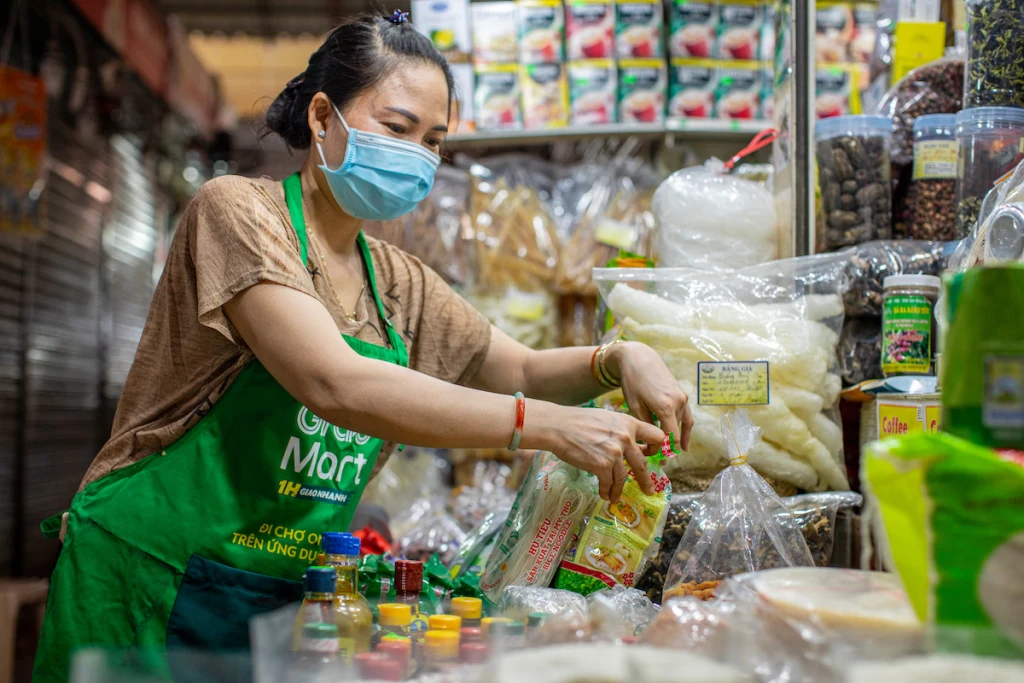
Photo credit: Grab
“There’s a need to bring more MSMEs into the digital economy while also driving deeper participation among those already online,” says Shashank Kohli, head of product for merchant experiences at Grab, which was listed on Nasdaq in December 2021.
Over the last 10 years, Grab’s offerings have evolved beyond ride-hailing to include other services such as on-demand delivery, digital payments, and financial products. One of these offerings is a “merchant super app” for the businesses that operate on its platform.
Helping merchants thrive online
Grab’s merchant app started out as a simple operating platform for businesses of all sizes to manage and process incoming orders and payments. It worked in tandem with the food delivery services that Grab offers to consumers. By facilitating tasks like order-taking and delivery, merchants could serve more customers and gain more visibility without needing to set up their own backend processes.
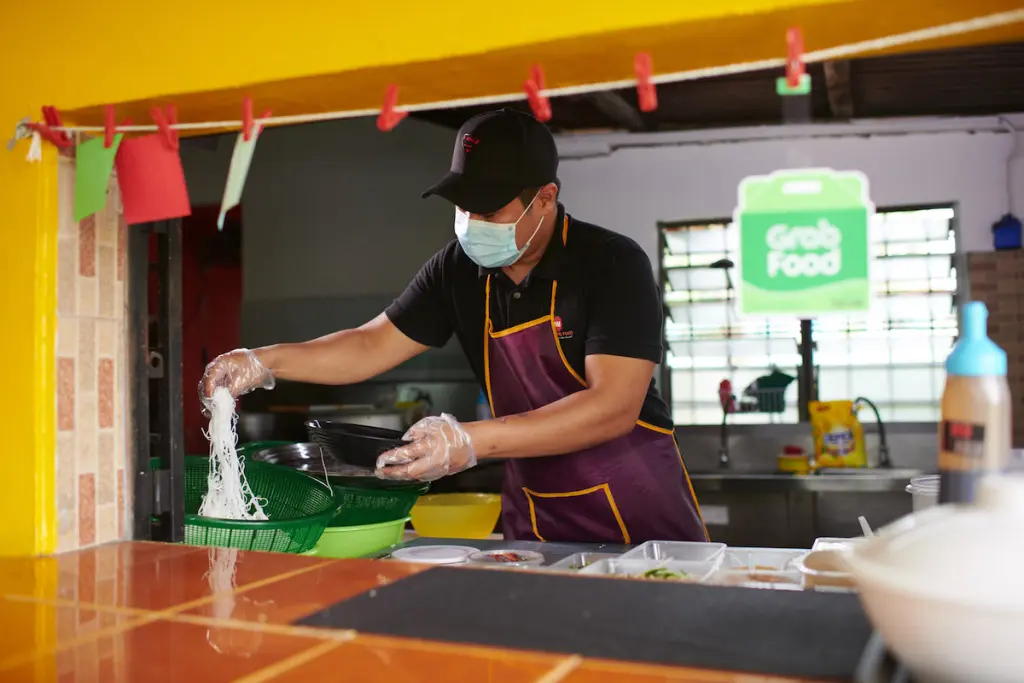
Photo credit: Grab
However, as more MSMEs joined Grab’s platform, the firm came to realize that these basic features weren’t sufficient to help them run a successful business.
“We didn’t want them to just come online but also thrive online. When we started building the merchant super app, our key design principle was to make it as simple and fuss-free as possible for small businesses,” Kohli explains. “The lower the barriers are, the more likely businesses are to get on it.”
With this in mind, Grab’s merchant app has evolved to adapt to the needs of these small businesses to support them at every step of the journey.
Right from the get-go, merchants don’t need to spend hours filling in forms or jump through hoops to start operating on Grab. The merchant app has been designed to make onboarding easy, enabling Grab to bring small businesses – even the many remote ones – onto its platform at scale. For example, in Singapore and Indonesia, the app integrates with government databases to streamline the account setup process while still enabling Grab to do its due diligence.
This focus on a smooth onboarding process has made a difference. At present, the firm has over 4 million merchant-partners – the term Grab uses to refer to the businesses that use its services – on its platform, with some 680,000 small merchant-partners coming on board in 2021 alone.
And as consumers’ demands have become more sophisticated and operating a business online more complicated, Grab has rolled out more tools and services to help MSMEs adapt.
Visibility on a budget
Drawing on findings from focus groups and direct engagements with merchants, Grab aimed to address issues like overcrowded ecommerce marketplaces and high advertising costs. After all, small businesses with limited marketing budgets and manpower run the risk of getting lost in a sea of options.
To address these challenges, the company launched GrabAds to provide merchants with “self-serve, budget-friendly” solutions to “boost visibility and target audiences without the need for specialized knowledge,” says Kohli. GrabAds enables merchants to use simple advertising tactics – like buying keywords to improve their searchability – to run targeted campaigns.
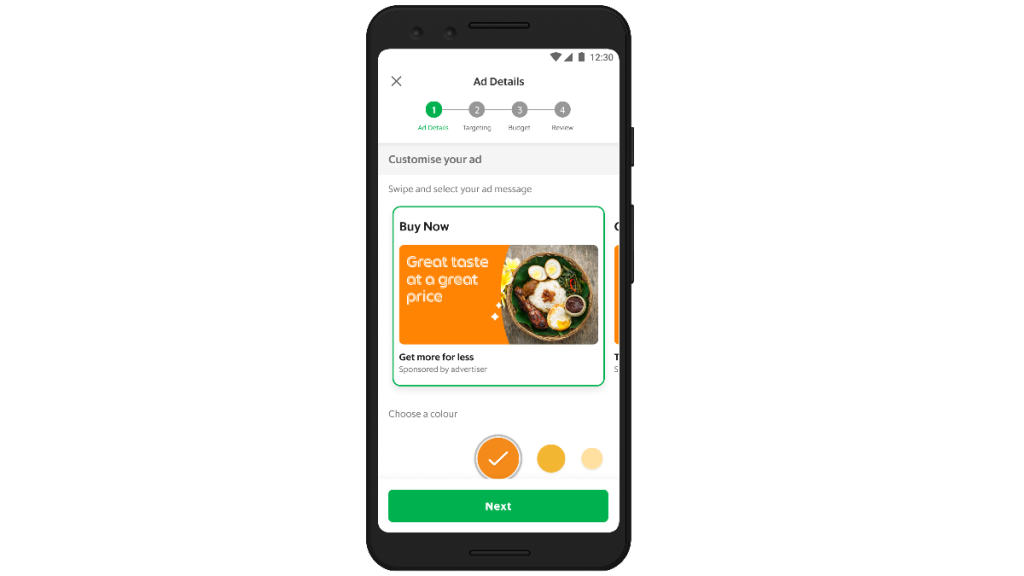
Photo credit: Grab
“For example, they can offer discounts to first-timers or meal deals including dessert, sides, and drink options that help customers meet minimum order values,” shares Kohli. “In 2021, GrabAds delivered 600% return on every dollar spent by our small businesses.”
For companies like Lykke Yogurt in Thailand, GrabAds provided a lifeline in the wake of the pandemic. Lykke used the feature to promote themselves to new customers on the Grab app after many of the restaurants and hotels they catered to ceased operations. It was able to have full control over its advertising, such as being able to set a cap to avoid overspending. As a result, its average daily sales tripled without taxing its marketing budget.
Grab also offers merchants a data analytics tool that helps them gain insights into areas such as sales figures, workflow bottlenecks, and customer preferences.
“Based on these insights, our in-app algorithm suggests ways for merchants to leverage our tools to improve their business,” explains Kohli. For example, the app can tell merchants what items on their menus are frequently bought together and the different types of bundles they can create to increase order sizes.
Leveling the playing field
A recurring theme in Grab’s merchant solutions is an effort to level the playing field for small businesses. Besides visibility, the company also provides MSMEs with access to financial services.
“Many small businesses have difficulty getting loans from financial institutions due to a lack of formal credit history,” says Kohli.
Grab fills that gap by using its proprietary data science models and its merchants’ sales history to build up credit profiles, which allow the firm to assess creditworthiness and disburse loans appropriately. Currently, these loans are available in Singapore, Thailand, and the Philippines.
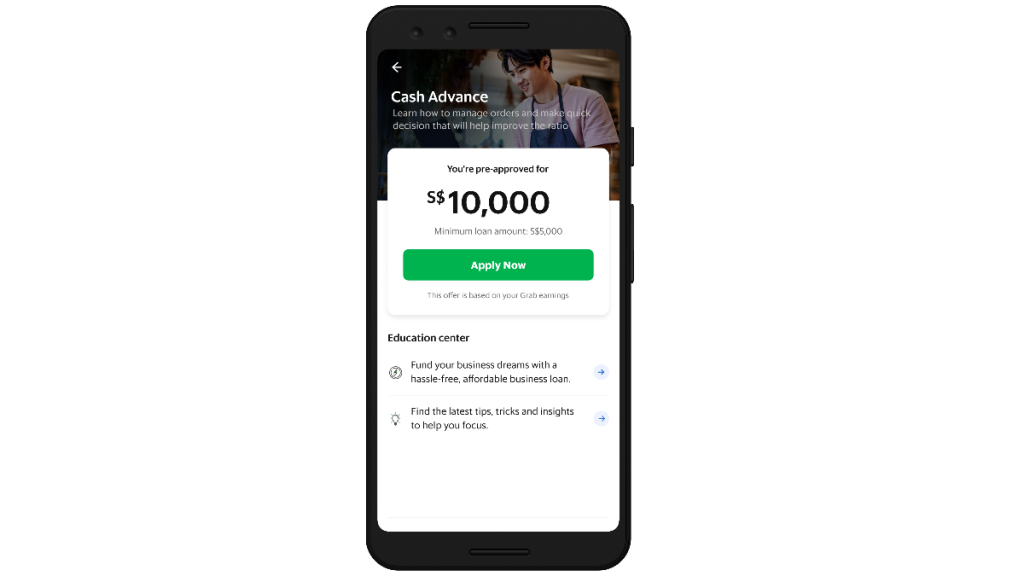
Photo credit: Grab
In Thailand, Grab has created access to some US$85 million in working capital for 18,000 local MSMEs, benefiting individuals such as restaurant owner Nattakarn Khingpat. With a loan from Grab, Khingpat was able to scale up his business, expanding his kitchen and buying more equipment to fulfil the growing number of orders.
Kohli adds that the app also streamlines the loan repayment process by enabling merchants to determine their monthly repayment amounts and have it deducted directly from their Grab earnings.
To help merchants learn and take advantage of these new tools, the company embeds e-learning tools into the app that have proven “critical in driving adoption among small business owners,” says Kohli.
“They are extremely short-staffed and have little time to figure out how to operate a new feature,” he explains. “We make it a point to roll out short videos to show merchants how to use them.”
Built-in algorithms also offer recommendations for e-learning opportunities based on merchants’ performance histories.
“We want to encourage them to make little improvements to their business operations to unlock more sales and create better customer experiences,” he adds.
Bringing benefits to millions
Kohli emphasizes that the features on Grab’s merchant app are designed to work together in order to “ladder up” to the objective of helping these businesses run and grow their organizations effectively.
“Through our insights tool, merchants can tell whether their store is attracting new customers. They can then use the self-serve advertising tool to create a targeted ad,” he explains. “We enable merchants to experiment and iterate on their own.”
Ideally, this would kickstart a cycle of effort and reward that Kohli hopes will translate into long-term merchant loyalty.
Looking ahead, Grab sees opportunities to expand into the suburbs, which is underpenetrated in terms of access to grocery and food delivery services. The firm is also in the process of rolling out a new merchant reply feature to enable small businesses to communicate with customers and build deeper brand engagement.
“We focus on building scalable tech-enabled solutions because that’s where we believe we can make a big difference,” Kohli says. “And we know that if we do it well, our product can potentially benefit millions of businesses in Southeast Asia.”
Grab is Southeast Asia’s leading super app, offering a suite of services consisting of deliveries, mobility, financial services, enterprise, and others.
Learn more about Grab on its website.
This content was produced by Tech in Asia Studios, which connects brands with Asia’s tech community. Learn more about partnering with Tech in Asia Studios.
Stay updated on the go with our mobile app.
Get latest insights with smoother, more personalized experience through TIA mobile app.
Recommended reads
 How financial infrastructure powers global startups
 Examining Alfamart’s and Indomaret’s digital moves
 Cold chain may be the next opportunity for Indonesia’s logistics startups
 Indonesian agritech firm rakes in $2.5m in seed money to support middlemen
 Have Amazon and Shein cracked the omnichannel fashion code?
 Why Southeast Asia’s ecommerce players should prioritize customer loyalty
 This startup is optimizing the international returns process for sellers on Amazon, eBay
 Grocery tech firm Ocado’s SEA entry could shake up the scene
 Tonik CEO on BNPL: ‘I prefer to call it sales finance’
 TikTok Shop’s logistics dilemma: to build or not to build





Editing by Stefanie Yeo, Winston Zhang, and Lorenzo Kyle Subido
(And yes, we’re serious about ethics and transparency. More information here.)





