 Samantha Cheh · · 5 min read
How Mitra Bukalapak empowers Indonesia’s mom and pop shops

Kang Irman knew he could be earning more from his small business in West Java.
As the owner of a warung, the mom and pop kiosks that are quintessential to Indonesian society, Irman plays a fundamental role in his community. However, whenever he needed to restock his inventory, he was forced to close his shop and make the long trek to his suppliers, costing him time and potential sales.
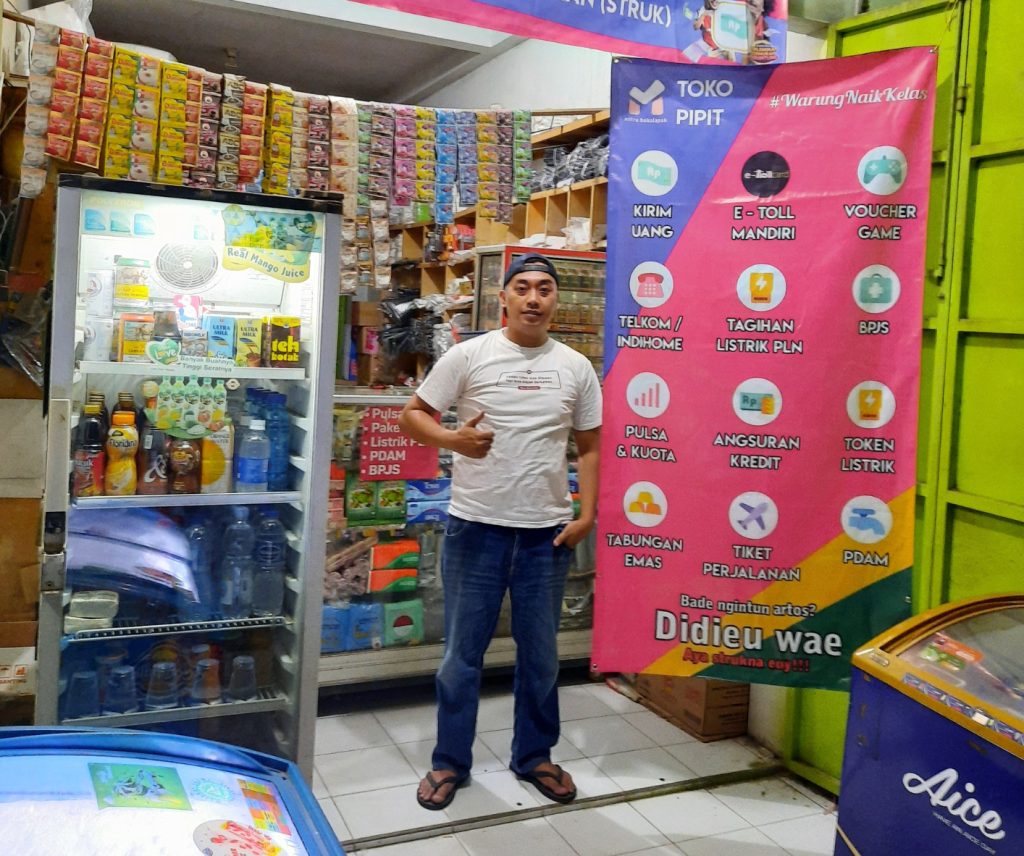
Kang Irman, a warung owner in West Java / Photo credit: Bukalapak
That all changed when he joined Mitra Bukalapak, a merchant partner program created by Indonesian ecommerce giant Bukalapak as a way to help warungs benefit from digitalization. Through the program, Irman could use an online application to order products for his store and restock his inventory without having to close his shop.
The platform also expanded the range of goods he could offer to customers – not just in terms of physical goods but also virtual ones like phone credits and electricity tokens.
Irman is just one of roughly 15.2 million mitras – the term Bukalapak uses to refer to the merchants under the program – who have seen their businesses transformed.
According to Howard Gani, CEO of Mitra Bukalapak, the company is the largest player in Indonesia’s online-to-offline space. Citing a NielsenIQ study, he says that the platform’s penetration rate stood at 56% in 2022 – up from 42% in the previous year – and surpassed the combined reach of the firm’s two main competitors. Mitra Bukalapak is also the market leader in two categories: groceries and virtual products, with penetration rates of 68% and 46%, respectively.
Bringing warungs into the digital age
The platform was founded to help the warungs that had been left out of Indonesia’s digitalization story, says Gani. Bukalapak’s founders had had various conversations with a number of small-business owners and realized that the tech boom of 2016 hadn’t trickled down to the level of MSMEs.
The firm saw this as a huge opportunity to digitalize these businesses, which contribute significantly to the country’s gross domestic product and are collectively a major local employer.
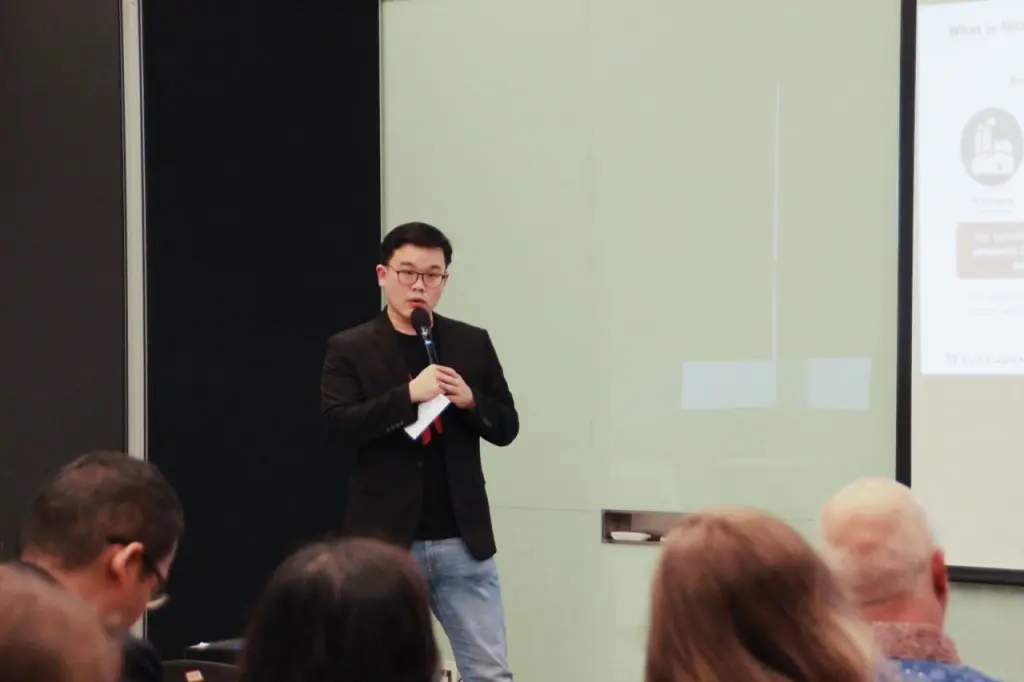
Howard Gani, CEO of Mitra Bukalapak / Photo credit: Bukalapak
Initially, Mitra Bukalapak was largely focused on helping merchants sell phone credits because it was the most accessible type of virtual product. Later, the platform zeroed in on providing support to mitras, such as digitized procurement and bookkeeping.
“We really want to add value to these mom and pops, so we help them figure out what products are most suitable for them,” Gani says. “We do that by making everything more visible – prices, stock levels, item information – and making delivery easier.”
Eventually, Mitra Bukalapak enabled warungs to supply virtual goods like e-wallet top-ups and also financial services like digital remittances and cash withdrawals. These services help fulfil the needs of the significant population of underbanked and unbanked Indonesians.
“Mitras are located in neighborhoods that are underpenetrated in terms of financial services and highly reliant on cash, especially in rural areas where bank branches are scarce,” Gani says. “Mom and pop shops are able to act almost like a bank branch – with certain limitations – because they’re neighborhood hubs that people can easily access.”
Serving the needs of the community
As Indonesia’s digital economy continues to evolve, Mitra Bukalapak has continued to level up its solutions to meet changing consumer demands. To help warung owners upskill, the company set up the Juwara community, which allows mitras to connect and collaborate. Sellers can even access training programs and sharing sessions organized by the company, allowing them to learn skills such as marketing and improving their financial literacy.
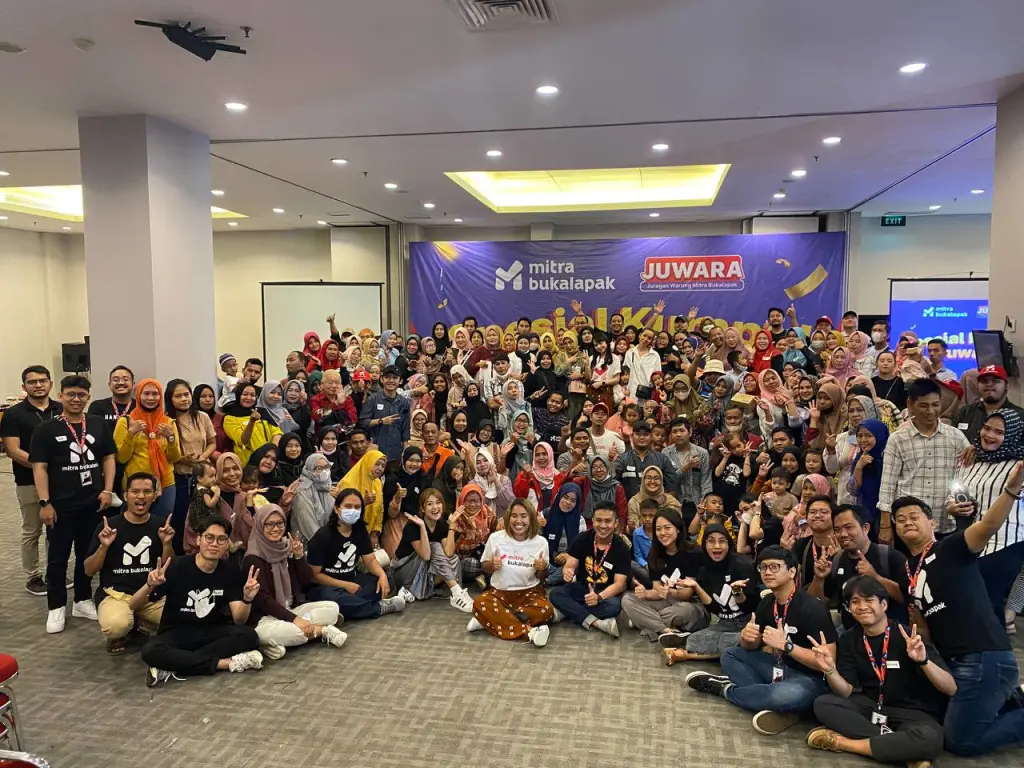
Mitra Bukalapak’s Juwara community / Photo credit: Bukalapak
The company has also launched two new services – BukaSend and Belanja Bareng – in 2021, which are specifically aimed at leveraging the role of these small businesses as community hubs.
Belanja Bareng is Bukalapak’s answer to the burgeoning social commerce trend. Through this program, warung owners and individuals can set up grocery businesses without the cost or skills needed to procure and store fresh food, while earning commissions on each sale.
“Many of our mitras are not used to handling fresh goods, not to mention packaging and delivering them,” Gani says. “By leveraging our infrastructure, they can avoid pain points like travelling long distances to shop for fresh groceries.”
As for BukaSend, it’s a solution that leverages warungs as logistics hubs. Indonesia’s booming ecommerce sector has created significant challenges for the local logistics industry, especially considering the fragmented nature of the archipelago.
“Not everyone has access to logistics services, especially in Tier 2 and Tier 3 cities,” Gani says. “We came back to the idea that if a warung is a hub, why can’t they become drop-off or pick-up points for courier services as well?”
He adds that customers have demonstrated a preference for BukaSend over traditional shipping agents because warung owners are established members of local communities and possess a deep understanding of their communities’ needs, such as flexible timings or on-demand services.
Making a real impact
Four years after its launch, Mitra Bukalapak has made big strides, contributing 53% of Bukalapak’s overall revenue in the third quarter of 2022.
However, Gani says the program’s social impact is much more important to the company. A survey of the firm’s mitra base has revealed that Mitra Bukalapak was able to increase partners’ revenues by 3x on average, creating new opportunities for these business owners.
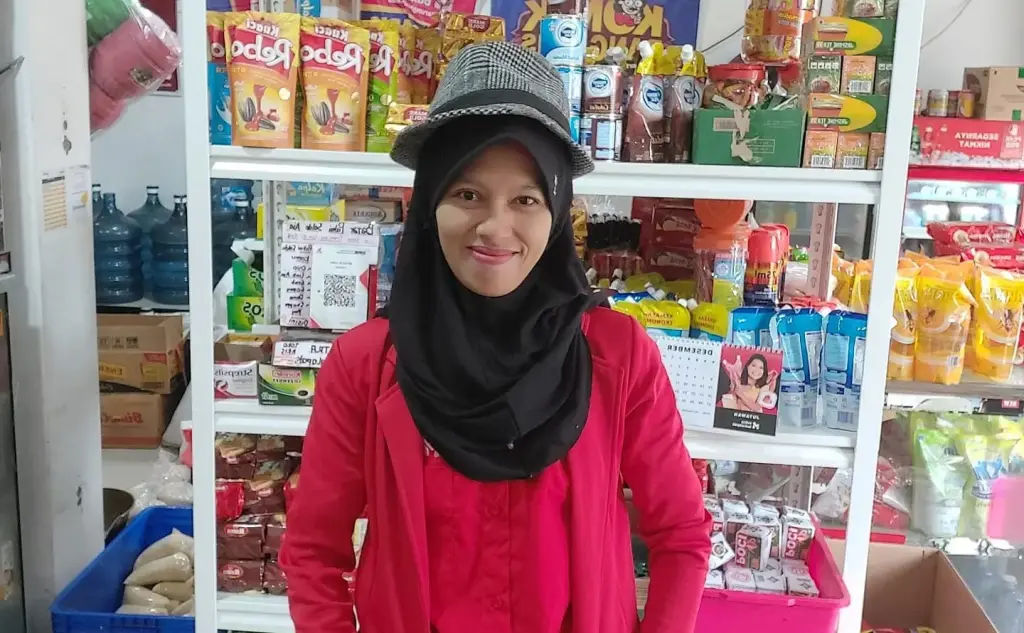
Tia, a warung owner in Demak / Photo credit: Bukalapak
For instance, a warung owner who goes by the name Tia grew her revenue and created employment opportunities for her community in Demak, a small town in Central Java, by working with the program.
“She used to run the shop herself, but after two years, she was able to expand her operations and employ three more people,” Gani explains. “Digitalization is a big boost for our mitras and for their communities.”
The CEO says that Mitra Bukalapak will continue to work on improving merchants’ experiences by providing increasing access to more new products. In particular, it will be looking into how to improve the selling experience as well as sellers’ financial literacy.
“What we always tell our partners is that we are here for the long run,” he concludes. “We want to help our mitras find stability and growth so they can sell more.”
As the leader of Indonesia’s competitive online-to-offline (O2O) segment, Bukalapak is helping to drive the growth of the nation’s economy by empowering small-business owners with innovative digital tools.
Learn more about how Bukalapak is creating positive social impact for communities across Indonesia here.
This content was produced by Tech in Asia Studios, which connects brands with Asia’s tech community. Learn more about partnering with Tech in Asia Studios.
Stay updated on the go with our mobile app.
Get latest insights with smoother, more personalized experience through TIA mobile app.
Recommended reads
 Tracking AI hiring in Singapore: OpenAI, Anthropic, and more
 Why ‘cheaper’ no longer wins dev deals for Vietnam
 Alibaba’s capex isn’t the full story
 Forget startups. Buy the business running on Excel
 Life’s a game, and AI agents are Animoca’s new play
 Indonesian AI startup goes global
 Forrest Li on scaling Sea, building smarter bots, and founder grit
 An AI assistant that joins sales calls and scores team skills
 Beyond the check: Why VCs need more than capital
 SGX’s CEO says it doesn’t need a unicorn to win





Editing by Stefanie Yeo, Winston Zhang, Jaclyn Tiu, and Dhania Putri Sarahtika
(And yes, we’re serious about ethics and transparency. More information here.)







📅 Upcoming Events
22 October 2026
Payoneer x CSPN Summit 2026