This article is a part of Startup Spotlight, a series that features young, up-and-coming startups.

Image credit: Timmy Loen
William Temple and Zhou Ziling researched smart grids and AI at a joint center run by A*STAR and the University of Illinois. They realized these technologies could modernize Southeast Asia’s built environment. This led them to launch Ampotech.
😟 Problem
Buildings consume roughly 40% of the world’s energy. Existing commercial and industrial facilities often rely on outdated, unmonitored equipment that wastes power through fixed schedules. Meanwhile, new regulations across Southeast Asia force enterprises to improve efficiency and report emissions.
💡 Solution
Ampotech helps businesses reduce operating costs and integrate new energy assets with zero upfront capital, including:
- AmpoCloud: An AI-powered platform optimizing HVAC systems, managing utilities, and automating sustainability reporting using open protocols.
- Asset financing: Replaces aging chillers and motors with high-efficiency equipment under lease-to-own agreements.
- Energy as a service (EaaS): Operates solar and battery systems, charging customers based on generated energy savings.
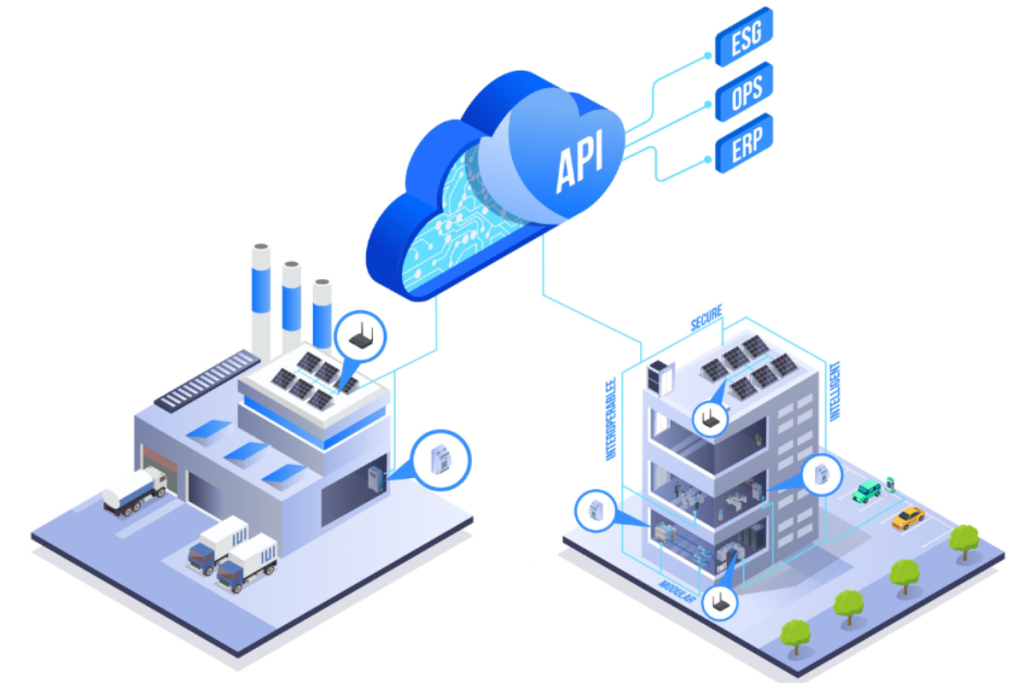
Image credit: Ampotech
📊 Market size
The shift toward zero-capex energy solutions is driving significant demand. The energy-as-a-service market in the Asia Pacific region is projected to reach US$33 billion by 2030. Ampotech targets a US$400 million immediate market across its active network.
🤝 Team
- William Temple. CEO and co-founder. He holds engineering degrees from Tufts and Cornell and previously managed an R&D center in Singapore.
- Zhou Ziling. CTO and co-founder. An NUS graduate who has led award-winning research at Ampotech, including a project that won an ASEAN Energy Award.
🚀 Traction
- Operates in six markets, including Singapore, Vietnam, and Indonesia.
- Deployed in over 300 commercial and industrial facilities for 100 enterprise clients.
- Achieved seven-figure revenue and over 100% year-on-year growth.
- Customers report reducing energy use by 6% to 48%.
🏆 Competition
Global incumbents like Schneider Electric and Siemens dominate the building automation sector. Ampotech provides a flexible alternative built specifically for Southeast Asian grid environments. Its zero-capex business model removes the heavy upfront investment typically required by hardware-focused competitors.
💰 Financials
The startup generates revenue through SaaS subscriptions, equipment leases, and performance-linked contracts. It raised an undisclosed series A from Clime Capital in January 2025 following US$2.8 million in earlier funding. Ampotech is currently raising a US$5 million series B.
🚩 Risks
- The zero-upfront model depends on measured savings converting into lease and EaaS collections fast enough to fund continued deployment, but repayment, technical performance, and customer credit risk sit at the center of shared-savings structures. As Ampotech expands across six markets, uneven site economics and collection risk could make the capital cycle harder to sustain.
- Ampotech must also compete against entrenched building automation vendors. Analysis of building automation systems points to the strength of installed bases, service contracts, uptime guarantees, and enterprise relationships. If large customers keep core automation budgets with incumbents, Ampotech may find it harder to compete.





Stay updated on the go with our mobile app.
Get latest insights with smoother, more personalized experience through TIA mobile app.









📅 Upcoming Events
22 October 2026
Payoneer x CSPN Summit 2026