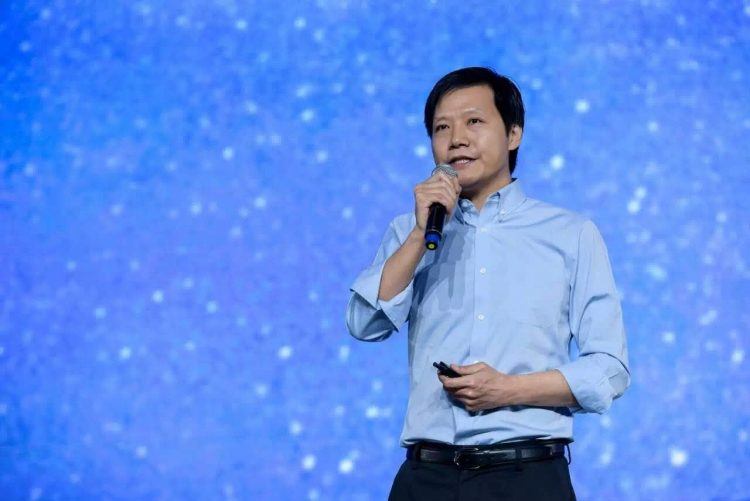
Photo credit: Xiaomi.
This article is an adapted translation of this interview with Lei Jun published on Tencent Tech.
Alibaba’s not the only Chinese tech giant with plans to reshape itself and get younger. Xiaomi CEO Lei Jun recently unveiled a dramatic restructuring plan that promises to rework the company’s headquarters and bring a lot of young, talented staffers into the management pipeline. So what’s in store for the Chinese smartphone and smart-tech giant? Who better to ask than Xiaomi founder and CEO Lei Jun:
Interviewer: When did you start thinking about this restructuring plan? Was it before the IPO?
Lei Jun: Actually it was even earlier. When I was personally overseeing the smartphone business in 2016, I did some testing with promoting younger employees into management, and later our sales and services departments tried similar things. The results were very positive; you could say that those changes were a key factor in our successful turning point in 2017. So during that process, the idea of a broader restructuring gradually took shape. Late last year I started talking with Liu De and Wang Chuan about it, and after the IPO we got into more serious discussions about it and hashed out this systematic adjustment plan.
The structure seems very clear now, and you will have more young people reporting directly to you; does this increase your management duties, and will it increase the pressure on you?
Actually, just the opposite. The basic idea behind this restructuring is to strengthen our headquarters functions and send partners back to strategic groups where they’ll be encountering more young people at strategic and management levels. The staffing department, which Liu De and Wang Chuan will lead, will aid me in organizing work and formulating development strategies, and direct all of the service departments and strategy implementations as well as doing core talent training and management. My thinking is that if Xiaomi wants to become a [RMB] 1 trillion revenue company, we need to strengthen our “brain” and collect experienced senior management at headquarters so that the “brain” isn’t just me.
When the brain is strong, you also need to maintain strong muscles. So we need to hand our core services over to young people and let them approach accomplishing their goals in the manner of an early-stage startup that’s attracting excited young talent. You need constant fresh blood coming in to keep a talented, effective team in the long term.
Having seen the details of the plan and hearing you say this, will the new organizational and staffing departments be strong departments?
Of course, very strong departments. If they’re not strong, they won’t be able to help me! Before I was like a lone commander at headquarters, but now I want more departments coming in to help me share the burden. I’m sure you know that in the past I’ve been utterly exhausted, but willing to assume that responsibility anyway. But now the situation is that even if I were to work tirelessly, it’s not enough. I need sufficiently strong people and teams to help me.
So you’ll be a bit more relaxed in the future?
I should be, yeah. That way I’ll have more time to consider the strategic direction of a few key groups. If I’m not a bit more relaxed after this, then it will be a sign that the staff department and organization department aren’t doing well enough.
Will restructuring continue beyond this plan?
Yes. This is an important start, but it’s just a start. The company has 20,000 people, and this plan mostly touches on the 4,700 people at the four original departments (MIUI, Interactive, Ecosystem, and TV). The smartphone, sales, and services departments will only see some breaking out of teams, but more is outside the scope of this plan.
More Chinese tech titans:





Stay updated on the go with our mobile app.
Get latest insights with smoother, more personalized experience through TIA mobile app.