- Premium Content It takes our newsroom weeks - if not months - to investigate and produce stories for our premium content. You can’t find them anywhere else.
 Simon Huang · · 5 min read
SGX is struggling to attract tech listings. Can 65 Equity Partners fix that?
Singapore and Hong Kong have long battled to be crowned Asia’s top financial center. Recently, the city-state received a boost when it placed third on the Global Financial Centres Index list of the world’s top 20 financial centers, behind New York and London. It replaced the Chinese special administrative region, which fell to number four.
However, there is one area where Hong Kong still far outpaces Singapore: equity capital markets.
In the first nine months of 2022, the main board of the Hong Kong Exchanges and Clearing Market (HKEX) ranked fourth globally in terms of funds raised. HKEX is no stranger to lofty heights on this list as it has ranked in pole position several times in previous years, outpacing stalwarts like the New York Stock Exchange and Nasdaq even in boom times.
The main board of the Singapore Exchange (SGX), in contrast, did not even rank after failing to secure a single IPO during that period. SGX’s Catalist exchange, which has fewer requirements than the main board, did host six IPOs, but these raised only US$32 million in total.
To add insult to injury, the Indonesia Stock Exchange (IDX) made the list, thanks to big listings from tech companies like GoTo. Meanwhile, its Singapore-based counterparts like Grab and Sea chose to list in the US.
Can a city with such anemic capital markets truly be a top global financial center?
Singapore Inc to the rescue
Evidently, the Singapore government was concerned enough to put together a package to address the issue – a typically Singaporean solution to problems.
This was announced in September 2o21 and involved stalwarts of the Singapore business establishment such as the Ministry of Trade and Industry, the Monetary Authority of Singapore, Temasek, EDBI, and the SGX.
Anyone with a passing familiarity with Singapore would be aware of most of these names. Less well-known, however, was the final party on the list: 65 Equity Partners.
Yet it plays a key role in this initiative.
The investment firm is wholly owned by Temasek but independently managed. It is led by CEO Tan Chong Lee, who was the president of Temasek International and held numerous roles at the state-owned firm. Several other members of 65 Equity Partners’ investment team were also previously with Temasek.
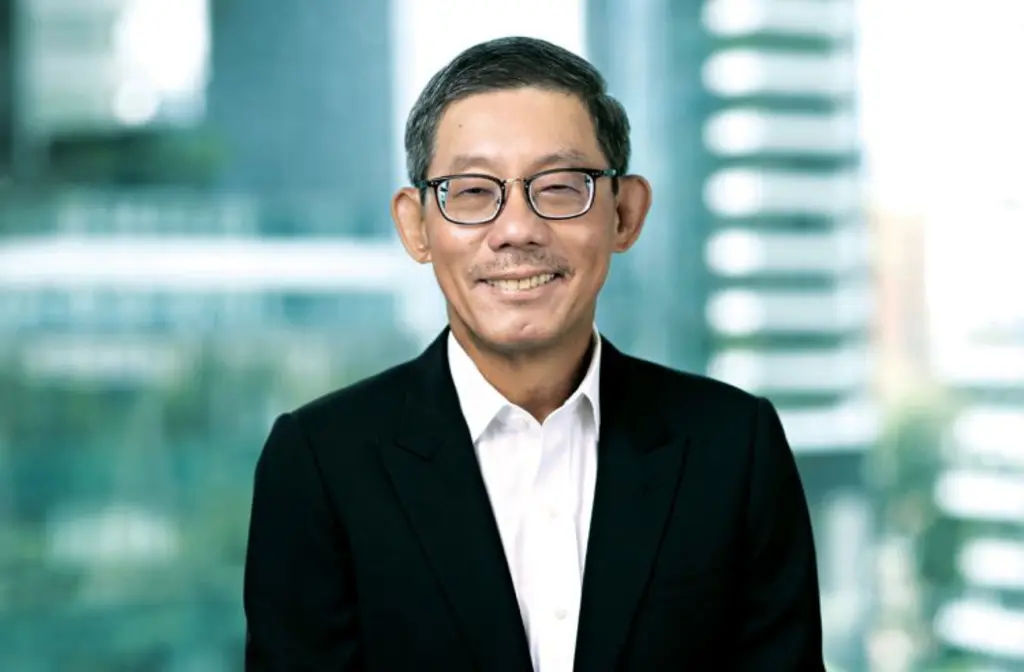
65 Equity Partners CEO Tan Chong Lee / Photo credit: 65 Equity Partners
Compared to Temasek, which manages over US$294 billion, 65 Equity Partners is a minnow – its assets under management is US$3.3 billion. This includes a US$0.7 billion Local Enterprise Fund and a US$1.1 billion Anchor Fund.
On the lookout for deals
Leveraging the Temasek ecosystem
Stay ahead in Asia’s tech landscape
This is premium content. Subscribe to read the full story.
While it’s making big investments in companies like Carsome and ShopBack, the Temsek unit’s mission goes beyond just financial returns.
We know this is not ideal. ⌛ Sign up in 20 seconds. Cancel anytime.
Our subscriber community includes professionals from these companies:





Stay updated on the go with our mobile app.
Get latest insights with smoother, more personalized experience through TIA mobile app.










📅 Upcoming Events
22 October 2026
Payoneer x CSPN Summit 2026