Paloma Ganguly · · 5 min read
What does a sexually violated woman go through? This website might give you the picture.
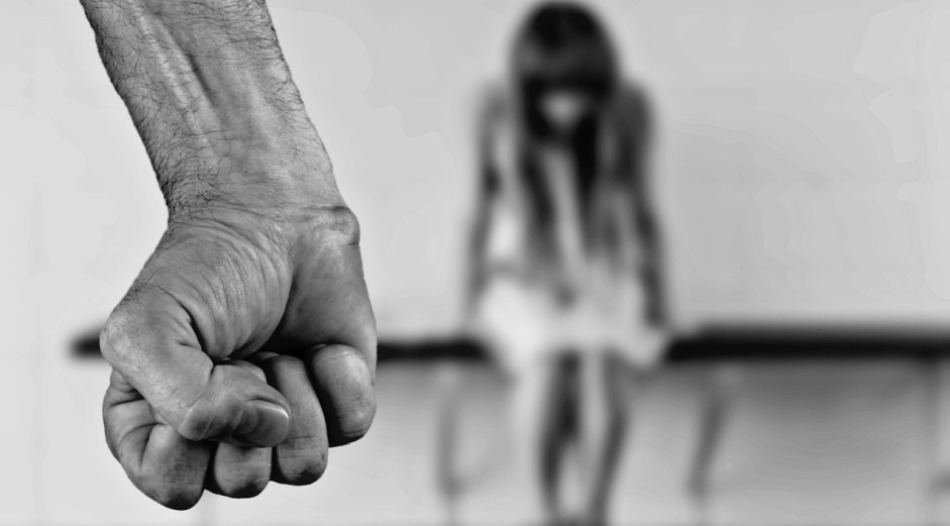
Photo credit: Pixabay
At a party for my 10-year-old daughter last month, her friend took offence to being likened to Katy Perry. Most little girls I know would have loved it, but this one was positively upset. “Why? I don’t sing, look, or even dress like her!” she burst out.
For me, the words had resonance (because I find the pop icon’s videos brain dead and her choice of costumes sexist).
I found myself thinking about it again while reading about What is Feminism and why do we need it?, a book for – believe it or not – primary school children, penned by Bea Appleby, former editor of British magazine Girl Talk, and children’s writer Louise Spilsbury.
With two growing children at home in India, a country that prefers men, I am delighted that there’s such a book and I can lay my hands on it via Amazon. But here’s the other interesting thing. What connected me to it? Lajja Diaries. This is where I came upon an article on Bea Appleby’s book.
It is a brand new website aimed at enabling dialogue, awareness, and support around women’s rights, crimes, and conditioning.
Shame, shame
Lajja is the Hindi word for ‘shame,’ a word we girls in India learn to hear, accept, and are made to hurt with since we begin to make sense of things.
When you question your elders, you are asked, “Have you no shame?” When you wear clothes others don’t expect you to, when you keep company others don’t expect you to, when you eat or drink what others don’t expect you to, when you eat more than what others expect you to, when you read what others don’t expect you to….my god, you hear it again and again.
But the brutal Delhi gangrape of 2012 – often called the Nirbhaya case in which a medical student was raped and tortured by six men – did something strange to this word. In one sharp stroke, it succeeded in making many ordinary Indians wonder what ‘shame’ really ought to mean.
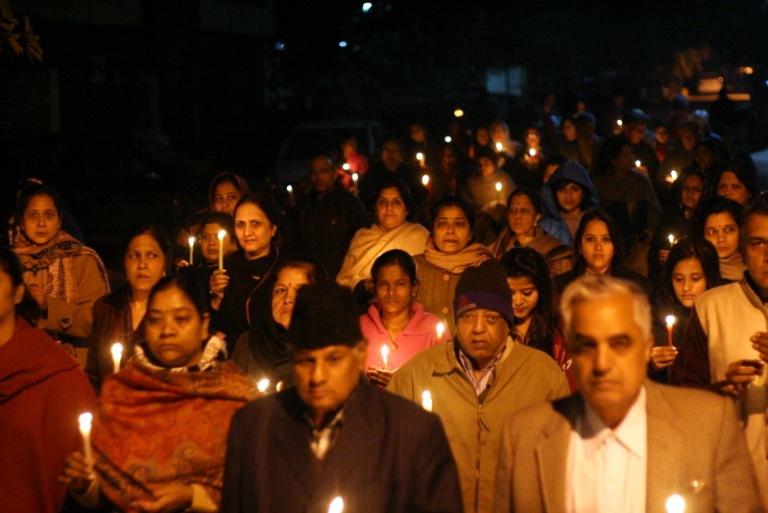
Candle light march after the 2012 Nirbhaya rape in Delhi. Photo credit: Ramesh Lalwani
“There is NO shame […],” says Lajja Diaries, urging women victims of physical, sexual, and emotional violence to speak up on the website.
Digital feminism
The initiative actually began December 16, 2014, on the second anniversary of the Nirbhaya incident. Its Twitter and Facebook pages have gained a following of 24,000 since then, most of them Indian but some also from other countries like Sri Lanka and the UK.
The world over, 1 in 3 women still experience physical or sexual violence. In Delhi, 20 percent more crimes against women were reported in 2015 compared to 2014. The alleged gangrape of a woman and her minor daughter, after they were dragged out of their car on a national highway close to the capital, is making front page headlines even as I write this story.
What’s wrong with us women?





Stay updated on the go with our mobile app.
Get latest insights with smoother, more personalized experience through TIA mobile app.