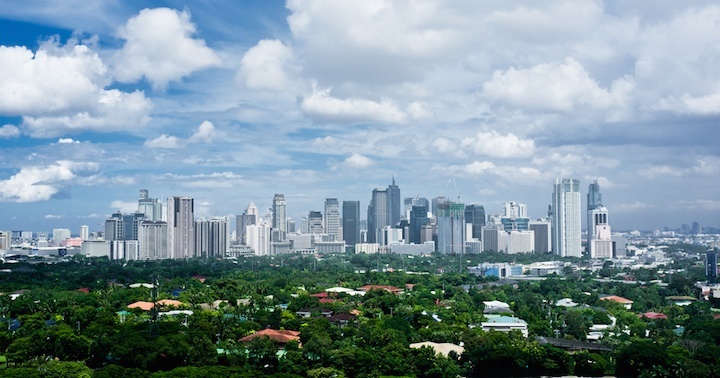
Photo credit: Bensonkua
The Philippines wants to draft by June a concrete action plan containing mainly laws and policies so startups would thrive in the country.
Which is why last night the Trade Department held a closed-door dialogue with stakeholders to identify barriers to startup growth. The first of what’s expected to be a series of consultations was led by trade secretary Adrian Cristobal Jr. and attended by senator Paolo “Bam” Aquino, Filipino startups, as well as a US delegation of multinational companies led by American businessman and ambassador David Thorne.
Aquino told Tech in Asia the session centered on lessons from the US on how to create an enabling environment for startups, while local startups cited their concerns about running a business in the Philippines. All these are now inputs to a “startup ecosystem development plan” the Trade Department aims to release in June, according to undersecretary Nora Terrado.
The development plan will list down the policies and programs to be done.
Terrado said the development plan would be different from the startup roadmap earlier drafted by the Department of Science and Technology (DOST) and the startup community in that it focuses on “actions” to be taken.
“We’re going to focus on the environment that will make the businesses thrive. What are the blockers that make it hard for them to start a business – both legislative and non-legislative? What are the different programs we should push and coordinate with the DOST? How do you help startups commercialize research, talk to banks so they can get access to capital? We also want to help them with the promotions when they’re ready with their products,” she explained.
The roadmap published by DOST gave an overview of the tech startup ecosystem in the Philippines and what it envisions to become by 2020 – 500 players with total funding of US$200 million and a valuation of US$2 billion.
The roadmap also identified some “blockers,” which the Trade Department now wants to zoom in on and figure out how to solve.
Hard to start and stop
Probably the biggest need for startups highlighted during the dialogue is “the ease of starting and closing a business,” according to Aquino. “There should be openness for failure, which of course isn’t only an issue of culture but policy. When people fail with their startups, are they able to start again easily?”
Minette Navarrette, president of Philippine investment firm Kickstart Ventures, a unit of Globe Telecom, told Tech in Asia that the key in solving the hurdles faced by startups is for people to first understand the nature of their business. Startups should not be confused with the usual small and medium enterprises (SMEs), she noted.
“SMEs are small businesses that generally have a proven business model in an established industry. A startup is an experiment. It’s an attempt to test something and see if you can make it work, make it sell, and make it scale,” she said. “The failure rate is significantly higher and it’s more risky than SMEs.”
She said the classic startup stories begin out of a dorm room or maybe a garage. That means they won’t be able to get a business permit because the law requires them to show a physical space in a commercial building.
96 percent of all startups fail, she added, so the ease of winding down something that could fail so easily is important. Existing laws for closing and dissolving a company in the Philippines are tedious and expensive.
Staying out of the way





Stay updated on the go with our mobile app.
Get latest insights with smoother, more personalized experience through TIA mobile app.









📅 Upcoming Events
22 October 2026
Payoneer x CSPN Summit 2026