
Welcome to The Offset! Delivered once a month via email and through the Tech in Asia website, this free newsletter breaks down the biggest stories and trends in greentech. If you’re not a subscriber, get access by registering here.
Hi there,
Clean energy is a red-hot segment where advances are happening quickly. For example, renewables have become sought-after commodities as their prices plummeted over the past few years. But this growth has also given rise to a problem: insufficient storage capacity.
In this issue, we’ll explore how storage troubles are holding back the renewable energy transition and look at the push for innovation in this space.
Enjoy reading!
THE BIG STORY
Meet the players fighting plastic scourge in SEA
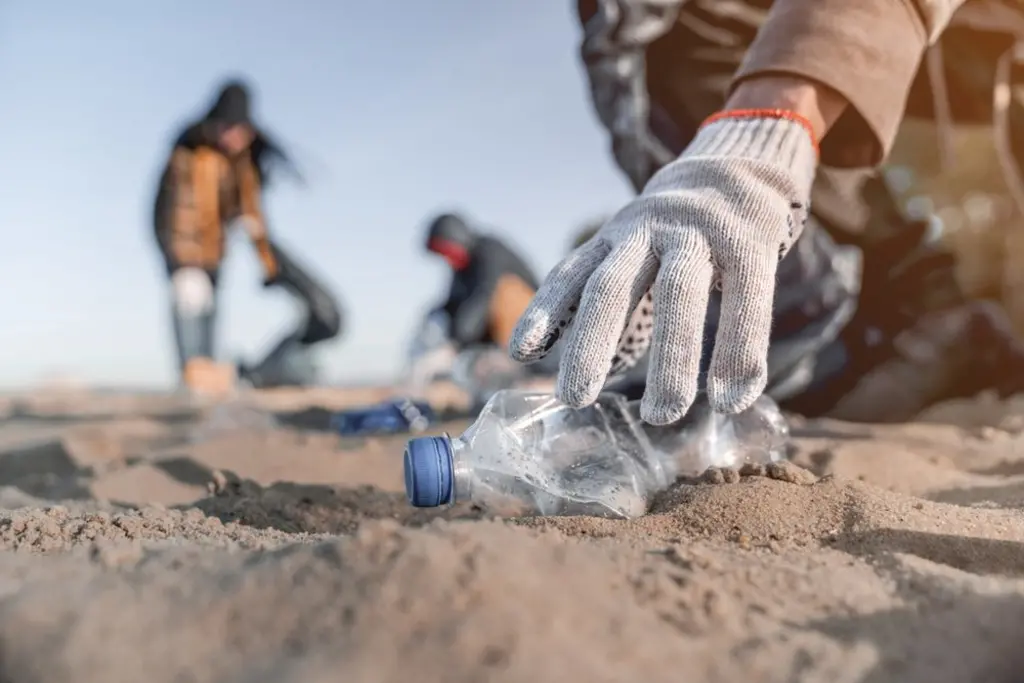
Plastic waste startups are on the rise, but more needs to be done to scale their impact.
DEEP READS
1️⃣ Power storage is world’s next big net zero challenge
There’s an urgent problem in energy transition that has been largely overlooked: storage.
Renewables such as solar and wind power fluctuate because the sun doesn’t always shine, and the wind doesn’t always blow. As renewable penetration increases, the cost of its intermittency will also shoot up. To ensure a constant supply of energy, back-ups are necessary during downtimes. But how do you go about this?
Energy storage systems are a low-carbon way to do it. Building up long-duration storage capacity (8 hours or more) is crucial step towards energy transition. At present, global capacity to store renewables is inadequate, considering the demand. The US, for example, is capable of storing 595 gigawatt hours, which is roughly just an hour of its demand.
Power providers are starting to focus on developing new technologies. Tech giants are also getting in the act: Google and Microsoft, for instance, are among the corporations that recently joined Long Duration Energy Storage Council, an organization that was formed at the United Nations Climate Change Conference 2021 (COP26). Moreover, capacity markets that provide financial support to companies supplying storage capacity are shaping up.
Energy storage is currently concentrated in a handful of developed markets, including the US, UK, France, Australia, and Japan. China and India are also pouring investment into the space. And yet, solar and wind power are not abundant in most of these countries.
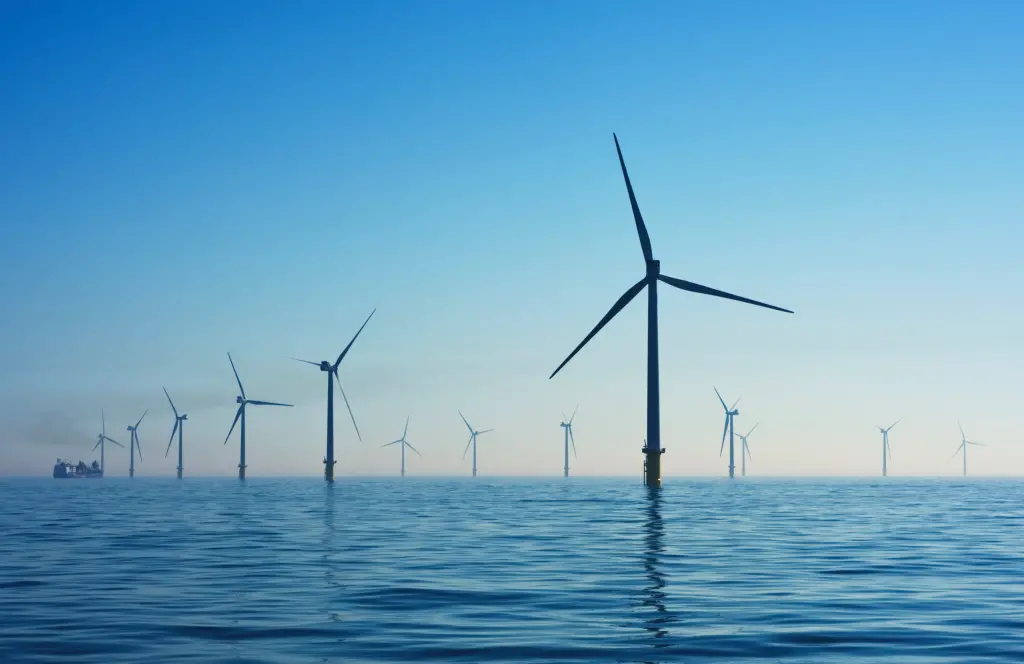
Wind turbines / Photo credit: Unsplash
The UK, for example, is grappling with this problem as it works to phase out fossil fuels by 2050. One of the hurdles is the lack of sites where pumped hydro storage plants can be built. Pumped hydro is how most electricity is stored, accounting for around 98% of global capacity.
Japan is also trying to advance the energy storage front. The government is planning to begin requiring power utilities to open up their grids to energy storage systems operated by other companies, hoping to grow its storage capacity. The government will also subsidize up to half the cost of battery storage systems to bolster its competitiveness against other types of energy storage.
Another way to store energy is lithium-ion batteries. Its usage has become prevalent as the cost per kilowatt hour of storage drops, thanks to electric-car makers. But because these batteries are designed to store relatively small amounts of energy, few believe that they will play a big role in stabilizing renewables supply during long-haul winters, for instance. There’s also no significant reduction in costs with the expansion of storage capacity.
Still, innovation happening in the space. Power providers in California are working on a long-duration storage system based on lithium-ion batteries.
2️⃣ Cryptocurrency traders move into carbon markets
Cryptocurrency’s outsized energy consumption has been under a lot of scrutiny, including from the likes of Tesla’s Elon Musk and, more recently, Mozilla founder Jamie Zalinski. A new study by Bank of America shows that in terms of annual emissions, Bitcoin has outpaced fossil fuel-reliant companies such as American Airlines.
It’s no surprise then that cryptocurrency companies are eager to clear their names.
Toucan, a Switzerland-based nonprofit specializing in decentralized finance, launched a carbon offset project in October that lets users trade carbon credits on cryptocurrency exchanges. Its carbon credits are linked to tokens called Base Carbon Tonne (BCT). According to Toucan, the goal is to create a more transparent platform by using real-time pricing data and record of trades to track who gets to take credit for funding green projects available to the public.
But critics are skeptical, pointing out that the Toucan team chooses to maintain its anonymity – a move that’s at odds with its transparency claim. But believers including billionaire Mark Cuban think that the idea of cleaner cryptocurrency is promising.
There are a myriad of new projects that aim to do something similar, from offering NFTs directly linked to purchasing carbon offsets to setting up mining farms that run on renewable energy.
The booming crypto space is clashing with the carbon reduction pledges made by many countries. Lawmakers in the US and other places that host cryptomining farms are now closely examining the carbon footprint of this practice. Regulators in the European Union are also seeking to outlaw cryptomining activities.
TRENDING NEWS
You can also check out Tech in Asia’s coverage of Asia’s greentech scene here.
1️⃣ China showcases low-carbon tech for ‘green’ Games
The Beijing Winter Olympics Committee says that its carbon-reduction efforts, such as retrofitting buildings from the 2008 Summer Games and using renewable energy, have saved about 158,300 tonnes of greenhouse gas emissions. From the prep work to the post-event period, the Games’ footprint is estimated to be equivalent to 1.028 million tonnes of carbon dioxide.
Why it matters:
Despite these measures, Beijing still faces scrutiny over water usage because the need to make artificial snow puts more strain on water-scarce regions. Pandemic restrictions also have helped Beijing reduce emissions.

The 2022 Winter Olympics opened on February 4. / Photo credit: Wikimedia Commons
2️⃣ Amazon leads corporate clean-energy purchases in record year
The ecommerce behemoth led a landmark year for renewable-energy purchases among corporations worldwide, according to a new report. In 2021, big businesses snapped up 31.1 gigawatts of clean energy capacity, with Amazon taking 20% of that total.
Why it matters:
More companies are shifting to clean energy as solar and wind power prices fall, making fossil fuels a less cost-effective option.
3️⃣ China says U.S. tariff extension on solar products hurts new energy trade
Continuing to impose tariffs on solar products “won’t contribute to the healthy development of America’s solar industry and distorts the international trade order of solar as a new energy product,” according to China’s Ministry of Commerce.
First introduced by the Trump administration in 2018, the the tariffs were recently extended by US President Joe Biden for another four years. However, the new terms excluded two-sided panels that are commonly deployed in bigger projects.
Why it matters:
Figuring out how to treat imported solar panels and cells remains a divisive issue in the US. Tariffs on products from China, the world’s largest supplier, can hold back the deployment of renewable energy in the US. Without the restriction, however, local solar players would be unable to compete with their Chinese counterparts.
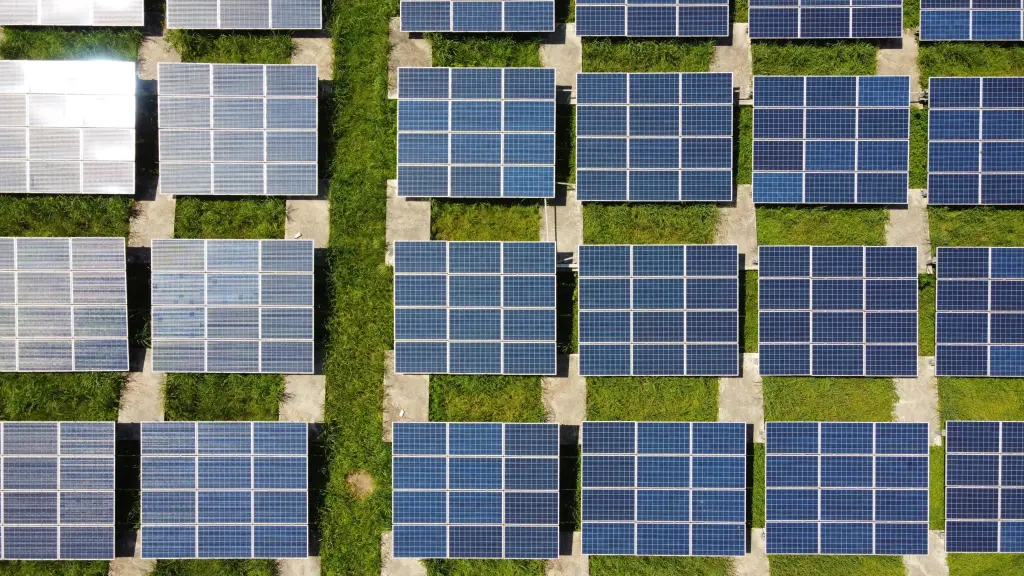
Photo credit: Unsplash
4️⃣ Huawei bolts into Japan with renewable power storage, chasing Tesla
The Chinese telco is expected to start selling large-scale battery systems for clean energy storage in Japan by March. Huawei will purchase small battery packs from CATL, a leading lithium-ion battery supplier, and bundle them into shipping container-sized units with the storage capacity of approximately 200x as much as a standard household battery.
Why it matters:
Japan is trying to move away from fossil fuels, and having adequate capacity in its power grid is crucial for the massive deployment of renewable energy. The country’s large-scale battery industry is an increasingly competitive space occupied by players like Tesla.
STARTUP WATCH
1️⃣ Kyoto Fusioneering nets $11.6m in series B money
The Japanese firm, which develops fusion energy materials, components, and systems, has raised over US$11.6 million in an oversubscribed series B round from investors including Coral Capital, JIC Venture Growth Investments, and Jafco Group. The startup also secured a US$6.1 million loan from the Bank of Kyoto, Sumitomo Mitsui Banking Corporation, and the Bank of Tokyo-Mitsubishi UFJ.
2️⃣ VinFast plans to produce only EVs by late 2022
The Vietnam-based automaker aims to cease manufacturing internal combustion engine vehicles and fully transition into producing electric vehicles starting later this year. VinFast is part of Vingroup, the country’s largest conglomerate.
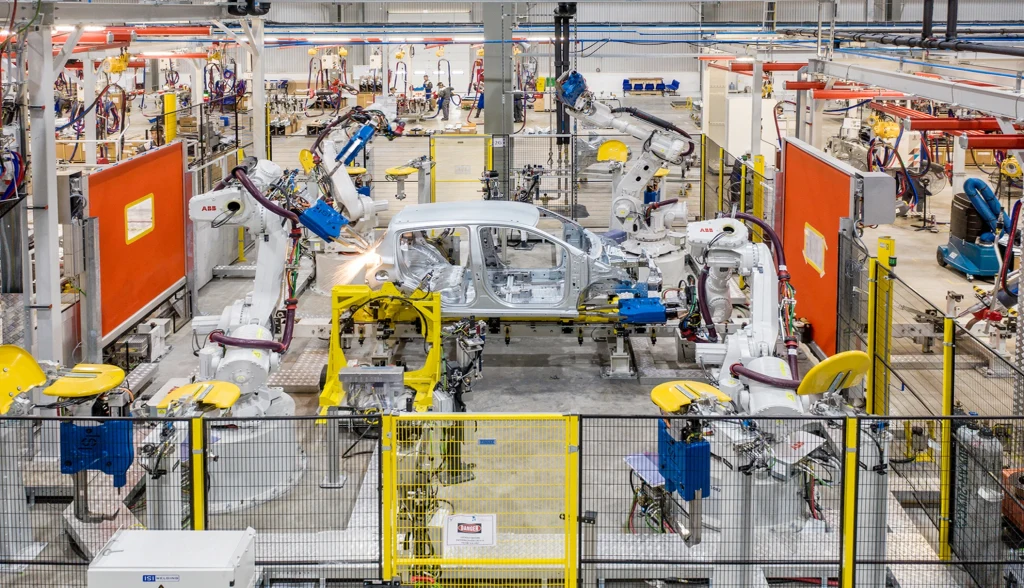
Photo credit: VinFast
3️⃣ Shell-founded startup fund receives $13m from Canadian DFI to accelerate clean energy access in Africa
Energy Entrepreneurs Growth Fund, which was initiated by the Shell Foundation and Dutch Entrepreneurial Development Bank, has received US$13 million from development finance institution FinDev Canada. The money will go towards boosting access to renewable energy for off-grid households and businesses in sub-Saharan Africa.
4️⃣ Sylvera raises $32m in series A round to become source of truth in carbon markets
The carbon offset rating company has secured US$32.6 million in a series A fundraise co-led by Index Ventures and Insight Partners. London-based Sylvera uses data and machine learning technology to generate information about the carbon offset market. It serves clients including Salesforce, Delta Airlines, Shell, and Cargill.
5️⃣ Bill Gates invests in Verdox’s carbon capture technology
The Massachusetts-based carbon capture startup got US$80 million from investors including Bill Gates’s Breakthrough Energy Ventures, Prelude Ventures, and Lowercarbon Capital. The funds will be use to develop and deploy Verdox’s electrochemical carbon-capture technology, which the company claims is less energy intensive.
That’s it for this edition – we hope you liked it! Do subscribe to continue receiving The Offset.
Not your cup of tea? You can unsubscribe from this newsletter by going to your “edit profile” page and choosing that option in our preference center.
See you next month!
Stay updated on the go with our mobile app.
Get latest insights with smoother, more personalized experience through TIA mobile app.
Recommended reads
 Flipkart’s costly late push into quick commerce and food delivery
 Inside Singapore’s government team that kills its own products
 Once an IPO hopeful, SCI Ecommerce nears collapse
 Who’s betting big on ChatGPT ads? Not Asian brands
 VC tracker: Granite Asia launches US$50 million fund
 GCash trims IPO ambitions to meet market realities
 Igloo CEO eyes global M&A: ‘We have an appetite to grow more’
 Why SBI paid a premium for Ajaib amid a tough market
 OpenAI warns building for today will cause technical debt





Editing by Eileen C. Ang and Shravanth Vijayakumar
(And yes, we’re serious about ethics and transparency. More information here.)





📅 Upcoming Events
22 October 2026
Payoneer x CSPN Summit 2026