 Sumit Chakraberty · · 6 min read
Lessons an Indonesian AI startup learned in an Indian accelerator
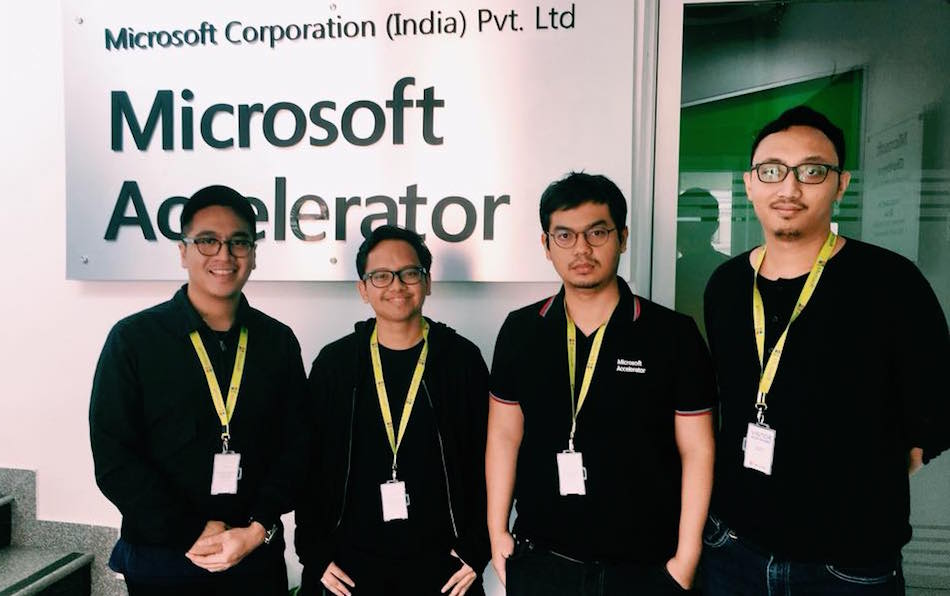
Kata CEO Irzan Raditya (second from left) with his team at Microsoft Accelerator in Bangalore / Photo credit: Kata
The recent graduation function of Microsoft Accelerator’s 11th cohort in Bangalore had an unusual participant: Irzan Raditya, CEO and co-founder of Kata.ai, the first Indonesian startup to join this growth-stage accelerator program in India’s tech hub. The 13 other startups in the batch were all Indian.
Apart from a newfound love for Indian food, Raditya showed off his understanding of Indian mythology when I chatted with him about his takeaways from the six-month program. “You’ve got to be your own Brahma, Vishnu, and Shiva,” he says.
You’ve got to be your own Brahma, Vishnu, and Shiva.
Brahma is the creator, Vishnu represents sustenance, and Shiva is the destroyer or transformer. In startup parlance, the entrepreneur begins with a creation or innovation. Then the pioneer attracts competitors and tries to use first-mover advantage to sustain the innovation. But sooner or later, the graph is going to flatten and go down. “That’s the point where you have to become your Shiva,” says Raditya.
In the case of Kata, its previous avatar was YesBoss, an SMS-based virtual assistant that was shut down in late 2016. It gave way to AI-powered Kata chatbots that use natural language processing to help enterprises engage with customers in the conversational Bahasa spoken in Indonesia.
Now, with a US$3.5 million series A investment led by the Taiwanese Trans-Pacific Technology Fund, Kata aims to expand into Taiwan and Japan. This will involve adding new languages like Mandarin to its repertoire.
At the same time, it has opened up a platform that provides the tools, libraries, and services for developers from any company to build their own chatbots. For Kata, the expansion out of Indonesia as well as its platform to build robust Asian-language-speaking bots are part of its vision to be a global company.
Platform model
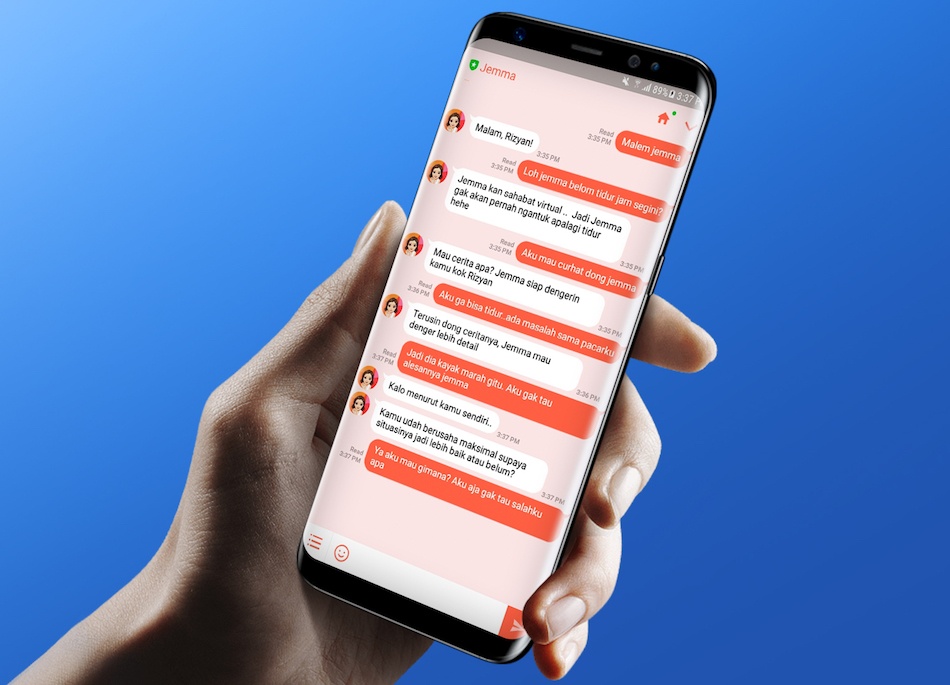
Photo credit: Kata
The stint in Bangalore not only gave Kata the courage to expand abroad but also an understanding of the right strategy to use. There are hardly any Indonesian B2B (business-to-business) or enterprise tech startups with a footprint in global markets, whereas the ecosystem for doing this is well-developed in India, points out Raditya.
A key learning was to team up with a partner for large clients, instead of going it alone. This deepens the engagement with clients, broadens the pipeline for enterprise sales, and eases expansion into new markets. It also shapes product strategy.
Kata has a partnership with global consulting firm Accenture for deploying its chatbot Veronika in Indonesia’s state-owned mobile operator Telkom. “This form of partnership is not that common yet in Indonesia because we barely see enterprise-quality tech products in the market,” says Raditya. “We have seen a lot of solution providers. They build everything from scratch or pick this and that for the client, like a software house or consultant […] We are playing it differently by becoming an enterprise-class conversational chat platform.”
It seems counterintuitive to open up its bot-building platform to others when Kata makes its own bots for enterprise clients. But it ties in with Kata’s vision. As Raditya puts it, “You have to see the end game first, and work backwards from there.”
A chatbot with 1.5 million friends





Stay updated on the go with our mobile app.
Get latest insights with smoother, more personalized experience through TIA mobile app.










📅 Upcoming Events
22 October 2026
Payoneer x CSPN Summit 2026