- Premium Content It takes our newsroom weeks - if not months - to investigate and produce stories for our premium content. You can’t find them anywhere else.
 Putra Muskita · · 10 min read
Mitra Bukalapak’s roadblock: Indonesia’s FMCG giants
Bukalapak is at a crossroads. It sits in fourth place among Indonesia’s mobile ecommerce apps, behind Shopee, Tokopedia, and Lazada, according to estimates seen by Tech in Asia and price comparison site iPrice.
Ecommerce growth in the country is hampered by underdeveloped infrastructure in second- and third-tier cities, various reports note.
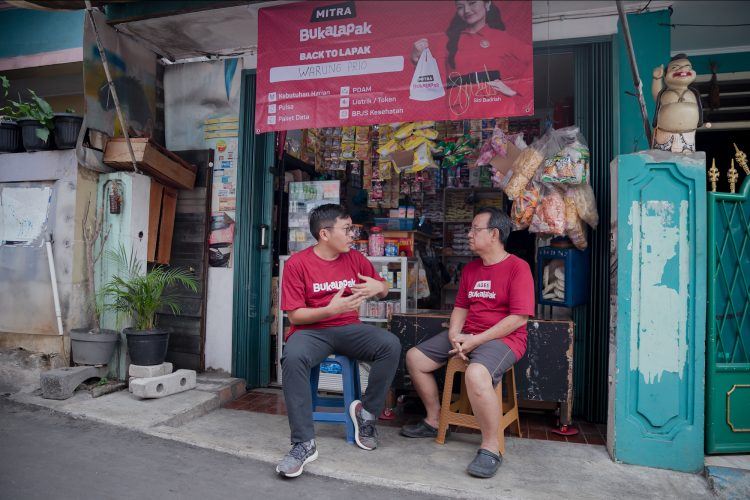
Co-founder and ex-CEO Achmad Zaky with a Bukalapak partner / Photo credit: Bukalapak
Launched in late 2017, Mitra Bukalapak could herald a new growth spurt for the company. The initiative marked Bukalapak move into offline retail, and its goal is to supply goods to Indonesia’s roadside stores or warungs, which in turn sell those items to consumers. Since then, many competitors have sprung up, each attempting a different approach to tackle a common problem: Indonesia’s fragmented retail supply chain.
But these players’ experiences highlight an obstacle for anyone looking to disrupt the status quo: well-entrenched incumbents. For Mitra Bukalapak, it finds itself grappling with skeptical manufacturers, which have strong economies of scale and strict policies on how their goods are priced and distributed. The company, for instance, had to deal with pushback from major cigarette distributor Sampoerna, sources tell Tech in Asia.
Bukalapak also has to convince warung owners to stock up through an app when they’re used to pen-and-paper methods.
These factors raise questions about whether Mitra Bukalapak, which claims to have onboarded 5 million partner warungs, can be financially sustainable, since most of the profits are captured by incumbents occupying the top of the supply chain.
Howard Gani, senior vice president of online-to-offline at Bukalapak, says the company has since established “far more improved and structured partnerships” with all major principals. A Sampoerna representative didn’t respond to Tech in Asia’s request for comment.
Protecting their turf
When Mitra Bukalapak was starting up, the company had limited relationships with fast-moving consumer goods (FMCG) companies. That’s a crucial gap, considering the program aims to supply warungs with FMCG products.
The ecommerce unicorn then relied on unofficial distributors while establishing partnerships with the manufacturers at the same time. But this approach caused Sampoerna, one of Indonesia’s largest tobacco companies, to bristle at how Bukalapak violated its pricing policies, three sources tell Tech in Asia.
They add that this chain of events happened sometime in 2019, and Bukalapak had trouble offloading its fast-expiring cigarette stock to warungs as a result.
While Mitra Bukalapak has pressed on despite the incident, it underscores how ecommerce marketplaces need to strike a balance between their own activities and the interests of FMCG incumbents – not the easiest task.
There’s a limit to how far an innovative company can disrupt a traditional business.
When viewing the entire retail supply chain, the most powerful players are not the ecommerce marketplaces. From global giants like Procter & Gamble and Unilever to local heavyweights like Mayora Indah or Sampoerna, manufacturers claim the bulk of margins and power – after all, they make the products. These companies are deeply entrenched, with well-established ways of doing business, including having specific processes as well as official distributors.
A way forward
Going up the supply chain
Less than 10% of retail
Stay ahead in Asia’s tech landscape
This is premium content. Subscribe to read the full story.
The titans of Indonesia’s fast-moving consumer goods sector aren’t necessarily the most open to ecommerce. But there are opportunities to work together.
We know this is not ideal. ⌛ Sign up in 20 seconds. Cancel anytime.
Our subscriber community includes professionals from these companies:





Stay updated on the go with our mobile app.
Get latest insights with smoother, more personalized experience through TIA mobile app.









📅 Upcoming Events
22 October 2026
Payoneer x CSPN Summit 2026