The title of this post is probably enough to make many Chinese gamers groan. Tencent may be one of the country’s biggest internet and gaming companies, but it isn’t that well-liked. It has a reputation for copying the work of other developers and then shutting them out with massive marketing campaigns that other companies can’t compete with. It’s not the sort of reputation that would make you think: I want to get into bed with these guys.
But taking a look at the track record of foreign games in China shows that as an overseas game developer, partnering with Tencent is one of the best things you can do.
Foreign games do best with Tencent
In the mobile sector, for example, there have been a lot of one-hit wonders, and this is likely to continue. But one of the few mobile gaming companies that has experienced sustained success in China is PopCap, which has seen Plants vs. Zombies, Plants vs. Zombies 2, Bejewled, and Zuma (among other games) perform incredibly well. And who is PopCap China’s local partner of choice? Tencent.
If you look at triple-A global games, the situation is similar. China’s most popular game right now is League of Legends, which is developed by America’s Riot Games but is published in China by Tencent.
In fact, most of the country’s most successful foreign-developed games are published by Tencent. Neople’s Dungeon & Fighter? Tencent. Smilegate’s Crossfire? Tencent. NCSoft’s Blade & Soul? Tencent. Heck, even Activision’s Call of Duty is working with Tencent to create Call of Duty Online for China.
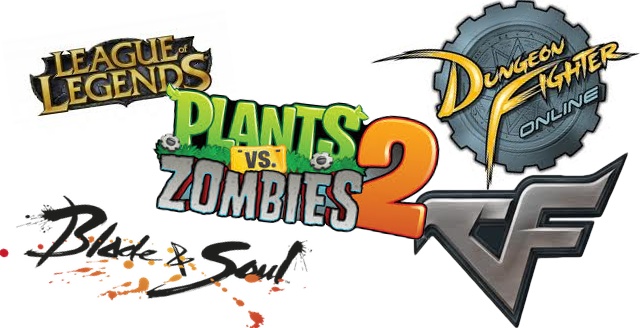
Guess what these games all have in common?
With the notable exception of Blizzard games, which are published by Netease, pretty much all of China’s most popular foreign games have some connection to Tencent.
What Tencent offers
So why are all of these companies choosing to work with Tencent, despite its sometimes-less-than-savory reputation?
- Money. Tencent has tons of it. And that means that if it thinks your game can be a hit, it has the resources for the kind of marketing push very few other companies can match.
- Users. Unlike many of China’s other big gaming companies, Tencent is a well-rounded corporation that also has a hundreds of millions of social media users across its platforms, operates massively popular web portals, and has a hand in pretty much everything you might be able to think of connected to the Chinese internet.
- Local knowledge. Love it or hate it, Tencent has been a player in China’s internet since the early days, and the company has been in gaming for years. Whatever you need done for your game in China, chances are that Tencent knows how to do it, because they’ve already done it dozens of times before.
- If you can’t beat ’em, join’em. Tencent does have a reputation for copying games (its Assault Fire was initially pretty clearly “inspired” by CrossFire, for example), and one way to try to keep Tencent from shutting your game out of the picture is to let it operate the game locally. Tencent is a formidable enemy, and even if you don’t really want it as an ally, the partnership might still be worthwhile just to ensure it doesn’t end up a competitor. (That said, Tencent will still sometimes develop its own competing games anyway).
If this all sounds like an advertisement for Tencent, it isn’t. I don’t have any stake in the company, nor do I have much love for it after spending hours fiddling with its uncooperative game clients while trying to test Tencent games (you try logging into the Blade & Soul China beta when all the text has become invisible).
But if you’re a foreign game developer looking for a China partner, as much as it pains me to say this, Tencent is probably your best bet regardless of whether your game is for mobiles or PC. It may have an unsavory reputation and it may be a behemoth near-monopoly. But that’s exactly why if you want to win, you’re going to want Tencent on your side.
Related:
Rumor: EA is shutting Beijing subsidiary and handing China work over to PopCap (UPDATED)




Stay updated on the go with our mobile app.
Get latest insights with smoother, more personalized experience through TIA mobile app.










📅 Upcoming Events
22 October 2026
Payoneer x CSPN Summit 2026