C. Custer · · 4 min read
Backpedaling: Why China’s bike-sharing startups are pulling out everywhere
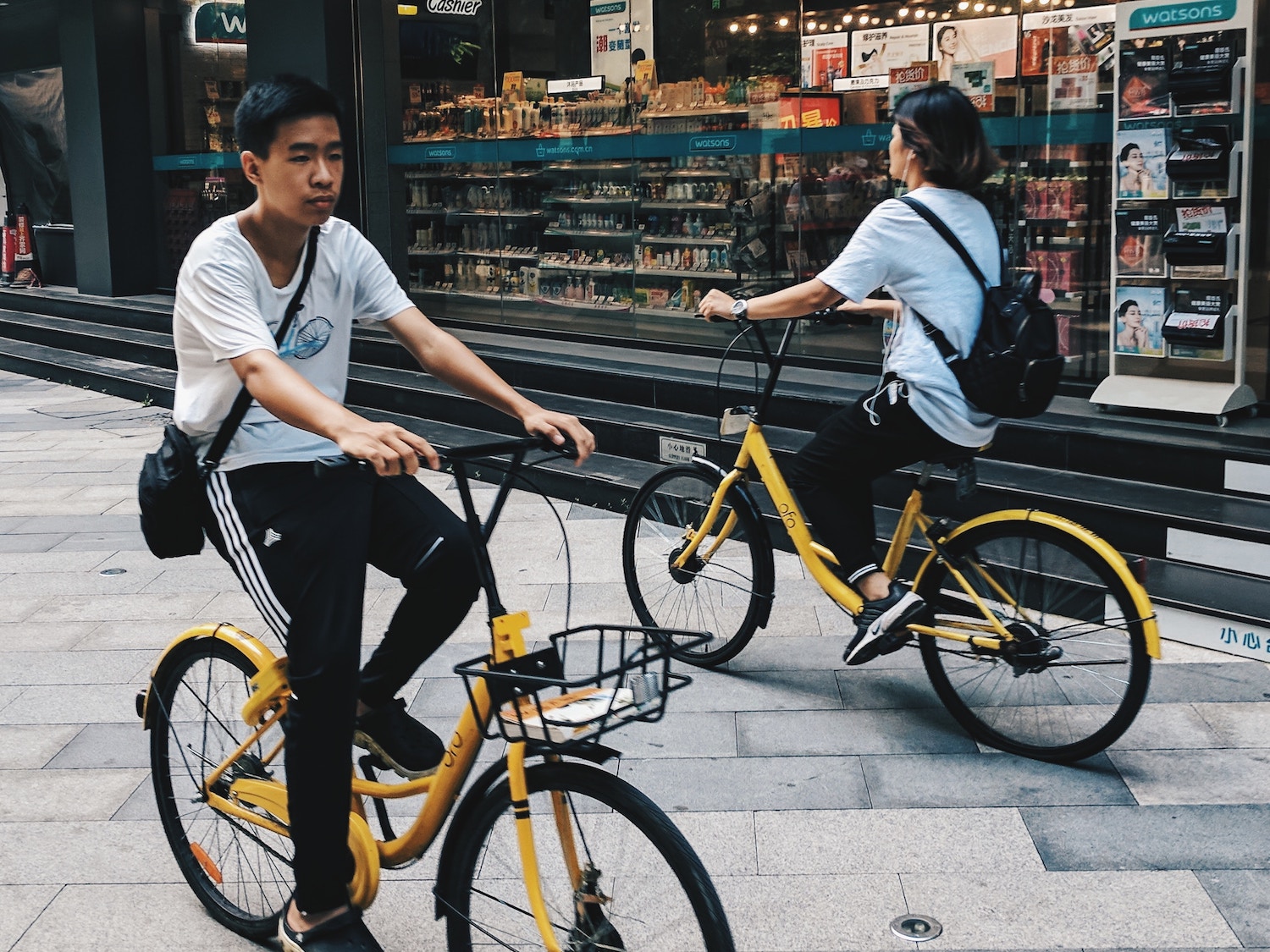
Photo credit: Jake To / Unsplash
If 2017 was the spring of hope for Chinese bike-sharing startups’ international ambitions, 2018 is their winter of despair.
The year has not been kind to Ofo, Mobike, and their ilk.
Ofo reportedly plans to quit Germany, Australia, Israel, the Czech Republic, Austria, and India, in addition to significantly scaling back in other markets like the US and the UK. It is also said to be facing difficulties in Singapore.
Mobike, too, is scaling back its plans in the US, although it claims to be expanding elsewhere. And Hong Kong’s GoBee, which had similarly made a major international push, pulled out of Europe entirely before going bust last month.
So what gives?
Costly vandalism
The dockless model makes it comparatively cheap for China’s bike-sharing startups to set up operations, but it also makes them incredibly vulnerable to theft and vandalism. In most countries, the operating company is ultimately responsible for fines related to misplaced, poorly parked, or vandalized bikes. This means that bike-sharing companies often get burned twice when their bikes are trashed on the streets: they have to spend to replace the bikes, and they have to pay local authorities the requisite fines.
After initially offering deposit-free rides, companies like Ofo eventually pivoted to requiring users to pay a security deposit. But apparently, even those fees haven’t been sufficient to cover the damage. When GoBee pulled out of France, its official notice cited “mass destruction,” adding:
“In four months, 60 percent of our fleet was destroyed, stolen or privatized, making the whole European project no longer sustainable.”
The numbers are apparently similar for other apps across international markets. Washington D.C., for example – which Ofo and Mobike both recently abandoned – has seen some dockless bike-sharing companies lose 50 percent of their fleets, according to a city official. Even the polite British apparently aren’t immune – Mobike employees in the UK told the Financial Times they have a particular problem with Manchester riders tossing their bikes into trash bins and canals.
And in this photo from social media, Mobikes litter the streets of Manchester:
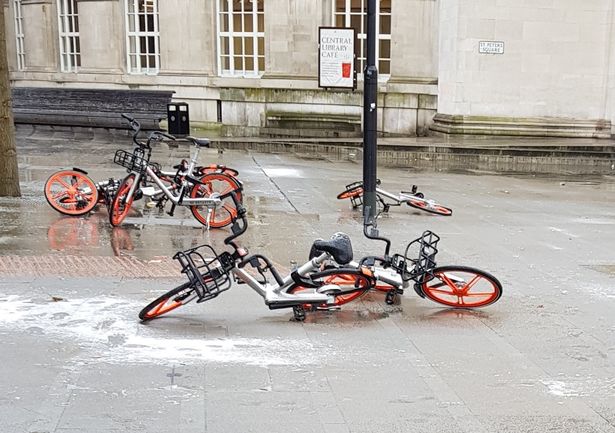
Photo credit: Olive and Andy, via Manchester Evening News
Differing urban environments
Another issue is that the international cities – particularly in the West where bike startups have set up shop – aren’t quite the same as China’s typical urban environment. For example, Western cities tend to be less densely populated and a bit more spread out, which can mean riders need more time to search for the closest available bike, and then spend longer riding on that bike. This may be a turn-off for some Western users, who’ve complained that the companies’ low-cost bikes aren’t very comfortable for longer rides.
Then there’s the fact that many Western cities don’t have the broad streets and sidewalks of modern Chinese cities. So having a bunch of bikes clumped together could become an obstacle, an eyesore, and a target for vandalism since they’re often found taking up precious sidewalk or parking space.
Financial pressure and competition





Stay updated on the go with our mobile app.
Get latest insights with smoother, more personalized experience through TIA mobile app.