When you think of Southeast Asia, what comes to mind?
The warm and humid weather all year round? The diversity of language, culture, and religion? The roar of countless motorbikes weaving through city streets?

Networking session at Tech in Asia Conference (Photo credit: Tech in Asia)
But what about the constant and exciting new innovations in the region? This dynamism extends to its digital economy: Its gross merchandise value (GMV) surged by 15% year on year to hit US$263 billion in 2024, according to the e-Conomy SEA 2024 report from Google, Temasek, and Bain & Company.
Fueled by growth in technology, manufacturing, and tourism, Southeast Asia’s economy is outperforming other regions and is projected to climb by 4.6% in 2025, according to the Asian Development Bank. It is expected to outpace even major economies like China, which is in a slowdown due to property sector issues and potential US tariff hikes.
What’s powering the key verticals propelling Southeast Asia’s economic growth? What are the investment opportunities in the region? Here’s a breakdown of what to expect.
Ecommerce
Ecommerce is a primary driver of Southeast Asia’s digital economy. The sector posted a 15% year-on-year growth from 2023 to 2024, according to the e-Conomy report.
Video commerce is sparking this boom, with this segment pushing ecommerce GMV from less than 5% in 2022 to 20% in 2024. Video is now deeply ingrained into the online shopping experience, with over 40% of shoppers relying on this medium to make purchasing decisions. Product videos that offer 360-degree views and customer testimonial videos that build credibility are also important for traditional ecommerce.
Ecommerce enablers like Philippines-based Etaily and Singapore-based AnyMind Group are playing a crucial role in the evolution of the shopping experience by providing essential support to businesses navigating the challenges of online sales. Offering services such as logistics, marketing, and data analysis to help online stores scale effectively, this segment has bagged more funding since 2024.
Fintech
Southeast Asia’s financial landscape is undergoing rapid change, fueled by increasing adoption of digital financial services. Digital payments are a key driver as e-wallets, QR code payments, and cross-border payment rails become more popular. However, fintech innovation spans a wider range of services.
Lending platforms such as Funding Societies and Amartha are expanding access to credit by providing alternative financing solutions for small and medium-sized enterprises (SMEs) and individuals. For one, Funding Societies has disbursed over US$4.2 billion across approximately 5.2 million deals across Southeast Asia as of March 2023, with a substantial portion allocated to supporting SMEs in Singapore. Meanwhile, Amartha’s latest reports show that in 2024, it disbursed over US$1.6 billion in working capital loans to more than 2.5 million businesses in Indonesia, most of which were led by women.
Cross-border payment rails like Singapore’s PayNow, Malaysia’s DuitNow, and Thailand’s PromptPay are also boosting fintech by enabling seamless intercountry transactions.

(Photo credit: Pexels)
Artificial intelligence
AI is drawing strong interest because of its potential to transform industries and stimulate economic growth. In the first half of 2024 alone, over US$30 billion in investments was committed to AI infrastructure in Southeast Asia, according to the e-Conomy SEA report. Major players like AI chipmaker Nvidia are leading the charge, reflecting the region’s rising importance in the AI landscape.
Southeast Asia offers considerable AI opportunities: Its fragmented end-layer application market has low barriers to entry, and there’s a need for more AI-ready data centers. With substantial investments in AI-related initiatives and more government support for AI development such as Singapore’s National AI strategy, Malaysia’s National Policy on Industry 4.0, and Indonesia’s AI roadmap, projections by Kearney indicate that AI could be a big contributor to regional economies by 2030.
While AI is generating plenty of excitement, its advancement depends on the semiconductor industry. Southeast Asia has long been a part of the global semiconductor supply chain, with countries like Singapore and Malaysia playing crucial roles, according to the e-Conomy SEA report.
The region’s semiconductor industry is also poised for growth, with sizable investments and government backing paving the way for future innovations. Recent developments include a partnership between Nvidia and YTL Power, a Singapore-based multi-utility provider, to build a data center in Johor, Malaysia. NXP Semiconductors has also teamed up with Vanguard International Semiconductor Corporation to construct a wafer manufacturing facility in Singapore.
Cleantech and climate tech
Climate change poses significant challenges to Southeast Asia, where millions who live in densely populated and coastal areas are affected by heat waves and floods, as well as more extreme and unpredictable weather. But the region also has huge potential in renewable energy and has seen increased investment in other sustainable technologies and solutions aimed at mitigating climate change.
That said, Southeast Asia’s net zero ambition lags behind its green transition progress. Balancing net zero goals with economic growth is tough, and constraints like geographical mismatches in renewables, limited carbon incentives, and financing shortfalls can also get in the way. The region needs an estimated US$1.5 trillion by 2030, but dedicated green investments since 2021 have only reached US$45 billion.
Southeast Asian startups are addressing environmental problems across sectors like carbon accounting, renewables, electric vehicles, and recycling, and have achieved some success, Some examples include Singapore-based carbon accounting firm Zuno Carbon; Vietnamese EV maker VinFast, and Indonesian e-motorbike companies Alva and Maka Motors.
Considerations for investors
Southeast Asia isn’t just a collection of different markets anymore; it’s a dynamic, constantly changing landscape. Hyperlocalized microtrends are blowing up alongside pan-regional digital ecosystems, creating a fascinating tension. Governments are now competing for investment through agile regulatory shifts, turning policy into a strategic pitch. Investors need to decode trends and understand evolving regulatory landscapes because the region is rewriting its playbook.
Investors interested in the region should keep these factors in mind:
- Shifting conditions: The rapid evolution of Southeast Asia’s business and tech scene requires investors to remain adaptable and informed about market trends, emerging technologies, and consumer preferences. Investors must be prepared to adjust their strategies to capitalize on new opportunities and counter potential risks.
- Focus on sustainable growth: There’s more emphasis on achieving sustainable profitability, which influences business strategies and investment considerations. Investors are increasingly prioritizing companies that demonstrate a commitment to long-term value creation and responsible business practices.
- Regulatory environment: Investors must navigate diverse regulatory environments across different countries. Governments in the region are realizing they need strong policies to attract private investment, particularly in areas like clean energy.

Industry events and forums are valuable resources to gain deeper insights into economic trends and investment opportunities in Southeast Asia. Want to make waves in the region? Platforms like the Asia Economic Summit (AES) are where you need to be.
Forget passive presentations – AES is a gathering of global leaders in business, tech, and policy, all driven to shape the region’s economic future. This event will feature three segments: Tech for Transformation, Policies for Progress, and Investing for Innovation.
AES is also your chance to hear from the brightest minds in the region. Key speakers include:
- Adrianto Djokosoetono – CEO, PT Blue Bird Tbk
- Jixun Foo – Senior managing partner, Granite Asia
- Aaron Tan – CEO, Carro
- Tessa Wijaya – Co-founder and group COO, Xendit
If you’re ready for high-impact networking, knowledge exchange, and partnership opportunities, then be part of the first AES on June 26 in Jakarta, Indonesia. Register for the summit here.
Stay updated on the go with our mobile app.
Get latest insights with smoother, more personalized experience through TIA mobile app.
Recommended reads
 Tracking AI hiring in Singapore: OpenAI, Anthropic, and more
 Last to board: why travel may be AI’s final frontier
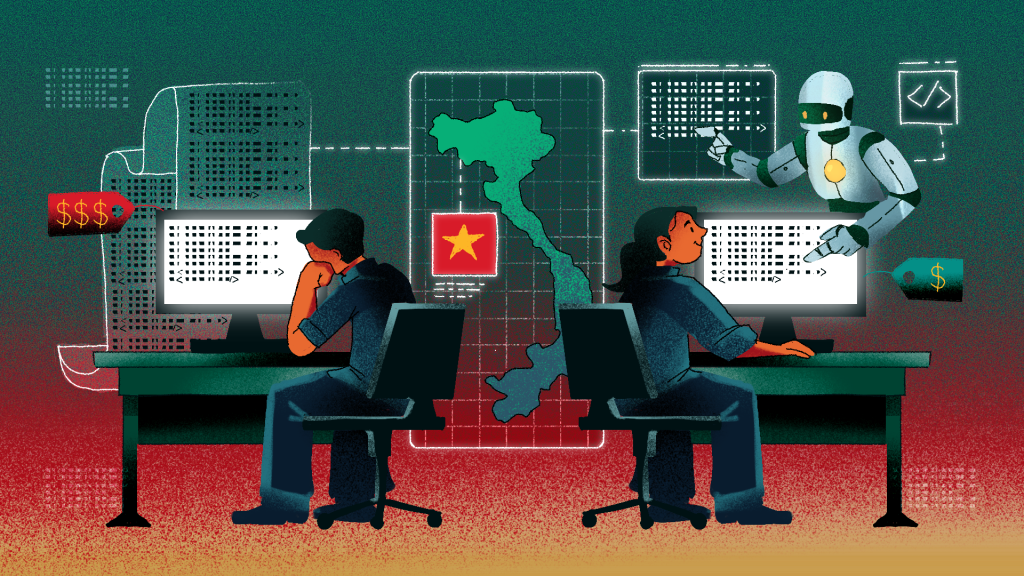 Why ‘cheaper’ no longer wins dev deals for Vietnam
 Alibaba’s capex isn’t the full story
 Forget startups. Buy the business running on Excel
 Life’s a game, and AI agents are Animoca’s new play
 Indonesian AI startup goes global
 Forrest Li on scaling Sea, building smarter bots, and founder grit
 An AI assistant that joins sales calls and scores team skills
 Beyond the check: Why VCs need more than capital





Editing by Winston Zhang and Eileen C. Ang
(And yes, we’re serious about ethics and transparency. More information here.)







📅 Upcoming Events
22 October 2026
Payoneer x CSPN Summit 2026