- Premium Content It takes our newsroom weeks - if not months - to investigate and produce stories for our premium content. You can’t find them anywhere else.
 Nikita Puri · · 10 min read
Behind Ula’s striking takeoff in Indonesia
For much of the 17 years that Bu Diana has been in business, she’s had to find someone to man the shop while she steps out to restock her warung, the traditional family-owned convenience stores popular in Indonesia.
The main retailer she used to rely on was five kilometers away from where she works in Surabaya, Indonesia. Stepping out without finding someone to take her spot was always a gamble: She could lose business while she was away. But things have changed since she signed up with Ula, a startup helping to digitalize Indonesia’s offline retail market.
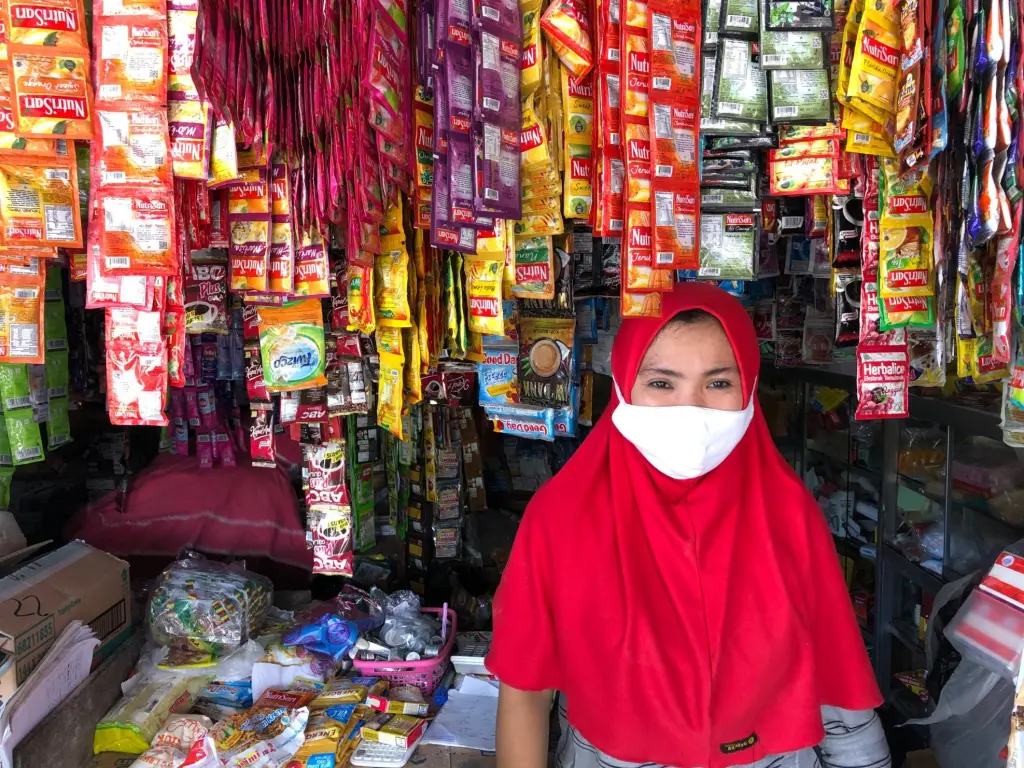
Store owner Bu Diana in Surabaya, Indonesia / Photo credit: Ula
“I don’t have to close my store if I need to replenish stocks. I don’t have to worry about fuel in the car while driving to the wholesaler or loading up supplies by myself. I don’t have to go to crowded marketplaces in the pandemic either,” she says.
Ula delivers what she needs to the shop, which is a convenience Diana has come to depend on: She orders from Ula two to three times a week.
According to a 2019 Redseer report, there are well over 5 million warungs in Indonesia, and 3 million of them are permanent like Diana’s.
Ula is perhaps the youngest entrant in the business-to-business ecommerce space in the country, having been launched in January 2020, shortly before lockdowns disrupted supply chain systems.
See also: The key players in Indonesia’s ecommerce industry
The quiet rise of the company is noteworthy. When it was five months old, Ula raised US$10.5 million in a round led by Sequoia India and Lightspeed India. This January, it raised US$20 million in a funding round led by Quona Capital and B Capital Group, with participation from its existing investors.
Battle-hardened
According to a 2018 Nielsen report, sales in the fast-moving consumer goods (FMCG) sector in Indonesia alone reached 700 trillion rupiah (US$47.5 billion), with warungs facilitating around 72% of those transactions.
A fair number of companies have already been working to digitalize Indonesia’s neighborhood stores, including Bukalapak, Warung Pintar, GrabKios, and Sequoia-backed GudangAda.
But Nipun Mehra, co-founder and CEO at Ula, seems unfazed by the competition. “I’ve seen the mother of all competitions with Amazon and Flipkart. I am battle-hardened,” says Mehra, laughing. He previously worked with both these ecommerce giants too.
Significantly, it is the archipelago’s untapped market that gives Ula’s founders confidence.
Mehra says Indonesia’s retail market is worth about US$300 billion. While reports vary around exact figures, Redseer’s estimates put this at US$377 billion. “If you think about all the players working collectively in the B2B space in Indonesia, they still don’t even constitute 1% of that market,” says Mehra.
The tortoise that won the rabbit race
A full checkout cart
Stay ahead in Asia’s tech landscape
This is premium content. Subscribe to read the full story.
A remarkably untapped ecommerce market gives young startup Ula the confidence to adopt a time-consuming approach to build a base in Indonesia.
We know this is not ideal. ⌛ Sign up in 20 seconds. Cancel anytime.
Our subscriber community includes professionals from these companies:





Stay updated on the go with our mobile app.
Get latest insights with smoother, more personalized experience through TIA mobile app.