- Premium Content It takes our newsroom weeks - if not months - to investigate and produce stories for our premium content. You can’t find them anywhere else.
 Emmanuel Samarathisa · · 7 min read
Can Carsome break even in 2023?
This year has been bittersweet for Carsome.
The Malaysian unicorn kicked off 2022 by raising US$290 million in a series E round, increasing its valuation to about US$1.7 billion. It was also a magnet for talent, having beefed up its workforce with employees that came from the likes of Capital A and MyTukar, the Malaysian arm of rival Carro.
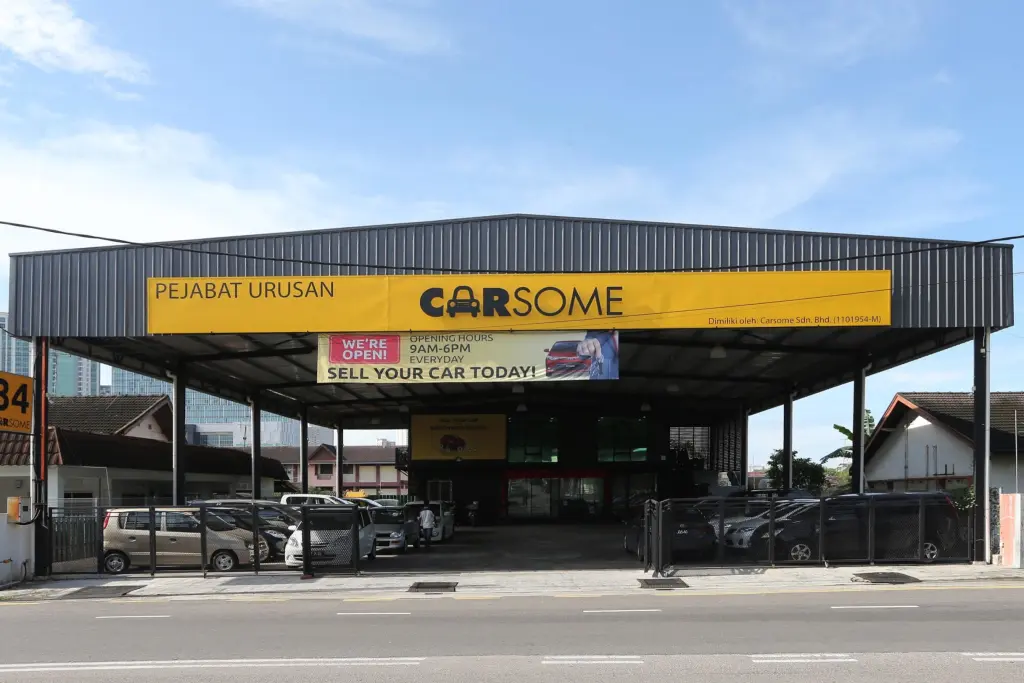
Photo credit: Carsome
Carsome, however, had to also shelve its dual-listing plans in Singapore and the US that were set for this year, Bloomberg reported in June.
Despite its war chest – our estimates show that Carsome has a three-year runway – the company ultimately had to lay off staff at the end of September. Its leadership team is also forgoing pay until the end of the year.
External headwinds, both at home and abroad, have been a thorn on the side of many ambitious tech companies this year. Carsome will not be an exemption, Kuala Lumpur-based investors tell Tech in Asia, saying that the current political change in Malaysia as well as the possibility of a global economic recession will be its stumbling blocks.
Carsome CEO Eric Cheng, however, tells us in an interview that the company will be on track to break even in 2023. By deciding to make tough cost-cutting decisions early, he says “we can go toward profitability in a much closer time frame.”
According to Cheng, the job cuts touched all departments but did not affect “a big part of the workforce.” He estimates that “less than 5%” were laid off and that Carsome still has 4,000 staff.
The focus now, he says, is to work on the company’s “accelerated profitability plan,” a road map that’ll guide Carsome to hit its goal.
And Cheng is banking on the company’s “tech stack” to bring it to the black.
Of thin margins
Carsome’s main business is the buying and selling of used cars, and it’s one of several players tackling this space in Southeast Asia.
We discovered that if marketplaces like Carsome or its closest rival Carro could acquire just 15% of Southeast Asia’s growing used-car market, they could generate a revenue of a little more than US$7 billion – multiple times larger than what these players are making today.
Covid-19 has not muted growth for Carsome and Carro either. Both platforms posted new revenue records amid the pandemic, while also providing a lifeline to used-car dealers, such as those in Kuala Lumpur.
Indeed, Carsome’s revenue for the financial year ending December 31, 2021 doubled to US$656 million compared to the previous year.
Carsome’s golden goose
The “transactional platform” for the underserved
Keeping burn rate low to hit profitability
Stay ahead in Asia’s tech landscape
This is premium content. Subscribe to read the full story.
The used-car platform plans to go back into the black after an eventful 2022.
We know this is not ideal. ⌛ Sign up in 20 seconds. Cancel anytime.
Our subscriber community includes professionals from these companies:





Stay updated on the go with our mobile app.
Get latest insights with smoother, more personalized experience through TIA mobile app.











📅 Upcoming Events
22 October 2026
Payoneer x CSPN Summit 2026