Gustavo Fidel Uy · · 7 min read
6 Singapore social media stats marketers should know
This article is brought to you by Studios, Tech in Asia’s new advertising arm which provides integrated media, marketing, events, and design solutions to help brands expand their reach in the tech ecosystem. Get in touch with us at studios[at]techinasia[dot]com for your tailored business solutions.
You can also sign up for our Studios bi-weekly newsletter to get the scoop on the latest trends in marketing, sales, tech and more.
In a country where almost everyone has access to the Internet, it’s no surprise social media plays such a vital role in the average Singaporean’s purchasing habits and decisions. With a population of 5.83 million people and 4.92 million internet users, Singapore has one of the highest internet penetration rates (84 percent) in the world, according to We Are Social and Hootsuite’s Digital in 2019 Singapore report.
Of that number, 4.6 million are active social media users and 4.2 million are active on mobile, representing 79 percent and 72 percent of Singapore’s total population, respectively.
The country also ranks fourth in terms of global social media penetration, next to the U.A.E., Taiwan, and South Korea.
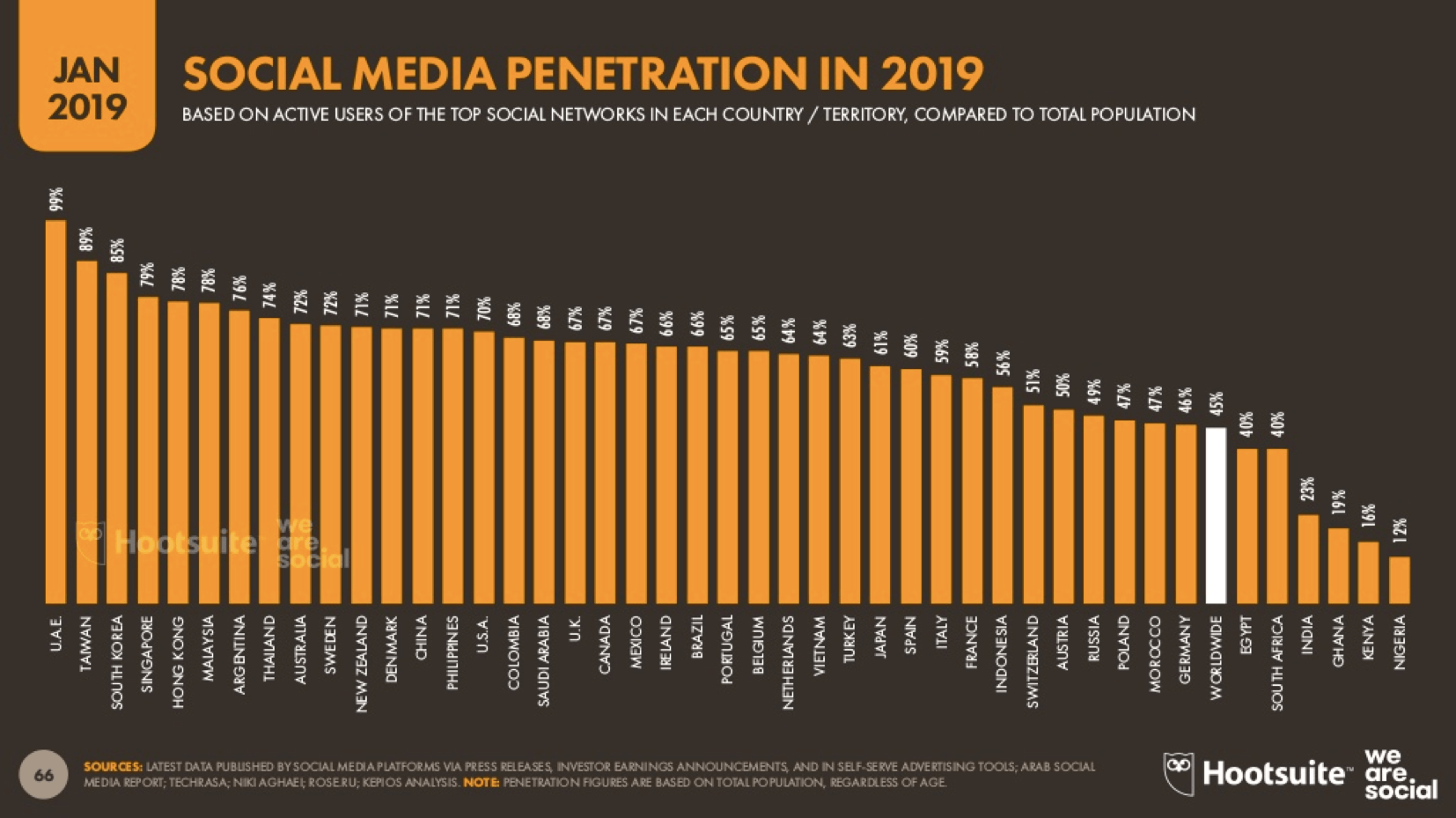
Source: Hootsuite and We Are Social
Unsurprisingly, Singapore’s high ratio of active social media users to its population leads to some interesting figures about the country’s social media habits that marketers should know in 2019.
We go over six of these stats below.
1. To no one’s surprise, Singapore’s millennials dominate social media
While Hootsuite and We Are Social’s report reveals that the amount of time (two hours, eight minutes) Singaporeans spend on social media is roughly on par with the global average of two hours and 16 minutes, the majority of this activity is dominated by millennials or individuals between the ages of 23 and 38 in 2019.
What this means for marketers: With millennials currently making up the majority of the Asia-Pacifc workforce, marketers need to adapt their social media marketing activities to this consumer group.
For starters, millennials tend to distrust online ads and put more stock in reviews, making it important to make customer reviews and user-generated content (UGC) visible on your social media pages.
Another reason to encourage UGC is to tap into the desire of millennials to belong to a group, a company, or in this case, a brand. Mothercare leverages this desire by calling on their Instagram followers to tag them with the brand’s hashtag to be featured on their feed.
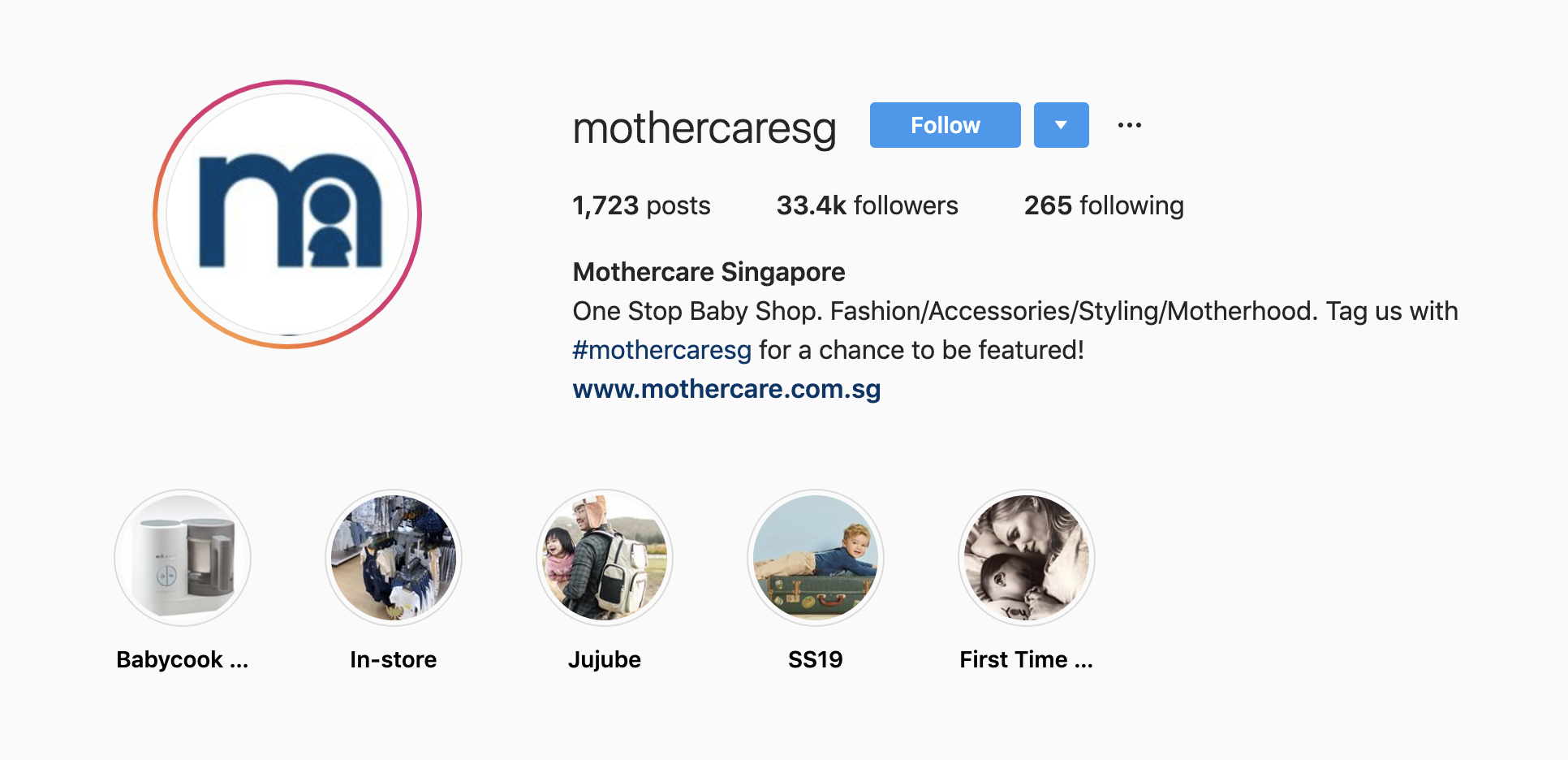
Source: Mothercare SG
Marketers should also keep an eye on Generation Z, the cohort born after millennials and whose participation in social media is growing. While sharing many of the same characteristics of millennials, Gen Z consumers require a mobile-first marketing approach, as this generation grew up accessing the internet through smartphones and tablets.
2. The most active social media networks in the country are YouTube, Facebook, Instagram, and Twitter
Singapore’s top social media platform is YouTube, followed closely by Facebook. Meanwhile, Instagram and Twitter trail behind at the third and fourth spot.
Statistics from Google, App Annie, and Kantar TNS also show that 82 percent of all internet users in Singapore access YouTube each month.
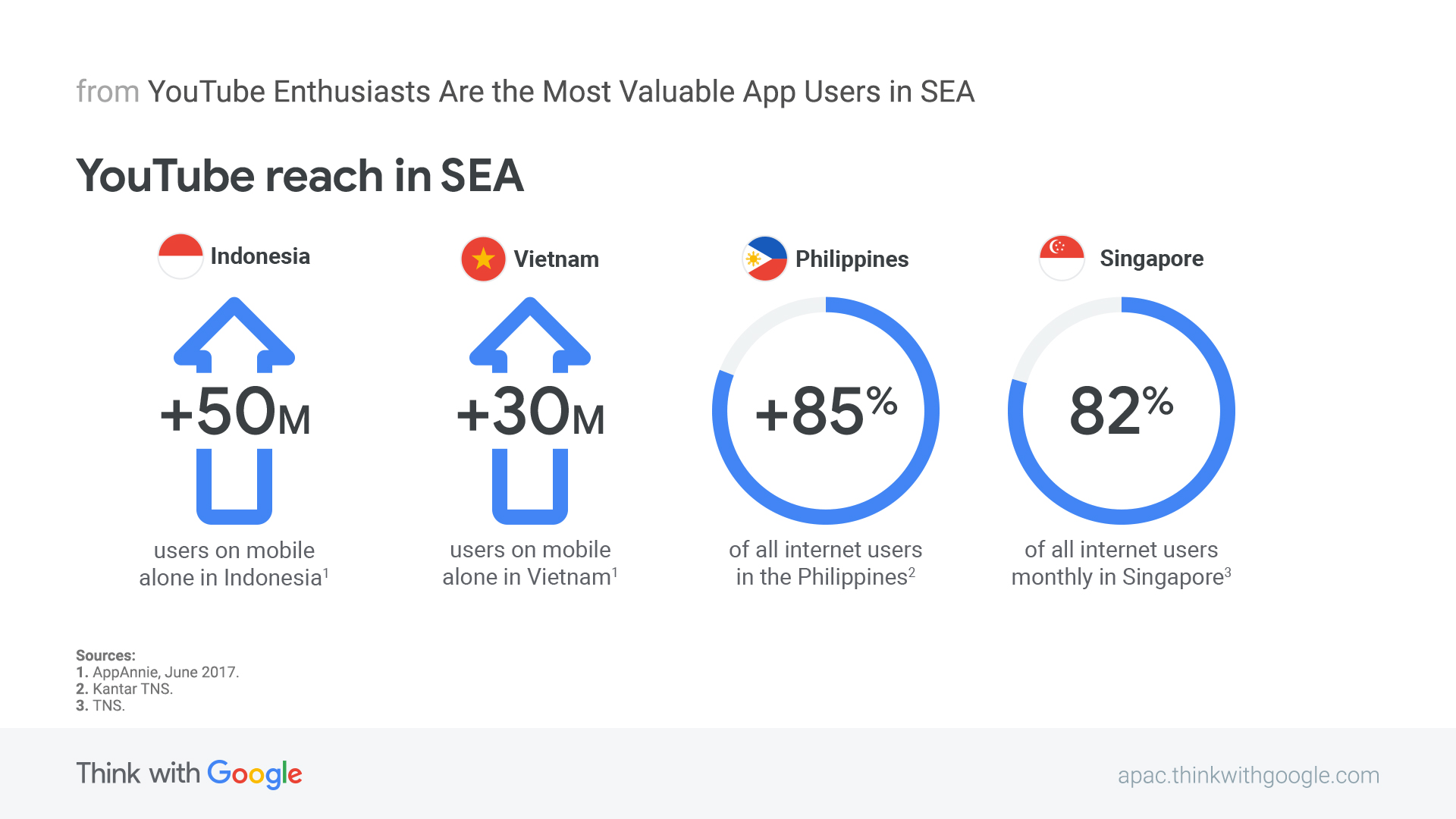
Source: Think with Google
What this means for marketers: As we discussed in a previous article, video content is the future of social media. With 68 percent of internet users in Singapore watching online video every day, ignoring video content could place you at a disadvantage.
A number of brands in Singapore are catching on. For its 50th anniversary, POSB launched a series of Trueview videos to reach out to millennials with the message of “Kampong spirit.”
The campaign also encouraged young Singaporeans to submit their community stories on YouTube, tapping into the power of UGC once more. The campaign led to a 128 percent increase in local search queries for POSB keywords and a twelve-fold increase in YouTube subscribers.
3. 4.3 million Facebook users in Singapore are reached by ads
In 2018, we learned that Singapore had 4.8 million Facebook users (up by 9 percent from 2017), with 90 percent accessing the social network on mobile.
For 2019, however, Hootsuite and We Are Social focused on identifying the number of users Facebook says can be reached by ads. In Singapore, that’s around 4.3 million people.
What this means for marketers: Buffer’s State of Social 2018 Report shows the overwhelming majority (94 percent) of businesses on Facebook have invested in paid ads or sponsored posts at some point. Clearly, it‘s a saturated market out there.
However, the same report notes that only 20 percent of marketers have used messaging apps for marketing. DBS is one of the few companies in Singapore to use Facebook Messenger successfully, leveraging chatbots to process orders for their partner F&B merchants, leading to a 20 percent increase in sales without additional staff.
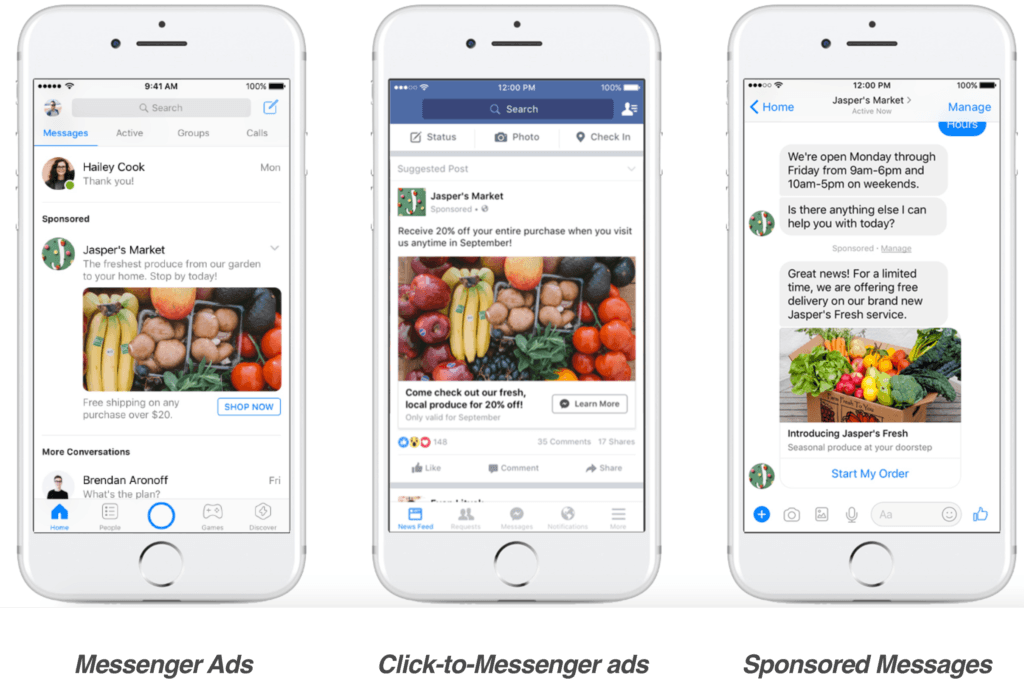
Source: Facebook
The potential for Messenger marketing is huge. As Mark Zuckerberg himself notes, “Messaging is one of the few things that people do more than social networking.”
Options such as sponsored ads also shorten the buyer’s journey, retargeting ads to users who are taking the time to chat with you on Messenger, making them more likely to make a purchase decision.
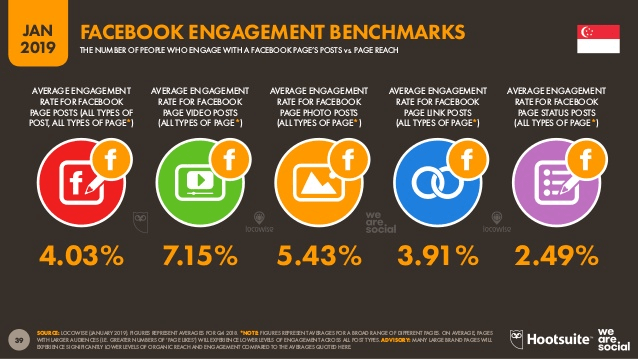
4. Photos and videos get the highest engagement on Facebook
Source: Hootsuite and We Are Social
This year, video content finally overtook the engagement rate of photo posts on Facebook, generating an average engagement rate of 7.15 percent. That’s slightly higher than the global Facebook video engagement rate of 6.03 percent, and an increase from 4.43 percent in the previous year.
What this means for marketers: Rising video engagement rates are another sign of the medium’s growing importance for Facebook. The social network giant has made no secret of the fact that it intends to give video play a more visible role, whether it’s through live streaming or Messenger Stories.
5. The most popular social messaging services are WhatsApp, Messenger, Skype, WeChat, and LINE
WhatsApp takes the lion’s share (87 percent) of Singapore’s social messaging market, followed by Facebook Messenger at 52 percent. WeChat’s user base grew by 9 percent from the previous year, while both Skype and LINE’s respective market share remains unchanged.
App Annie’s State of Mobile in 2019 report also confirms WhatsApp as the most used and downloaded app in Singapore.
What this means for marketers: WhatsApp holds tremendous potential as a customer engagement and retention tool, especially for ecommerce companies. According to insights from Facebook, 53 percent of consumers are more likely to shop with a business they can reach through chat.
The fastest way to leverage WhatsApp is to sign up for WhatsApp Business, which automatically gives you a profile, ability to make quickly respond to inquiries, and get message insights.
6. Instagram and Snapchat see a dip in ad reach
Ad reach on both Instagram and Snapchat fell by 4.3 percent and 21 percent, respectively. For Instagram, this may simply be a blip on the radar as the app still commands 82 percent of all social media activity in Singapore.
Furthermore, Instagram was the only social media app other than Facebook to make it on App Annie’s top 10 apps with the most number of monthly active users in Singapore.
On the other hand, Snapchat’s decline in ad reach is consistent with the global trend of users leaving the app after a botched redesign and Instagram rolling out the same features (i.e. ephemeral stories) that once made Snapchat unique.
What this means for marketers: Given Instagram’s popularity with millennials, it’s no surprise why it’s the preferred social media platform for influencer marketing. And while some marketers may dismiss it as a fad, even the Singapore government sees its value, engaging local influencers to talk about Budget 2018.

Source: The Straits Times
Social media trends to watch out for
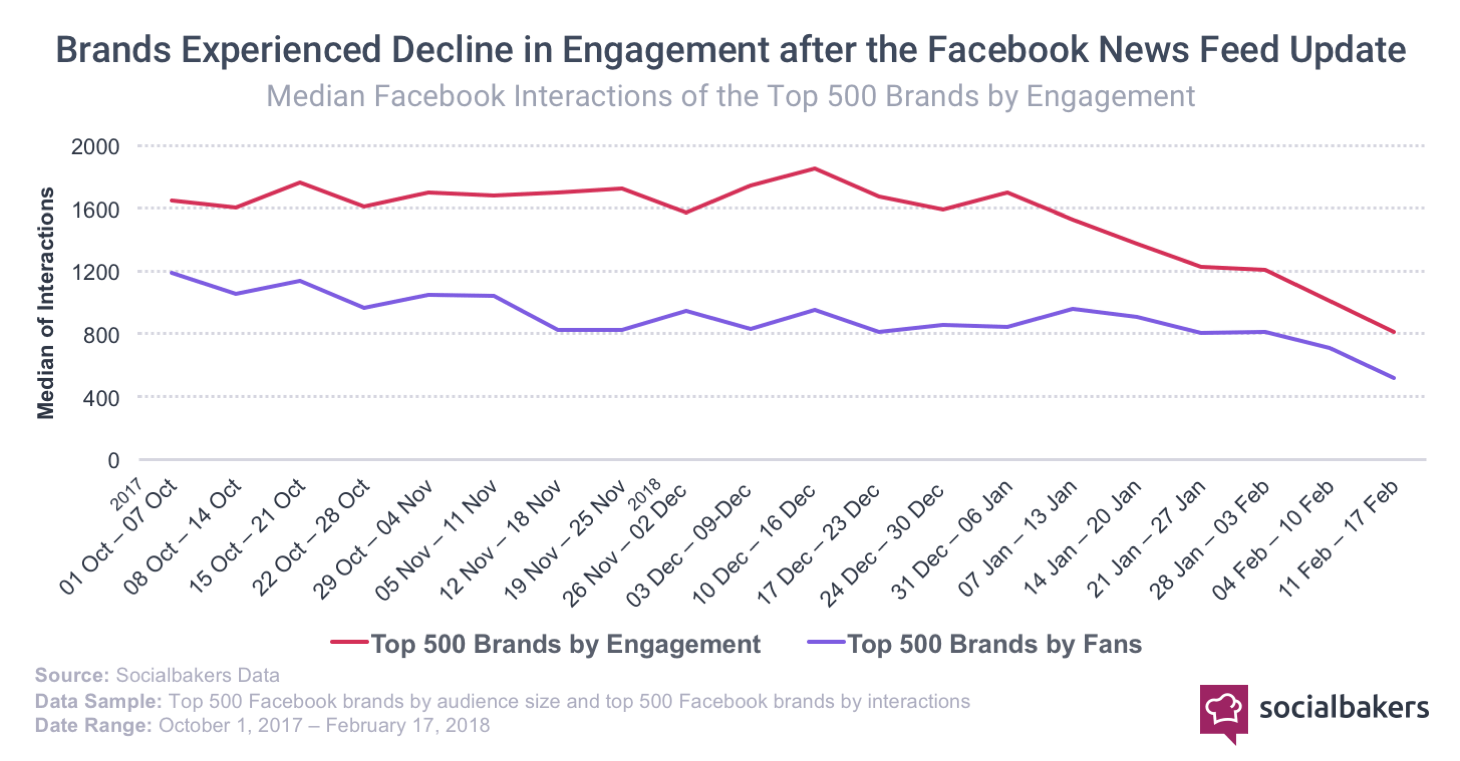
In 2018, we saw organic reach decline in Facebook after changes were made to the News Feed, forcing businesses to pay for post visibility (i.e. boosting). We can expect this trend to continue in 2019, which will require marketers to come up with more meaningful social media content that can be promoted judiciously.
Source: Social Bakers
As mentioned earlier, marketers can expect video to continue to play a vital role in social media. Buffer’s State of Social 2019 report already shows that roughly 37 percent of businesses publish video content monthly.
And with the launch of social media TV platforms like Instagram TV (IGTV) and Facebook Watch in 2018, we can expect more brands to take advantage of these personalized video-on-demand channels this year.
Buffer’s report revealed that only 12.2 percent of businesses are using IGTV, suggesting that brands are probably still figuring out how to use these platforms.
Like any other digital marketing channel, social media is constantly evolving. What doesn’t change, however, is the need to craft personalized messages for clearly defined audiences and using content to engage them.
To gain insights into the latest happenings across tech, marketing, sales and more, sign up for our Studios’ bi-weekly newsletter.
Stay updated on the go with our mobile app.
Get latest insights with smoother, more personalized experience through TIA mobile app.
Recommended reads
 Animoca co-leads $1.75m round of IreneDAO creator
 Will virtual humans replace ‘real’ influencers, models, and more?
 WhatsApp could be incubating the region’s next billion-dollar startup
 The important and unseen role that content delivery networks play in our daily lives
 High-voltage drama in the world’s fastest-growing video-streaming market
 Breaking down WhatsApp and Facebook’s super-app ambitions
 Gojek to take on GrabAds with the launch of digital ads solution GoScreen
 Hooq’s CEO shares his side of the story for the first time
 Gojek-backed audio firm plays cashy tune
 UMG IdeaLab pours seed money into Indonesian influencer marketing platform





Editing by Cheong Hui Min and Lim Jia Xin
(And yes, we’re serious about ethics and transparency. More information here.)