 Daniel Tay · · 4 min read
Hackathon success stories are rare, but here are two startups that broke the mould
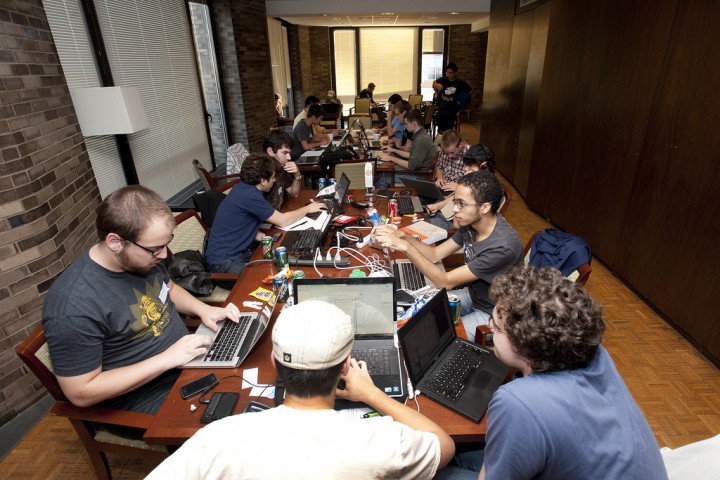
The utility of hackathons is one of those issues that will never be conclusively agreed upon. Both camps have their own set of arguments. While the pro-hackathon camp point to the hype and excitement that have been built up in tech communities as a result of these events, the opposition usually goes: so what?
If anything, it certainly is true that very few hackathons actually yield successful startups – such stories are a dime a dozen. A quick search on Quora brings up the question, “What are some successful startups that were born out of a hackathon?” Rather tellingly, there was just one lonely answer.
Still, factors such as good follow-through by the organizing committee, and experienced, hands-on mentors, can make all the difference. Case in point: mobile marketplace app Carousell and taxi app EasyTaxi were both born from hackathons – specifically, Startup Weekend, albeit on different continents.
Some hustle required
Like many people who attend hackathons today, EasyTaxi’s co-founder Tallis Gomes went in with an idea in mind. His intention: to create a bus monitoring application. After waiting for a taxi for half an hour on a rainy night, however, he decided to forgo the idea and focus on creating a taxi booking app at Startup Weekend 2011 in Rio de Janeiro instead.
According to Dennis Wang, CEO and co-founder of EasyTaxi, the greatest value they got out of the event was from the people Gomes had met there. In fact, he chanced upon two of their founding members at the hackathon, and was even personally mentored by the very capable Dave McClure from 500 Startups.
Another important advantage Gomes gained from attending the event was being able to validate their product. “Hackathons are great environments for ideas, and you have people you can bounce ideas off,” Wang says. “You get to meet like-minded entrepreneurs who can introduce you to potential investors, offer you tips and advice, and give feedback. The advantage is you get a gauge of how marketable your idea is right off the bat.”
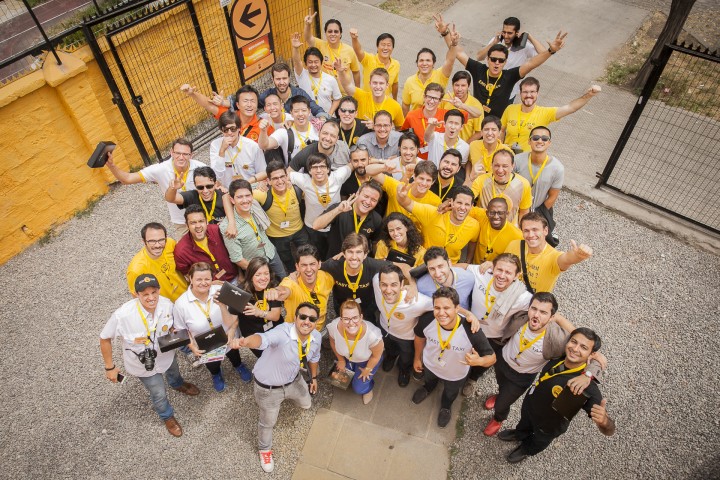
And marketable it was. The team ended up winning Startup Weekend Rio 2011, IBM SmartCamp Brazil 2011, Startup Farm RIO 2011, and TNW Brazil Awards in quick succession. But winning these accolades wasn’t enough to turn the idea into reality. Money was still a matter of concern for Gomes, and he had to hustle to make things happen.
“To raise funds, Gomes sold his car to bankroll the day-to-day operations. He also recruited the company’s first drivers at a gas station and used his own savings to purchase smartphones for them,” Wang says.
A year later, the app was launched in Rio de Janeiro, and the rest is history.
Intense pressure to perform
Things were slightly different for the Carousell team. Unlike Gomes, Carousell co-founders Lucas Ngoo and Quek Siu Rui joined Singapore’s Startup Weekend in 2012 simply for the sake of hacking “a fun project that could solve a meaningful problem”. This was the first hackathon they had ever attended, and Quek describes as it as “intense.”
Like Gomes, though, Quek found that they were able to receive validation for their product on the spot, which gave them the confidence to pursue the idea even after the event was over. “During the hackathon, we realised the problem we were trying to solve resonated with people,” he recalls.
“We collected a few hundred emails from our landing page, and we even received tweets asking if they could download the app right away. That gave us confidence to take the idea forward, put together a team, and take the plunge to do this full time.”
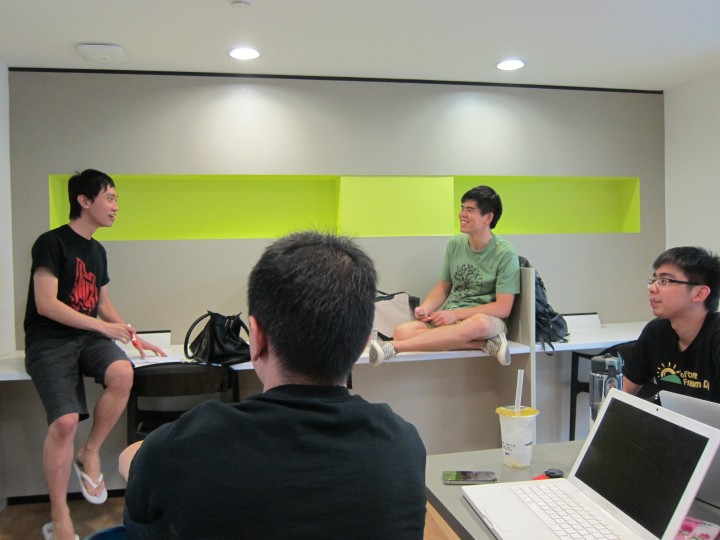
From left to right: co-founders Lucas Ngoo and Quek Siu Rui, and lead engineer Victor Neo at Startup Weekend
To Quek, the hackathon environment played a huge part in their rapid progress. “It forces you to think of the simplest prototype you can build to communicate your value proposition for validation,” he explains. “Even with the simplest prototype, we had to stay up all night on Saturday at the hackathon to complete the demo.”
Their demo must have been something special, because the team ended up winning Startup Weekend Singapore 2012. Spurred on by the positive reception, things started to fall in place very quickly for them.
“NUS (National University of Singapore) was also one of the organizers, since Startup Weekend was organised by the alumni of NUS Overseas College, [so] we had the support of NUS Enterprise through a S$7,000 (US$5,600) Venture Ideation Grant, and free office space at Plug-in@blk71,” Quek says.
Quek considers themselves fortunate to have been able to validate their product idea at Startup Weekend. “The downside [of such events] is that the hackathon audience and judges may not really be your target audience, and if you don’t get the validation you need, it may prematurely kill the idea,” he explains. “So ultimately, founders need to be really passionate about the problem they are solving, and stick to it regardless.”

Stay updated on the go with our mobile app.
Get latest insights with smoother, more personalized experience through TIA mobile app.
Recommended reads
 Cake DeFi shines while firms crumble amid crypto winter
 The most active investors in Vietnam’s startups
 Can Sociolla’s supporting features take center stage?
 Get face time with investors and speakers at the TIA Conference 2020
 Tech in Asia Conference 2020 Virtual by the numbers (INFOGRAPHIC)
 [TIA Conference Luncheon] Building customer journeys that scale
 These companies are ready to connect with you at the Tech in Asia Conference 2020 Virtual
 Get 18% off on tickets to our upcoming Saigon Summit
 OJK’s draft regulations may kill innovation; ShopeePay hits reeling rivals
 Founders, we’re looking for more potential ESG unicorns





Editing by Paul Bischoff and Terence Lee, top image by hackNY.org
(And yes, we’re serious about ethics and transparency. More information here.)




