 Li Tao · · 3 min read
In China, you’ll soon be able to pay your subway fare with your face
China has led the world in adoption of smartphone-based mobile payments, reaching the point where its central bank had to remind merchants not to discriminate against cash. And the next phase of development may be to pay with your face.
In Shenzhen, the local subway operator is testing various advanced technologies backed by the ultra-fast 5G network, including facial-recognition ticketing.
At Futian station, instead of presenting a ticket or scanning a QR bar code on their smartphones, commuters can scan their faces on a tablet-sized screen mounted on the entrance gate and have the fare automatically deducted from their linked accounts.
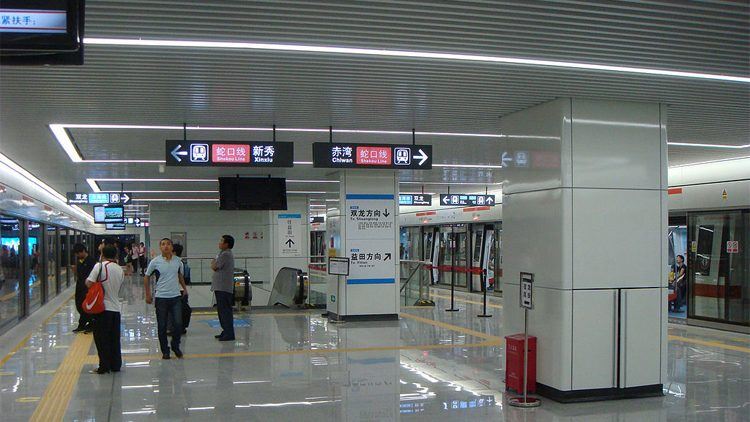
Shenzhen Metro’s Futian station in China / Photo credit: DeBit via Wikipedia
Currently in a trial mode, the facial-recognition ticketing service could in future help improve the efficiency of handling the up to 5 million rides per day on the city’s subway network. Shenzhen Metro, however, did not elaborate when it will roll out the facial payment service.
The introduction of facial recognition and payment services to the public transit system marks another step by China toward integrating facial recognition and other AI-based technology into everyday life in the world’s most populous nation.
Consumers can already pay for fried chicken at KFC in China with its “Smile to Pay” facial recognition system, first introduced at an outlet in Hangzhou in January 2017.
“To use facial ticketing in the future, passengers will also need pre-registration of their facial information and link their payment methods to their accounts, just like them making payments at the KFC restaurant,” said a staff member at Futian station’s demonstration area in Shenzhen.
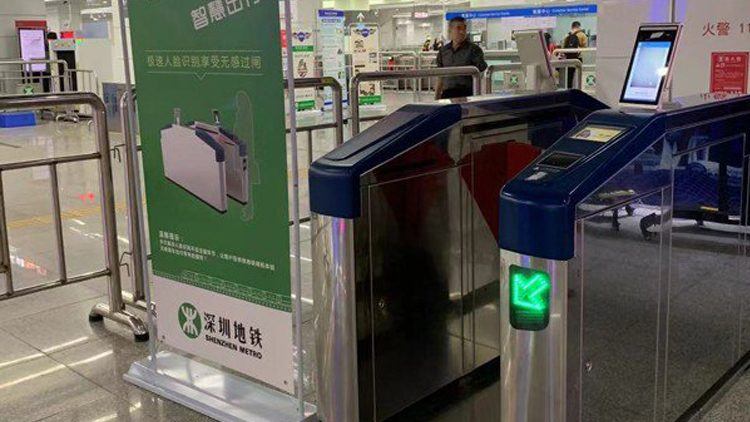
Facial recognition gates at Shenzhen Metro’s Futian station / Photo credit: South China Morning Post
Chinese cities are among the most digitally savvy and cashless in the world, with about 583 million people using their smartphones to make payments in the country last year, according to the China Internet Network Information Center. Nearly 68 percent of China’s internet users used a mobile wallet for their offline payments.
Major Chinese cities like Beijing and Shanghai are using artificial intelligence and facial recognition to regulate traffic and identify drivers who violate road rules. In Shenzhen, traffic police also began displaying photos of jaywalkers on large LED screens at major intersections starting in April 2017.
Passers-by at the demonstration area in Futian station will see their information displayed on a big screen, including their facial photos captured by surveillance cameras, their gender, age, and the length of stay in the area.
The 5G-backed AI technologies were developed by an innovation laboratory backed by the metro operator and Huawei Technologies, according to Shenzhen Metro.





Stay updated on the go with our mobile app.
Get latest insights with smoother, more personalized experience through TIA mobile app.











📅 Upcoming Events
22 October 2026
Payoneer x CSPN Summit 2026