 Rita Liao · · 6 min read
For Xiaomi, the real money is not in gadgets

Xiaomi’s bus stop advertisement in Shenzhen: “Technology on one facet, art on the other.” / Image credit: Tech in Asia
It’s official. Chinese behemoth Xiaomi has applied to sell its shares on the Hong Kong Stock Exchange, seeking to raise US$10 billion at a valuation of US$100 billion.
That would make the eight-year-old firm China’s third-most valuable technology company, trailing behind leader Alibaba and second-placer Tencent, as of this writing.
Xiaomi has long been known for its affordable handsets, but it’s not really banking on them – and connected devices in general – to make money. Company CEO and founder Lei Jun describes the firm’s business model as a “triathlon”, where it invests in companies producing hardware and devices, sells the products through its online and offline stores, and offers services for product users on the internet.
The internet services, according to the hardware giant’s playbook, will drive the bulk of its revenues down the road.
Not your average hardware company
From inception, Xiaomi has prided itself on offering “value for price.” Now it’s making good on that promise – indefinitely.
In late April, Lei announced that the company would put a five percent net profit margin cap on its hardware products, including smartphones and gadgets like hoverboards and air purifiers.
Although it’s low, the single-digit figure is “above average in China’s hardware industry,” Alex Huang, Asia-Pacific chairman of Segway-Ninebot, tells Tech in Asia. Huang’s company makes hoverboards for Xiaomi and is a top player in its field after acquiring its American counterpart three years ago.
Henry Chang, senior marketing manager at Xiaomi’s smart-home device manufacturer, Lumi United Technology, has the same view. “Hitting a five percent margin is difficult for Chinese hardware companies.”
In other words, selling hardware isn’t that lucrative in China.
Zooming in on smartphones, Xiaomi is dwarfed by its rivals – both locally and globally. While the company earns a meager US$2 in profit for every phone shipped, according to data collected by Counterpoint Research, its Chinese peers Vivo and Oppo – which also focus on affordable smartphones – earn about seven times that. For further comparison, Apple’s profit per unit shipped stands at a staggering US$151.
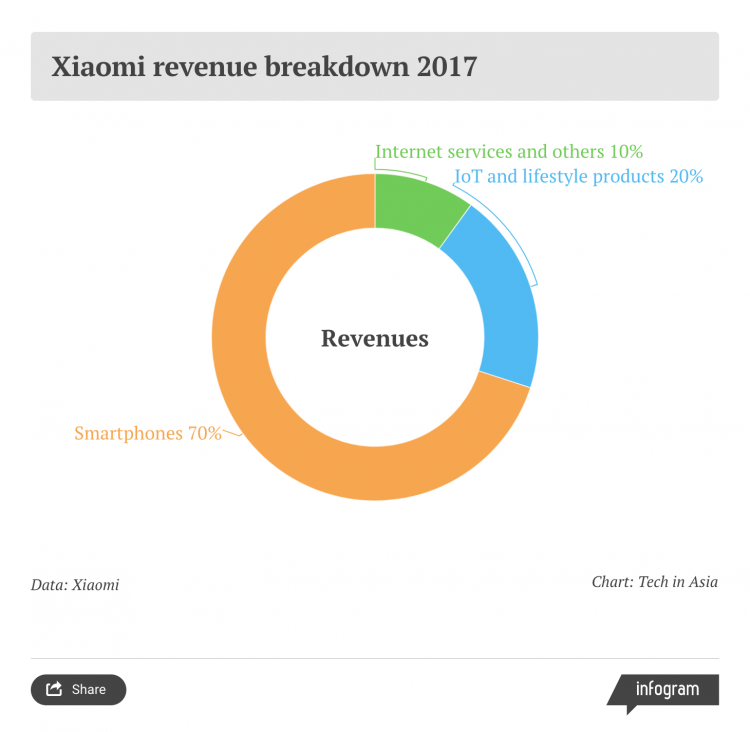
For now, gadgets remain Xiaomi’s major source of income, but this is expected to change soon.
Being cheap
Cashing in
Moving up the income ladder





Stay updated on the go with our mobile app.
Get latest insights with smoother, more personalized experience through TIA mobile app.











📅 Upcoming Events
22 October 2026
Payoneer x CSPN Summit 2026