Apoorva Dutt · · 6 min read
How Google CEO Sundar Pichai used OKRs to build the world’s most popular web browser
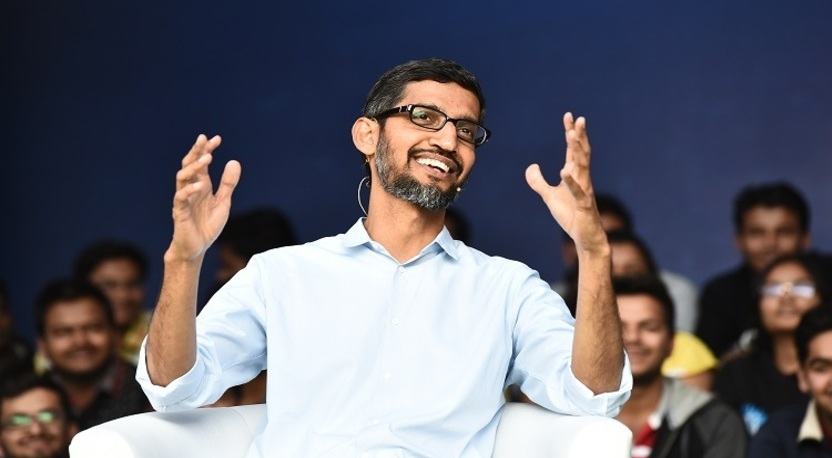
Google CEO Sundar Pichai. Photo credit : Google.
The following is an edited excerpt taken from Measure What Matters: How Google, Bono, and the Gates Foundation Rock the World with OKRs, a book authored by John Doerr. The excerpt is provided courtesy of Portfolio Publishing. You can buy a copy here.
By 2006, we were beginning to rethink the browser as a computing platform, almost like an operating system, so that people could write applications on the web itself. That fundamental insight gave birth to Chrome.
We knew we needed a multi-process architecture to make each tab its own process and protect a user’s Gmail if another application crashed. And we knew we had to get JavaScript working a lot faster. But we were up for the task of building the best browser possible. Eric Schmidt, our CEO, knew how hard it was to construct a browser from scratch: “If you’re doing it, you had better be serious about it.”
If Chrome wasn’t going to be dramatically different and better and faster than the traditional browsers already on the market, there was no point in moving ahead.
In 2008, the year of Chrome’s rollout, our product management team formulated a top-level annual objective that would have an enduring influence on Google’s future: to “develop the next-generation client platform for web applications.” The main key result: “Chrome reaches 20 million seven-day active users.”
In Google’s OKR climate, it was understood that 70 percent achievement (on average) was considered a success. You weren’t supposed to strive for greens on every OKR you wrote—that wouldn’t stretch the team. But there was an intrinsic tension because you didn’t get hired at Google unless you were driven to succeed.
As a leader, you didn’t want to find yourself at the end of the quarter, standing in front of the company with a big red on the screen, having to explain why and how you failed. The pressure and discomfort of that experience made a lot of us do a lot of heroic things to avoid it. But if you set your team’s objectives correctly, it was sometimes unavoidable.
Larry was always good about upping the goals for the company OKRs. He used certain phrases that stuck with me. He wanted people at Google to be “uncomfortably excited.” He wanted us to have “a healthy disregard for the impossible.” I tried to do the same for the products team. It took courage to write an OKR that might well fail, but there was no other way if we wanted to be great.
We deliberately set the bar for 20 million weekly active users by year’s end, knowing it was a formidable stretch—we were starting from zero, after all. As a leader, you must try to challenge the team without making them feel the goal is unachievable. I thought it unlikely we would reach our target in time. (Candidly, I thought there was no way we would get there.) But I also considered it important to keep pushing to the limit of our ability and beyond. By putting the 20 million out there, I knew good things would happen.
Our stretch OKR gave the team direction and a barometer to measure our progress. It made complacency impossible. And it kept us all rethinking, every day, the framework for what we were doing. All of these things were more important than reaching a somewhat arbitrary target on a designated day.
Early on, as Chrome struggled to reach 3 percent market share, we received some unanticipated bad news. The Mac version of Chrome fell way behind schedule. Only Windows users would count toward the 20 million. But there was good news, too—people who used Chrome loved it, which was starting to have a compounding effect on growth.
Glitches notwithstanding, we were driving awareness of a new way to engage the web. We just needed to find more users, and sooner than later.
Google stands for speed. The company has waged a constant battle against latency, the delay in a data transfer that degrades the user experience. In 2008, Larry and Sergey wrote a beautiful OKR that truly captured people’s attention: “We should make the web as fast as flipping through a magazine.”





Stay updated on the go with our mobile app.
Get latest insights with smoother, more personalized experience through TIA mobile app.