Jeffrey Towson · · 5 min read
Opinion: Winning and losing in bike-sharing is all about utilization
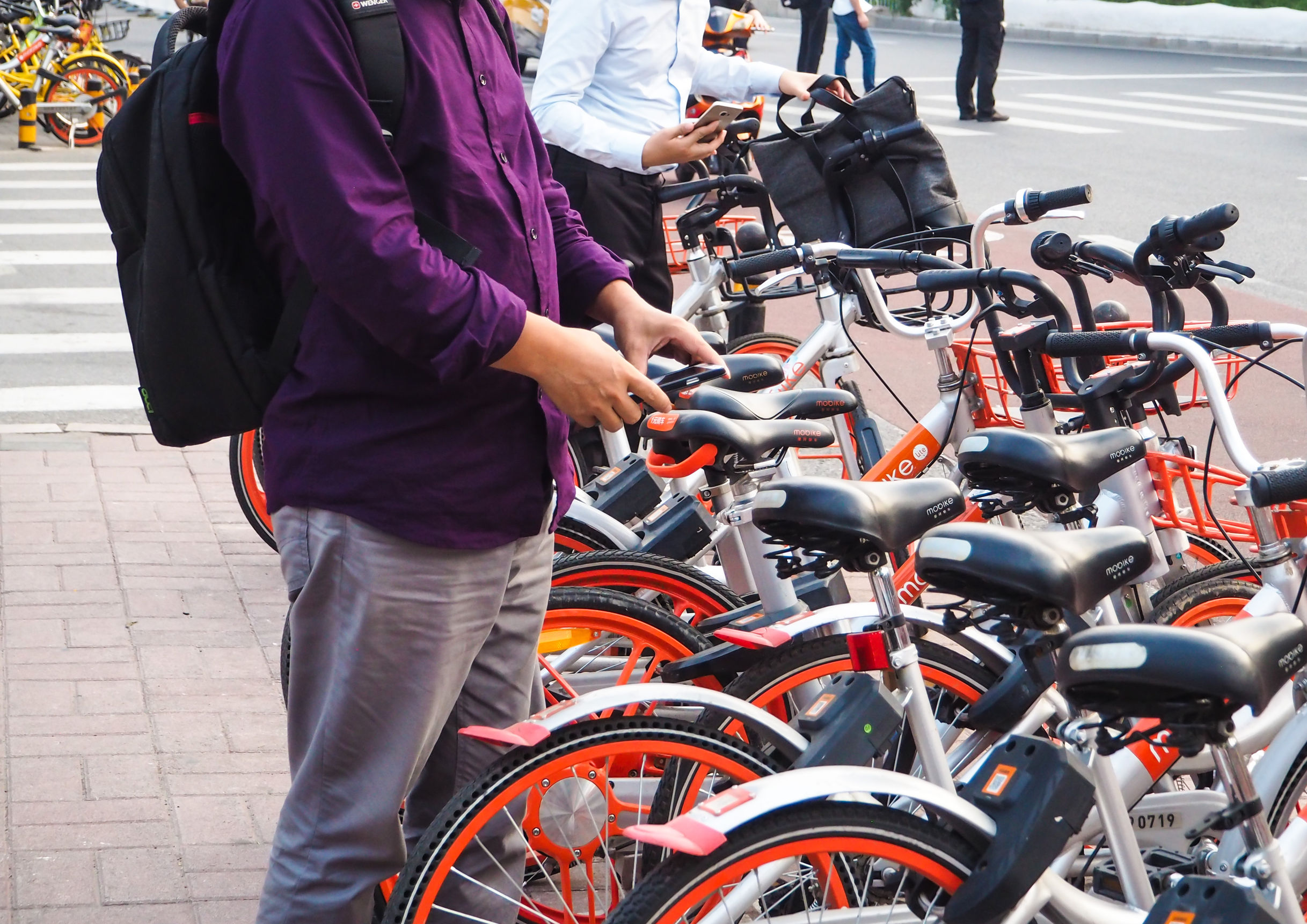
Photo credit: luoxi / 123RF Stock Photo.
This is the fourth and final article on “assets in the wild” and how they are a powerful new economic engine, most visibly manifested in bike-sharing in China. My basic argument in parts one, two, and three is that the meteoric rise of Mobike, Ofo, and other bike-sharing companies is because of their pioneering use of assets that can be released in great numbers into public spaces. These wild assets can then exist and sell independently.
But pulling back from all the theory, let me make a final point about winning and losing in bike-sharing: It’s ultimately all about utilization. This raises the fascinating topic of herd size vs herd intelligence.
Bike-sharing is all about utilization
Everyone is talking about bike-sharing’s low pricing vs the likely cost. How can you spend US$300 on a bike and charge only US$0.15 per hour? There’s a lot of speculation about profitability.
But profitability is going to depend on the utilization of the bikes. If a bike is generating US$1 per day in rentals, it is losing money. If a bike is generating US$7 a day, it’s making money.
And this is where I think the whole subject of wild assets and bike-sharing becomes super cool. Because what ultimately determines utilization?
- The number of bikes deployed
- Customer preferences and habits
- Ease of use
- Company marketing and reputation
- Having your bikes in the right places at the right times (the biggest factor)
This is when the conversation changes from individual bikes to herds. How many bikes do you have? How big is your herd? Are these bikes in the right places at the right times for customers? How smart is your herd?
Herd size vs herd intelligence
I think the first year of bike-sharing was mostly a fight based on fleet size or, as I like to say, herd size. You deployed a lot of bikes, your bikes were put on every corner, and people thought you were convenient for having a lot of bikes in an area. This gave you a powerful marketing and sales ability.
But bike-sharing in China is now becoming a fight between smart and dumb herds. Having your bikes in the right places at the right times is about herd intelligence. Do you know the 35 places where people really want bikes at 2 pm on Saturday in Wuhan? Do you know how these places change when it rains? And can you rebalance your herd’s locations to maximize utilization in this situation? Can you rebalance in real time if things change?
This is where Mobike appears to have a real advantage. From day one, they built “smart bikes” that tracked movement and location, not just when the bikes were locked and unlocked, but all the time. Their bikes were manufactured in-house (everyone else has them made externally) and always had smart locks and GPS systems. They’ve been accumulating usage data from the beginning.
Initially, this gave them a primitive sort of herd intelligence. They could identify unused or damaged bikes by their lack of movement and repair or put them in better locations. They could move bikes when they accumulated at the bottoms of hills and correct similar incidents. Early on, Mobike knew the movements of all their bikes and could reposition their herd somewhat by offering red envelopes or by sending operations staff to get them.
So, if it feels like these bikes are following you, it’s because they are.
Today, bike herds are getting smarter. After 18 months of data across hundreds of cities, the leading companies know where people are moving every day. And this big data is being combined with AI. Bikes are increasingly ready and waiting for people when they likely need or want one (e.g. when the subway system closes at night). So, if it feels like these bikes are following you, it’s because they are.
This is just the beginning





Stay updated on the go with our mobile app.
Get latest insights with smoother, more personalized experience through TIA mobile app.