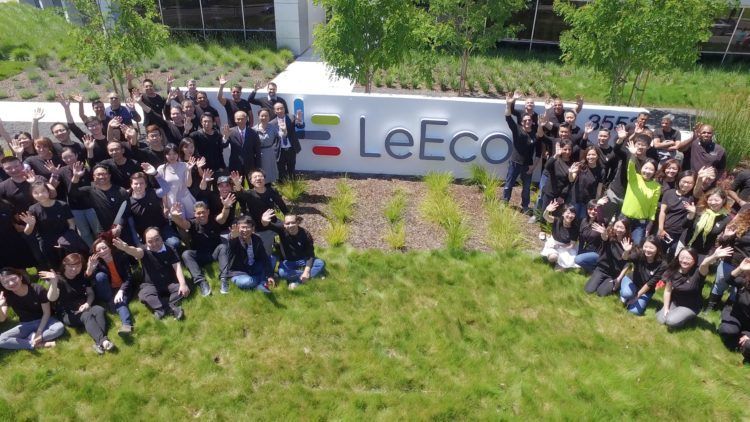
Earlier this week, Chinese tech giant LeEco (formerly known as Letv) spent US$460 million to buy two property/real estate companies: Beijing Fortune Times Property and Beijing Baiding New Century Commercial Management. The deal will also see LeEco cooperate with Shanghai Shimao, the parent property firm that owned the two companies before LeEco acquired them.
This isn’t LeEco’s first foray into property. Previously, the company spent around US$60 million 400,000 square kilometers of land in Chongqing. But this half-billion investment into two companies that operate in a different market from LeEco’s raises some questions.
It wasn’t long ago, after all, that LeEco was really just a video streaming site. But over the past few years, the company’s offerings have exploded under the direction of founder Jia Yueting. Here’s a partial list of the things LeEco does now: smartphones, virtual reality, smart TVs, electric smart cars, cloud computing, music streaming, live sports, smart bikes, film production, wine ecommerce, internet finance, and real estate/property. Oh, and it still does video streaming.
LeEco is expanding in every direction at once. That’s the idea, anyway. The company changed its name from Letv to LeEco to reflect its commitment to building an ecosystem. But it raises the question: could the company be spreading itself too thin?
I put that question to LeEco but never received a reply.
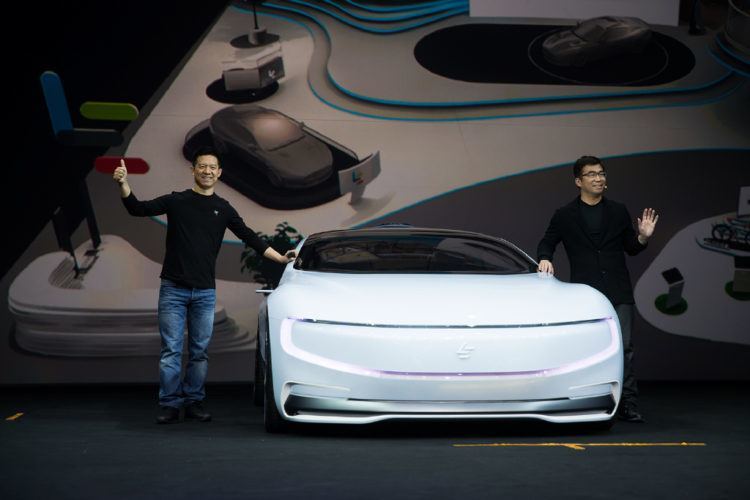
LeEco founder and CEO Jia Yueting shows off the LeSee at an event in Beijing. Photo credit: LeEco’s Weibo.
LeEco founder Jia Yueting has an impressive track record. Coming from a rural town in Shanxi he worked in IT at a local office before setting out on his own with an increasingly ambitious series of entrepreneurial endeavors. LeEco isn’t his only successful startup: before it he founded Sinotel Technologies, which successfully listed in Singapore back in 2007.
But some of his more recent projects have raised eyebrows. Faraday Future, a US-based electric vehicle startup that Jia started, has seen several high-profile departures, and its relationship with LeEco still isn’t clear. The state treasurer of Nevada, where Faraday Future plans to build a massive manufacturing facility, visited China and then told the LA Business Journal he has serious concerns:
It’s the emperor’s new clothes. [Jia] isn’t making any money. He certainly isn’t making any money to fund a billion-dollar car facility.
Other analysts disagree, but the market hasn’t had a chance to speak. Trading of LeEco’s stock was suspended in December of 2015 to allow LeEco to incorporate its LeVision Pictures film production subsidiary into its stock. That was meant to be a short process, with trading scheduled to resume on January 5. But now, four months and a series of delays later, trading of LeEco is still suspended.
What happens to the stock matters quite a bit, because according to the Wall Street Journal, Jia Yueting has pledged a lot of his own shares as collateral for large personal loans. He’s then used those loans to fund some of LeEco’s newer ventures, like the smartphones and the smart car. He does this, he has admitted, because his board of directors disagrees with him about some of these new ventures, and because he thinks it allows the company to focus on long-term growth in a way that outside investors would not. But if LeEco’s stock slides significantly when trading resumes, it could trigger a margin call on those loans that would require Jia to sell his shares or put up more collateral.





Stay updated on the go with our mobile app.
Get latest insights with smoother, more personalized experience through TIA mobile app.