- Insights This article was written by a TIA community member. Insights pieces undergo the same rigorous editorial process that newsroom-produced articles have.
 Mario Berta · · 8 min read
Why I chose to base my company in the Philippines, and not in Singapore or Hong Kong
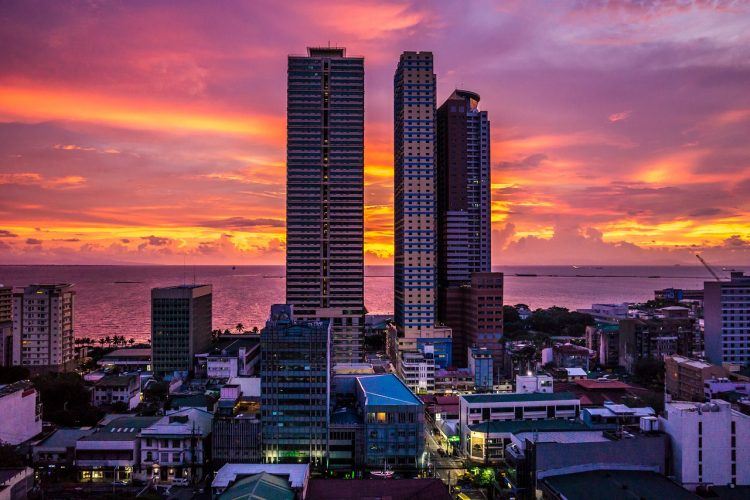
Photo credit: Pixabay.
I’ve lost count of the number of times I’ve been asked “Why the Philippines?” especially by big regional companies that notoriously pick either Singapore or Hong Kong to base their headquarters. It was always somewhat a hard sell when I explained to potential investors why I decided to base my company, FlySpaces, in Manila.
By working at Rocket Internet for nearly three years, I received the great opportunity to build companies in Southeast Asia. The region has magnificent and fascinating diversity and various entry barriers, regardless of the industry.
In this article, I will share why I chose to build a company in the Philippines. I will also share some tips on how you can do it yourself.
First things first: Incorporation
The Philippines unfortunately does not score very high in ease of doing business. Based on The World Bank’s data, it received a score of 99 (a score of 1 means the country has the most business-friendly regulations), lagging far behind the world’s leading countries like Hong Kong and Singapore, which received a score of 4 and 2, respectively.
Nonetheless, doing business in the country is easier compared to its neighbors like Indonesia. In Indonesia, it can take you two months to have all the paperwork in place, assuming that you are not operating in a restrictive industry (ex. banking), which may require more approvals. In the Philippines, you can be done with the paperwork in less than a month.
The easiest thing I found is to get a law firm that specializes in incorporating foreign-owned entities. These firms are generally a one-stop shop. They also process visas for foreign workers and take care of other administrative matters. Hiring a local law firm will also help you ensure that you avoid any confusions with specific local government policies.
The Philippines, like other SEA countries, has various foreign ownership restrictions. But if you want to incorporate an ecommerce or B2B business, there are no restrictions. Back to Indonesia, it recently set a 49 percent cap on foreign ownership of small ecommerce businesses despite the government’s initial statement of opening up the sector 100 percent.
It is also much easier to get immigration visas in the Philippines for foreign workers compared to Singapore. In an attempt to ensure companies have a Singaporean core, the city-state has gradually made it more expensive and tedious to bring in foreign workers. They also began raising the required salaries for foreign workers to further tempt companies to hire locally, as they found 40 percent of the workforce is made up of foreign workers. But with minimum salary requirements relatively low (approximately US$1,000 per employee), it is easy to access foreign talent in the Philippines.
Capital requirements again vary by industry and if foreign ownership restrictions are applied, you can register 100 percent of foreign entities with just US$177,000 for most tech companies. This capital can then be used as working capital for the company. This avoids it being frozen or stuck in a government bank account.
Local talent is the key to succeed

Photo credit: Pixabay.
It is well-known that Filipinos are by far the best English speakers in Asia. With a high literacy rate of 95.9 percent, the country has one of the most competitive workforces in SEA. In general, the best talent have studied in reputable schools and are fully bilingual. This reduces any lost-in-translation scenarios while hiring and training local staff. Filipinos are also extremely creative and social people, so they excel in skills like sales, marketing, and customer service.
Linked to this is the unique office culture in the Philippines, where Filipino values of friendliness and hospitality are evident. This means that on top of salary, employees look for a certain work culture that promotes not only hard work but also close relationships. I found that food is the universal unifier in the country. In fact, it is often the key to a successful meeting. And in the office, it is quite common to see potlucks or cakes brought in to celebrate birthdays or promotions of co-workers.
Great place for low burn rate
High income tax but offset by low salaries
Opportunities everywhere
Relatively low competition
An inexpensive and exciting place to live
Conclusion





Stay updated on the go with our mobile app.
Get latest insights with smoother, more personalized experience through TIA mobile app.









📅 Upcoming Events
22 October 2026
Payoneer x CSPN Summit 2026