- Insights This article was written by a TIA community member. Insights pieces undergo the same rigorous editorial process that newsroom-produced articles have.
 Cynthia Luo · · 8 min read
Opinion: Singapore’s largest retailer Mustafa could’ve gone online. But…
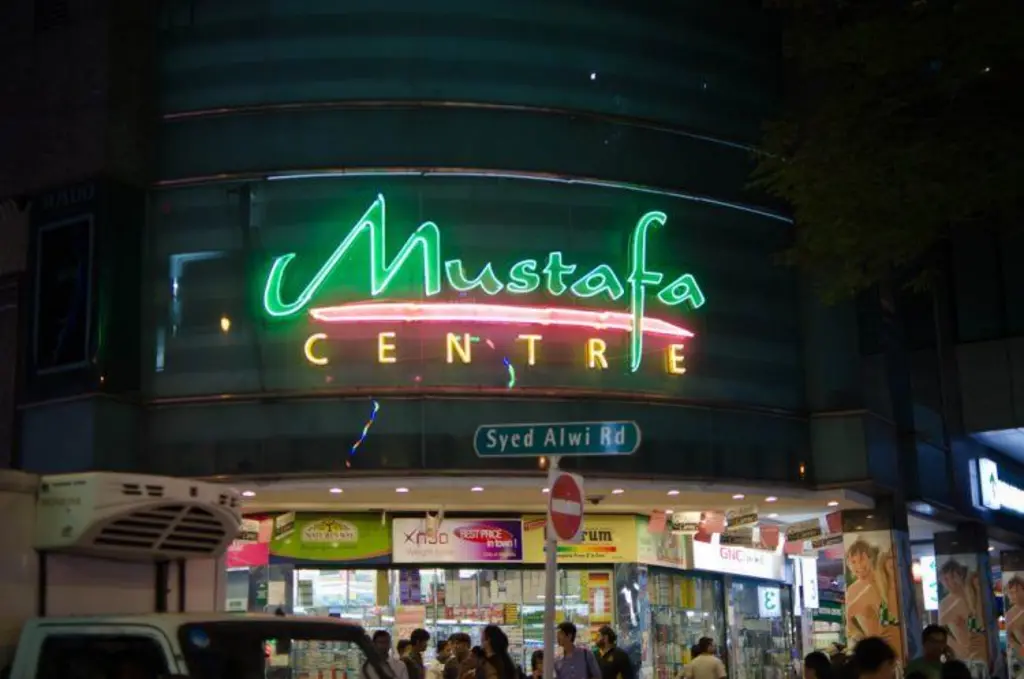
Photo credit: Scott Dexter.
Tucked away in Singapore’s Little India is a 24-hour retail center, Mustafa Shopping Centre, that is never devoid of foot traffic. The company was on the annual Enterprise 50 for five consecutive years from 1995 to 2000 and has outlived plenty of other retail centers.
So, what makes it so enticing?
Shoppers like its enormous product selection and bargain prices. The 200,000 sq ft space is composed of seven floors that sell over 300,000 items, ranging from Indian spices, wheelchairs, vitamins, gold, to DVDs. Everything is available at any hour of the day—money exchange, flight tickets, postal service, and restaurants. The store has even become one of Singapore’s tourist attractions.
But a quick search of online reviews suggests that the retail experience has drastically changed since the mega-store’s heyday:
- The place is sleazy.
- Customer service is slow at best, indifferent at worst.
- Broken products
- Always be aware of your personal belongings; pickpockets are very common at the Mustafa Centre.
- Dizzying and chaotic
And it might get even more crowded!
The 46 year-old company recently announced the closure of its 65,000 sq ft flagship branch in Serangoon Plaza earlier this year due to the redevelopment of the property. This essentially cuts Mustafa’s retail space by a quarter and all products are stored in its Little India branch.
Considering that and a growing selection of cheap goods that are readily available online, how many more trips will Singaporeans undergo to save a few dollars?
Without an influx of returning shoppers and smaller customer reach with the closure of its second branch, how can Mustafa ensure the continued growth of its business? We take a look at some factors:
1. Singapore’s average shopper
Euromonitor International’s data shows that the average annual disposable income per capita in Singapore is now US$27,664 and predicted to reach US$30,143 in 2020. This is quite high in comparison to consumers in the rest of Southeast Asia who make less than US$500 a month.

Photo credit: Movehub.
Even so, there was a modest retail growth in 2016 due to Singapore’s slowing economic rates (from 3.3 percent to 2.2 percent year over year). More price-sensitive shoppers means good things for low-cost sellers like Mustafa, but consumers are more likely to go online to compare prices, especially for more expensive products such as electronics. And this is where they will find a plethora of pure-play sites such as ShopBack, Ebates SG, and Lazada SG, which help them save on well-known brands and everyday items with cash back and daily offers.
2. Expansion opportunities
3. Future of retail
Would Mustafa do well online?
Other hurdles
Where do we go from here?





Stay updated on the go with our mobile app.
Get latest insights with smoother, more personalized experience through TIA mobile app.











📅 Upcoming Events
22 October 2026
Payoneer x CSPN Summit 2026