- Insights This article was written by a TIA community member. Insights pieces undergo the same rigorous editorial process that newsroom-produced articles have.
 Nikola Pavesic · · 4 min read
Silicon Valley startup engineering fish to save oceans eyes Asia for expansion
In downtown San Francisco, in an inconspicuous alley called Jessie Street, stands the office of VC firm SOSV. Inside, you can find a branch of Hax, the Shenzhen-based hardware accelerator, and IndieBio.
IndieBio is a biotech accelerator determined to bring biohacking to life while focusing on biology as a technology rather than just the biomedical vertical of it.
In each batch, the accelerator has about a dozen companies to whom they offer US$250,000 in funding for an 8 percent equity stake. Part of their latest batch is Finless Foods, an early-stage startup that lays out its mission in its curious name. They aim to reverse engineer, prototype, and grow fish meat and products.
Its founders, Michael Selden and Brian Wyrwas, who are only 26 and 24 years old, respectively, plan to produce pure, fresh, and healthy fish without taking a single mackerel out of the ocean and without farming a single sea bass.
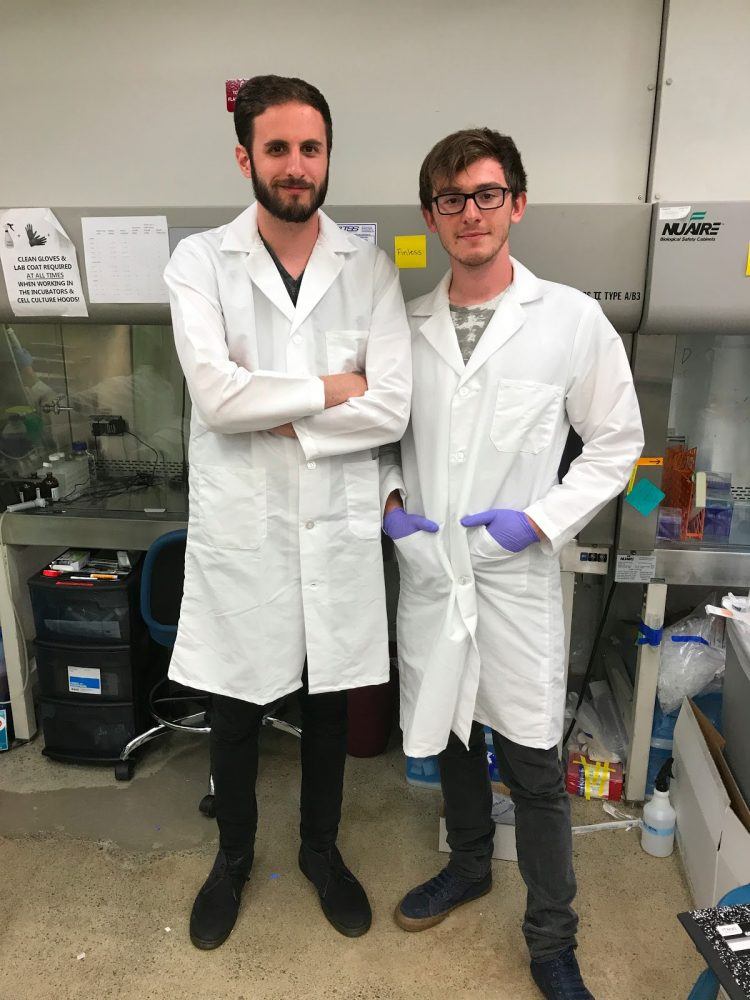
Michael Selden and Brian Wyrwas, founders of Finless Foods, in the IndieBio lab in San Francisco.
Taking fish production to the future
If you wonder how it works, they take a marble-size sample—approximately a billion cells—from a fish.
“Theoretically, at full efficiency from one cell, we would be able to produce a metric ton of fish meat,” said Selden, who is the CEO. And he is very careful not to call their products “lab-grown” or “synthetic fish.”
“We are taking a natural process that occurs within the fish and accelerating it outside of it,” he explained. “It is a chemically indistinct process from nature in which we do the science in the lab and grow the fish meat separately, not unlike brewing your beer.”
Wyrwas, who is the chief science officer, revealed their first product. He said that they intend to start with surimi, a paste made of fish that is most commonly sold as red crab sticks.
He also said they might continue with simpler products like fish sauce before they move on with more structured fish products like tuna steaks, mackerel fillets, and katsuo sashimi, which will follow in five to six years.
Engineering fish allows them to produce fish meat with good characteristics. For instance, they can determine the amount of fat and consequently make the meat as healthy and nutritious as possible.
They are aware that they have quite a few challenges to get Finless Foods to the market. Food regulatory bodies and consumer skepticism are right at the top of the list.
Food regulatory bodies in the US, Europe, and Japan—incidentally the three most important markets—are very tedious and severe. But the founders said this is as it should be, as they must keep consumers safe. The procedures for new food approval may take multiple years but they believe their products will be approved before they bring them to the market.
Going back to Asia where it all started





Stay updated on the go with our mobile app.
Get latest insights with smoother, more personalized experience through TIA mobile app.