Sumit Chakraberty · · 6 min read
10 Asian unicorns in MIT list of the world’s 50 smartest companies
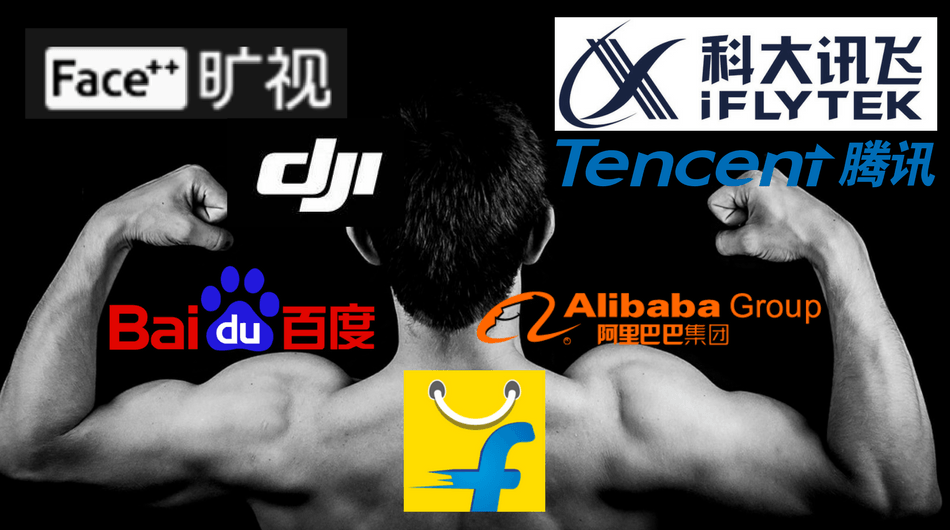
Seven Chinese unicorns, including Baidu, Alibaba, and Tencent, and Indian ecommerce hero Flipkart made it to MIT Technology Review list of the 50 smartest companies in the world. Photo credit: Pixabay and Tech in Asia.
Indian ecommerce leader Flipkart and seven Chinese unicorns – including the BAT trio of Baidu, Alibaba, and Tencent – figure in this year’s MIT Technology Review list of the 50 smartest companies in the world. Two Taiwanese companies complete the contingent of 10 from Asia in the annual list, which is curated by the editors of the 118-year-old magazine published by the Massachusetts Institute of Technology.
The editors identify companies that have been “smart” in creating new opportunities in the preceding 12 months. By “smart”, they mean companies that best combine innovative technology with an effective business model.
Amazon’s aggressive investments in India have upended the country’s ecommerce industry, but Flipkart keeps battling back.
While the BAT trio figured in last year’s list too, the four others from China, two from Taiwan, and Flipkart from India are new entrants. Surprisingly, there are no companies from Asia’s technologically advanced nations like Japan, South Korea, and Singapore.
Two African companies – internet platform Jumia and pay-as-you-go solar power provider M-Kopa – as well as Latin America’s largest online marketplace MercadoLibre make the cut, underlining the weightage given to business opportunity.
Here are the 10 companies picked from Asia, and the reasons for their inclusion:
Flipkart: battling back against Amazon
India’s ecommerce leader had a tough time in 2016, as global rival Amazon came hard at it with US$5 billion earmarked for winning this large, emerging market. But Flipkart managed to hold its ground, and finally landed a US$1.4 billion funding round from Tencent, Microsoft, and eBay early this year at a valuation of US$11.6 billion. Flipkart’s main Indian rival Snapdeal, on the other hand, lost market share drastically to Amazon.
Flipkart is now negotiating to buy Snapdeal at less than US$1 billion, a fraction of its peak valuation, to further consolidate India’s competitive ecommerce sector after acquiring eBay India.
“Amazon’s aggressive investments in India have upended the country’s ecommerce industry, but Flipkart keeps battling back,” observes MIT Technology Review, putting the Indian company 36th on the list, above tech giants like IBM, General Electric, and Alibaba.
The most notable among Flipkart’s local innovations is its progressive web app – a website that looks like a mobile app. It’s much lighter in the use of mobile data and works better in places with patchy internet. The Indian company has also been hiring AI experts to improve product recommendations and the customer interface. It is expanding its product range with private labels. And the eBay India acquisition has boosted its cross-border ecommerce.
See: How the $1.4 billion Flipkart funding changes the ecommerce game in India
Baidu: pushing into AI
Baidu suffered a setback with the exit of its Silicon Valley import, Andrew Ng, but continues to invest in AI research despite falling revenue growth. It launched DuerOS, a voice-enabled smart assistant like Amazon Alexa, after acquiring Y Combinator-backed startup Raven Tech.
Baidu leads China’s national AI mission. It also acquired a computer vision startup to bolster its driverless car initiative.
Alibaba: challenging Amazon in cloud services
Ant Financial: expanding into global markets
Tencent: keeps on expanding WeChat features
iFlytek: new kid with voice-activated systems
Face++: first facial recognition unicorn
DJI: low-cost, portable drones for all
Foxconn: automation with Foxbots
HTC: pivoting to VR





Stay updated on the go with our mobile app.
Get latest insights with smoother, more personalized experience through TIA mobile app.