A few months ago, I was at the Manchester Lowry theatre watching a performance of Lord of the Flies — it’s a hugely popular story that touches on controversial topics of human nature, and the different motives people have when leading a group. It got me thinking:
“What really is a leader?”
It turns out that plenty of people have had the same question, as seen in these very popular images below that resonate with many.
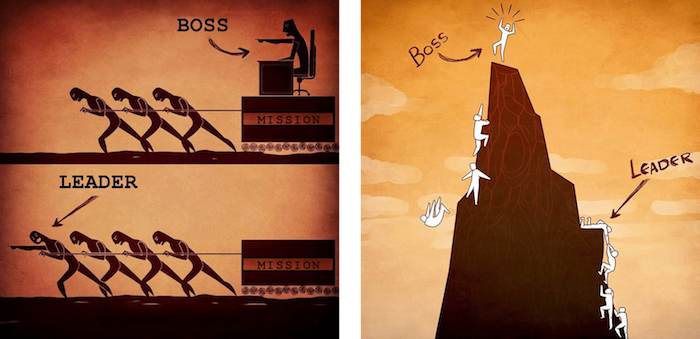
The pictures highlight how a real leader would want to work alongside his team, pulling them up to his level. In contrast, there also exist people in positions of power who seem to be leaders, but actually just give people orders with more focus on helping themselves than their teammates.
The problem comes when these ‘bosses’ are mistaken for leaders by their juniors, and before you know it, a culture of personal gain is created, where teamwork is no longer the focus. The story of Lord of the Flies really helped me put this into perspective and understand why a ‘boss’ can sometimes be perceived as a leader, even when their morality and actions don’t match that of one.
Leader versus dictator in Lord of the Flies
Lord of the Flies is a story by William Golding, and it starts off with bunch of schoolboys stranded on a remote island, trying to recreate the civility they’ve left behind. It focuses on the behaviours of two contrasting characters — Ralph and Jack, who are both ‘leaders’ of the group at different times.
In the beginning, Ralph is elected by the rest of the boys to be leader, because of his likeable personality and desire to help the group by building shelters so everyone can be safe. He works to the group’s benefit, so is, in my opinion, much like the leader portrayed in the images above.
In contrast, Jack always has a desire to dominate the group so that he can have control and satisfy his love of power. He cunningly uses force and deceit to lure the boys out of the civility Ralph is creating, into his primitive tribe where he goes on to become the self-titled chief.
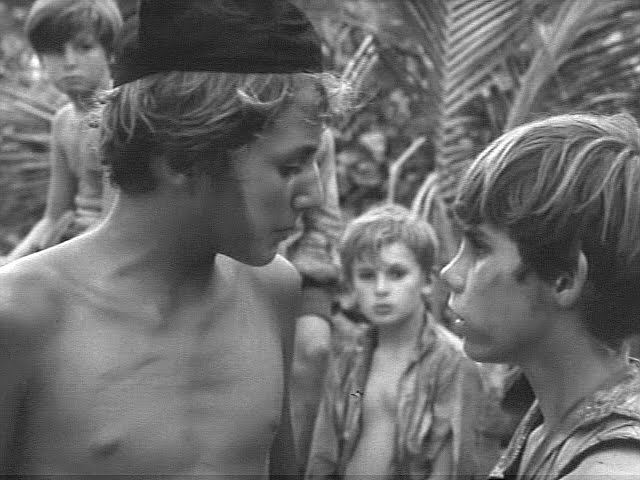
Photo credit: mindmeister
Interestingly, Jack only values the boys he finds useful in carrying out the plans he has for his own success. He looks down on and ignores those he doesn’t agree with. Maybe it’s obvious, but watching the story made me notice how characters such as these are present everywhere.
There’s no “I” in team
People like Jack and Ralph are fairly common in reality, often appearing in positions of influence, which can be a problem — especially in a workplace. If you read the story, you’ll probably agree that Jack is, by Rhys Newman’s definition, a dickhead:
The rise of the imposter leader
Culture eats strategy for breakfast





Stay updated on the go with our mobile app.
Get latest insights with smoother, more personalized experience through TIA mobile app.








📅 Upcoming Events
22 October 2026
Payoneer x CSPN Summit 2026