 Erik Crouch · · 4 min read
How one computer can go from Alibaba’s office to a classroom in rural China
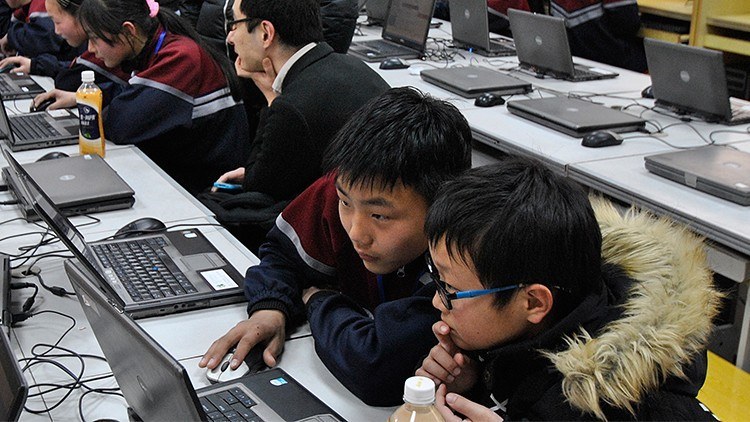
Kids using donated computer. Image credit: Netspring.
Companies like Alibaba burn through computers. Every few years, it’s in with the new and out with the old laptops, desktops, monitors, and digital miscellany. But between sitting in the company’s cozy Hangzhou offices and getting disassembled in an electronics recycling plant, many of those computers take an unexpected detour – and spend a few years in poorly funded schools throughout China.
China is certainly not new to environmental issues, but dealing with digital waste is a particularly tough one – the heavy metals in chips, recycling facilities that don’t follow proper laws, and so on. Then there’s the problem that many companies are constantly dumping slightly-used computers while, at the same time in the same country, there’s a desperate need for those devices.
A cottage industry
By next year, China is predicted to be the biggest ewaste producer in the world, churning out around seven million tons of the stuff every year. One group that’s working to make sure China’s ewaste stays in the formal sector – instead of filtering down to environmentally and ethically-dubious informal recyclers or landfills – is the Shanghai-based Netspring.
Netspring works with companies to put their waste to use. Its clients include a number of multinationals as well as Mei, an Alibaba-owned flash sale company. It has also worked with Ant Financial, Alibaba’s finance arm that runs the popular Alipay platform.
Netspring provides hardware and tech support for its donated computers for three years.
When a company like Ant or Mei decides that its computers are ready for an upgrade, they don’t toss the old models out on the curb. Instead, Netspring takes the devices, refurbishes them, and sets the devices up in impoverished schools in China. Netspring provides hardware and tech support for its donated computers for three years, and then manages their trip to an environmentally-friendly recycling facility.
The company works with 58 schools in China, primarily those in rural areas, or schools attended by the children of China’s many rural-urban migrant workers. Ant Financial, for example, sponsored computers from TUV Reihnland that ended up in three classrooms in southern China’s Guizhou province. As catologued on Netspring’s website, one school with 182 students was working with just four computers, all of which were donated years ago. Now that school has a fresh supply of 50 desktops and laptops.
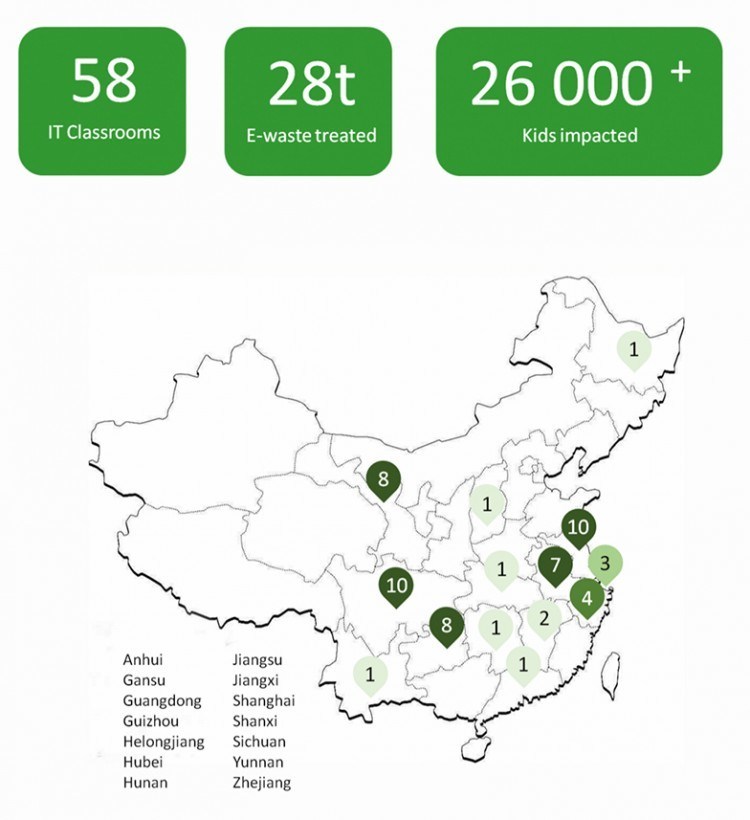
Map of China noting the number of schools where Netspring has donated computers. Image credit: Netspring..
“In the beginning, we were just placing the computers in the school and that was it,” says Clotilde Pallier, general manager of Netspring. “But now we follow up for three years to make sure the computers are in the school and working properly.”
“After three years, at the end of the program, the computers are dismantled,” she adds. “[The donor] companies sponsor the dismantling.”
But all of this work – from refurbishing the computers, to delivering them to schools, to supporting them, to recycling them – doesn’t pay for itself.
Going corporate
One of the biggest challenges in dealing with ewaste in China is the cost. Companies aren’t exactly climbing over each other for the privilege of paying to get rid of their old devices.





Stay updated on the go with our mobile app.
Get latest insights with smoother, more personalized experience through TIA mobile app.








📅 Upcoming Events
22 October 2026
Payoneer x CSPN Summit 2026