- Premium Content It takes our newsroom weeks - if not months - to investigate and produce stories for our premium content. You can’t find them anywhere else.
 Collin Furtado · · 4 min read
Sunseap records biggest loss in 7 years
After two years of profitability, Singapore-based Sunseap slipped into the red in 2021. The renewable energy startup swung to an operating loss of S$112 million (US$77.8 million) during the year from a profit of US$2.9 million in 2020, according to its ACRA filings.
Data from VentureCap Insights shows this is Sunseap’s largest reported loss in the last seven years. For context, the second-largest operating loss it reported was in 2017, which was over 11x lower in comparison.
This largest reported loss comes as the greentech firm’s total expenses nearly doubled and revenue growth slowed down to 15.4% in 2021 from an over 40% growth just a year before.
Tech in Asia asked Sunseap about its financials, but the company didn’t comment. A closer look at its revenue sources, however, indicate that Southeast Asia is increasingly adopting renewable energy.
In November 2021, Sunseap was acquired by EDP Renewables (EDPR), a Portugal-based renewable energy major, for US$816 million. The deal allowed EDPR, a listed firm with a market capitalization of over US$20 billion, to expand its renewables platform in Asia.
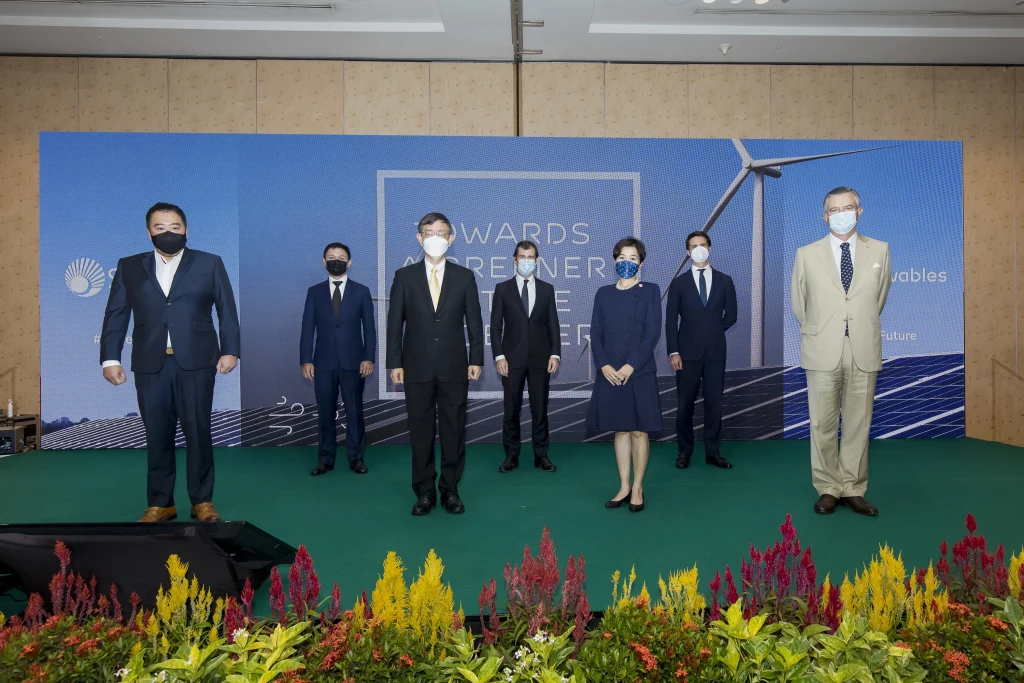
(From left) Sunseap co-founders Frank Phuan and Lawrence Wu; Peter Ong, chairman of Enterprise Singapore; Miguel Stilwell d’Andrade, CEO of EDP Group; Jacqueline Poh, managing director of Singapore Economic Development Board; Pedro Vasconcelos, COO of EDPR for Asia Pacific; and João Talone, group chairman of EDP /Photo credit: EDPR
After completing the acquisition in February, EDPR announced that it was investing US$7.4 billion by 2030 to set up its Asia-Pacific headquarters in Singapore. It aims to launch multiple projects across the region, focusing on solar and wind energy sources while also exploring opportunities in energy storage and green hydrogen.
Revenue analysis
Sunseap has three major sources of revenue: generating and supplying solar energy for residences and businesses, and income from the construction and maintenance of solar photovoltaic systems. The slump in its 2021 revenue growth is primarily because its revenue from construction and maintenance fees dropped by more than 7x. This income is the second-biggest revenue source for the company.
That said, Sunseap’s revenue from energy supply doubled to US$62.3 million in 2021 becoming its biggest source of revenue from being one of the smallest two years earlier. However, this growth and the nearly 20% rise in its solar energy income wasn’t enough to push its total revenue growth beyond 16%.
The surge in the company’s energy supply income indicates higher demand and adoption of solar energy among homes and businesses in Southeast Asia.
This could be attributed to how prices for solar energy fell by 90%, making it cheaper than fossil fuels. Last year, global solar power prices dropped by 13%.
Expense analysis
Cash balance
Stay ahead in Asia’s tech landscape
This is premium content. Subscribe to read the full story.
The Singapore firm slipped into the red in 2021 after two years of profitability. But its filings show Southeast Asia’s steady adoption of solar energy.
We know this is not ideal. ⌛ Sign up in 20 seconds. Cancel anytime.
Our subscriber community includes professionals from these companies:





Stay updated on the go with our mobile app.
Get latest insights with smoother, more personalized experience through TIA mobile app.









📅 Upcoming Events
22 October 2026
Payoneer x CSPN Summit 2026