
Welcome to The Offset! Delivered once a month via email and through the Tech in Asia website, this free newsletter breaks down the biggest stories and trends in greentech. Get it in your email inbox by registering here.
Hi there,
Do you love hacks? I’m talking about clever shortcuts to big or laborious tasks that yield rewards with minimal effort. For example, I recently followed a recipe hack that promised Jollibee-style crispy chicken via an air fryer. (Happy to report that it works).
It’s interesting to know that some are also seeking hacks to mitigate climate change. This month’s Deep Read, for instance, focuses on how the Singapore government is extracting more carbon dioxide from the ocean using cutting-edge technology.
With the help of marine carbon dioxide removal technology from US-based startup Equatic, Singapore is looking to accelerate the ocean’s ability to absorb CO2 from the atmosphere. Kind of cool, if you ask me.
Like the other hacks I’ve come to enjoy, here’s hoping that Singapore’s latest initiative could be a scientific trick that works.
— Elyssa
Deep read
World’s largest facility to remove ocean CO2 to open in Singapore: How does it work?

Image credit: Timmy Loen
With the ocean absorbing about 30% of the world’s carbon dioxide and covering 70% of Earth, it’s no wonder that some scientists are exploring how using seawater could help our warming planet. The Equatic-1 demonstration plant in Tuas, an industrial area in Singapore, is but one manifestation of that effort.
The facility, set to open by the first quarter of 2026, is designed to employ marine carbon dioxide removal, a technique that uses the sea environment to absorb atmospheric carbon. This process can be seen in nature: Seaweeds do this through photosynthesis.
Equatic-1 aims to achieve this through chemical means. The result would dissolve CO2 and produce material that can be stored in the ocean floor, trapping carbon for at least 10,000 years, according to scientists.
But the tech’s impact on marine life and ecosystems as a whole remains uncertain. And others have already warned that further studies need to be conducted to fully understand its effects.
The big stories
1️⃣ Mapping the players sweeping Korea’s cleantech space

Photo credit: Shutterstock
The country’s cleantech players have raised US$54 million in the last 12 months, data from Tech in Asia shows. Most of the startups that have historically enjoyed VC funding are those focused on long-tested technology like recycling and newer endeavors like energy storage.
2️⃣ Oatside doubles revenue to $74m after bets to win alt-milk fans

Photo credit: Oatside
Alternative food products don’t always do well, so Oatside’s continued positive revenue growth is a rare story in the field.
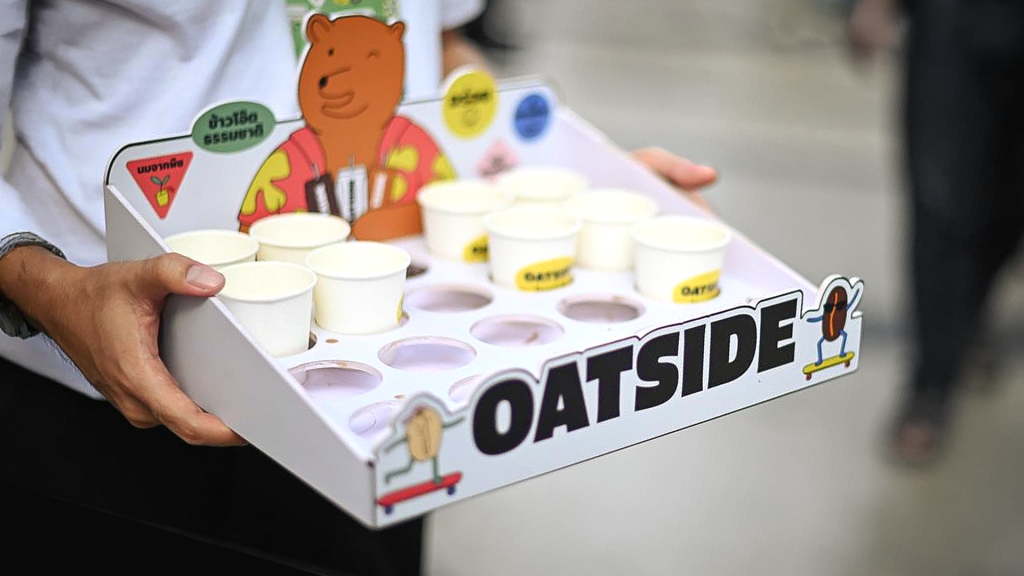
Known for its oat milk, the Singapore-based company closed 2024 with US$74 million in revenue, according to its latest audited financial statement. Its financials show that much of Oatside’s success is thanks to its clever marketing campaigns and partnerships with hip coffee shops across Southeast Asia.
Trending news
Also check out Tech in Asia’s coverage of Asia’s greentech scene here.
1️⃣ A casualty of Trump’s tariffs: India’s nascent solar industry
The US has imposed a 50% tariff on all imports from India, undermining the South Asian country’s growing solar power sector.
Why it matters:
India hoped to position itself as an alternative to Chinese-made solar panels, which had also seen US government scrutiny. New production plants were built across the country to support the US demand for solar panels.
It remains to be seen whether India’s local market can take on this surplus of supply, as the government has mainly extended subsidies for manufacturing and not for installing the panels.
2️⃣ Too hot for school: global push to keep classrooms cool as heatwaves force closures
The Inter-American Development Bank said it is planning a loan program that could be tapped to help developing countries build “heat-ready” schools.
Why it matters:
A 2024 UNESCO report estimated that children were missing up to 1.5 years of school days due to extreme heat. The loan could be used to fund insulated roofs and solar-powered air conditioners in classrooms.
3️⃣ Money is raining down on green-tech firms that have an AI story

Image credit: Timmy Loen
Almost a quarter of VC funding for the US climate tech sector went to nuclear energy startups in the first half of 2025, Bloomberg reported.
Why it matters:
Share prices of clean energy firms or those that position their facilities to be powering data centers for AI have outperformed the S&P 500, according to Bloomberg.
Some experts consider this new narrative as a lifeline for greentech firms that were initially feared to be taking a backseat as the Trump administration clamped down on climate mitigation efforts.
4️⃣ From tissue to trees: How critically endangered plant species are lab-grown in Singapore
Scientists at Temasek LifeSciences Laboratory in Singapore have developed new techniques to propagate tissue from nine species of endangered native trees.
Why it matters:
This can help mitigate the accelerating loss of nearly-extinct trees in the city-state. Some of these trees number less than 50 in the wild.
5️⃣ Global plastic talks fail as ‘hardline positions’ block deal
United Nations delegates still cannot meet halfway in crafting a treaty that could address the impact of plastic pollution globally. Talks have been ongoing for the last three years.
Why it matters:
Bloomberg reports that the discussions have been divided between two options: a proposal to cap the amount of plastic produced worldwide, and an agreement focused on plastic waste collection and recycling. Most of the countries have reportedly favored the former. This could push the possibility of a plastics treaty into further uncertainty, as there have been six meetings so far without significant progress.
Startup watch
1️⃣ Waterhub raises seed funding to expand sustainable drinking water access across Indonesia
Founded in 2025, Waterhub aims to manufacture water filtration systems made for public spaces. The startup is looking to install its water filtration product in schools and businesses.
2️⃣ Indian firm Wastelink raises $3m to boost animal feed supply
Wastelink processes surplus fast-moving consumer goods to be turned into animal feed. Established in 2018, the company aims to provide alternative ingredients for the animal feed industry in India. The sector relies heavily on maize and soya, which could be subject to volatile prices.
3️⃣ Indonesian EV logistics provider Blitz raises pre-series A
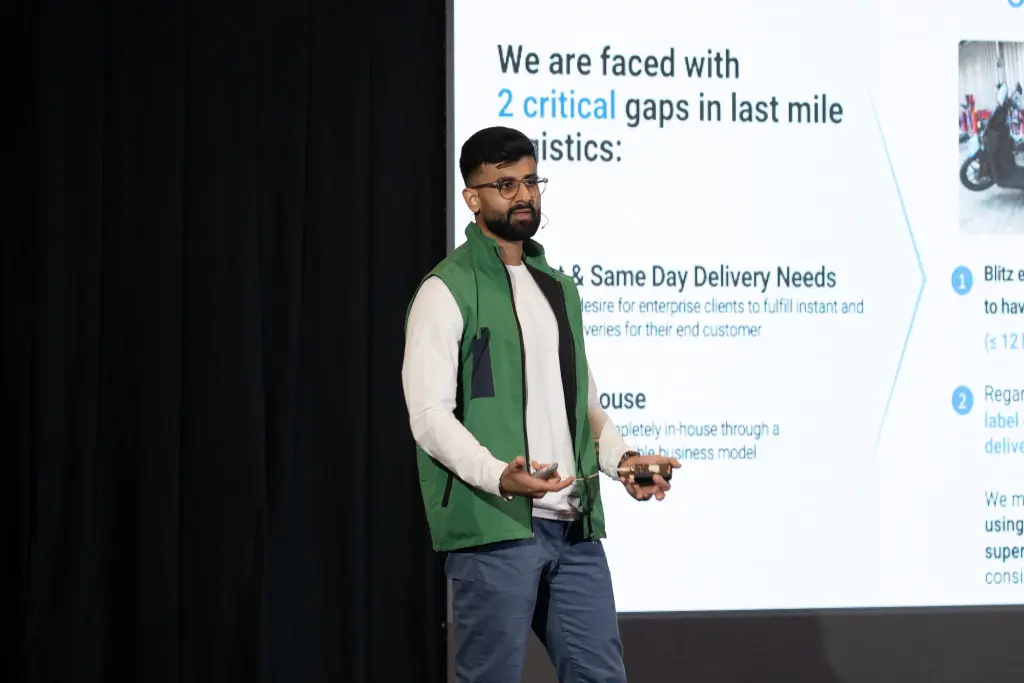
Blitz Mobility founder and CEO Saivya Chauhan Photo credit: Blitz Electric Mobility
The last-mile delivery startup raised the round from Malaysia-based Vynn Capital, Iterative VC, Balaji Srinivasan, Rajesh Venkatesh and Vinner Ventures. The fresh capital is set to help Blitz expand in Indonesia, where it already operates in 60 cities.
4️⃣ Bolt launches business ride-hailing solution in Malaysia
The Estonia-based startup aims to penetrate the Southeast Asian market by entering Malaysia. The firm is already well-established in Europe, with services ranging from car ride-hailing to on-demand deliveries.
5️⃣ Philippines’ Nibertex raises $7m to expand sustainable textile technology
Nibertex manufactures waterproof textile free from per-and polyfluoroalkyl substances or PFAS, which are also known as “forever chemicals.” Exposure to these chemicals has been linked to a number of health problems including fertility and immune system disorders.
That’s it for this edition – we hope you liked it! Do subscribe to continue receiving The Offset.
See you next month!
The Offset is made possible thanks to Taiwan Mobile.
The company hosted a media luncheon with the theme “Tech-Telco Aircraft Carrier Leading the AI Era: New Business Fighters Powering Growth Engines” as it unveiled its three-tier “Telco+Tech” upgrade strategy.
Taiwan Mobile, verified by the Science Based Targets initiative (SBTi), commits to net-zero emissions by 2050.
Stay updated on the go with our mobile app.
Get latest insights with smoother, more personalized experience through TIA mobile app.
Recommended reads
 Indonesian AI startup goes global
 Forrest Li on scaling Sea, building smarter bots, and founder grit
 An AI assistant that joins sales calls and scores team skills
 SGX’s CEO says it doesn’t need a unicorn to win
 SMEs want AI too, but not the kind Big Tech is selling
 Oatside’s alt-milk rise hits a profitable gear
 Alibaba’s financial health in 12 charts
 Asia’s telcos bundle AI into mobile plans. Will it pay off?
 M-Daq chases bigger clients as revenue falls, losses grow
 VC tracker: Accel raises US$3.5b, including US$550m for India





Editing by Peter Cowan and Eileen C. Ang
(And yes, we’re serious about ethics and transparency. More information here.)