Nicolette Tan · · 5 min read
CEO of coding school for kids shares challenges scaling into 3 big markets
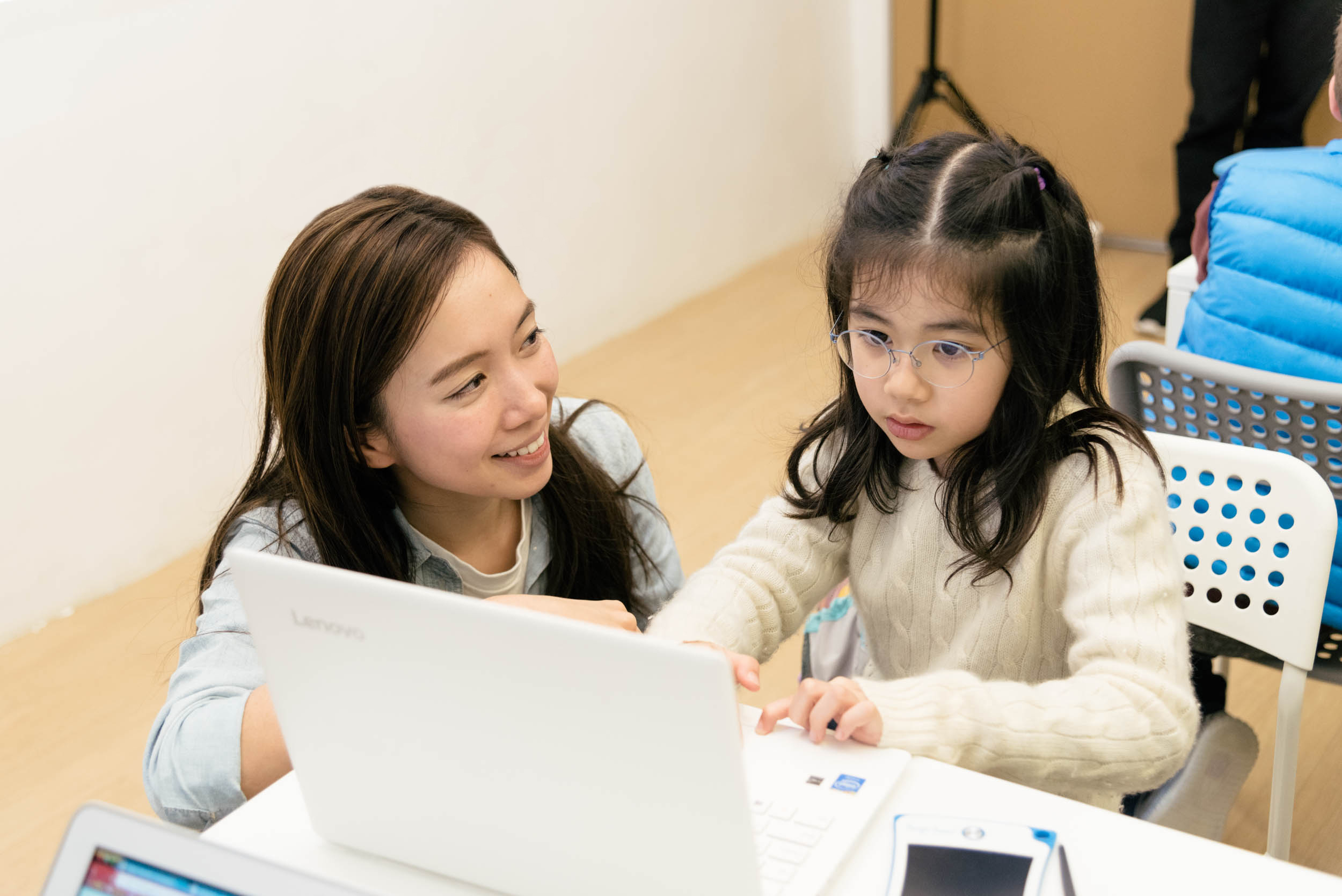
First Code Academy founder Michelle Sun is no stranger to Tech in Asia. Previously, she shared with us her challenges as a female entrepreneur and her passion for coding education.
First Code Academy teaches mobile applications, games, 3D printing, and animation to over 4,000 students five years old and above. In this interview, Sun shares how the company has scaled in Hong Kong, Singapore, and Taiwan.
Did you think of your company as a global one from day 1?
First Code Academy started as a side project when I was at Buffer, and I found that there was a big interest among the kids I was teaching. In 2012, there was nothing like that in Asia.
What is very important to me as an entrepreneur is that I can align my company with my personal sense of meaning and purpose. With coding for children, I arrived at the conclusion that it is a big enough problem worth dedicating my time and effort to and to do it intensely.
Coding is the literacy for this generation of kids, and it is not just a Hong Kong problem, but a global one.
How did you decide what markets to enter?
A huge part of this is market readiness.
When [the company] started, this topic was so early for Hong Kong. In 2015, when we started in Singapore, there was a lot of customer awareness already because it was well-publicized by the local government, and parents already knew quite a bit about coding education.
It is up to us to think about what we can do differently and uniquely for each market and make the decision from there. Government funding is something that changes with policies, so we only see it as a bonus.
What were some of the first priorities when you were launching?
How we launched in Singapore was very different from how we launched in Taiwan—they were in very different stages of our company’s life cycle.
It was very important for us as founders to have launched the market ourselves. We weren’t just launching in a new market, we were learning how to launch in a new market. It is something we believed we couldn’t skip.
On hindsight, it was really helpful because it forced us from very early on to conceptualize our company structure, product, and metrics. Everything has to be modularized and you can’t hack it when you’re not in the same location. It instills discipline in our team.
With Taiwan, our third market, the priorities were different. We started off with hiring—building the right team, finding the right people […], and using data to find a GM that believes in our vision and was a hustler.
What are things you look for when you hire your city launcher/general manager?
The GM has to have local knowledge and be very comfortable in the local market, someone who is so quick to learn that he/she is almost always impatient and chasing you—chasing the metrics. [He/she has to be] someone who is super thick-skinned with a strong sales mentality, someone who is able to be scrappy, can make decisions, and can attract people to join the team.
How have you localized your company to adapt to each of the three markets?
You support gender equality, especially in tech. Has that influenced any of your business decisions?
What challenges do you foresee as the company scales to more markets?





Stay updated on the go with our mobile app.
Get latest insights with smoother, more personalized experience through TIA mobile app.