 Kaya Domingo · · 5 min read
3 ways DeFi can improve how businesses operate and grow

In 2018, DeFi (decentralized finance) disrupted traditional financial institutions.
It operates on a trustless system that eliminates the go-between in legacy banking infrastructures and gives people greater control over their money.
Powered by users and for users, DeFi is often hailed for its promise of transparency and resistance to censorship, a factor that has fueled its rise in popularity.
“DeFi encourages everyone to participate in financial services in a more open way,” says Victor Tran, co-founder and CEO of Kyber Network, the firm behind multichain decentralized exchange and aggregator KyberSwap.
Today, DeFi technologies are present in many applications such as decentralized exchanges and insurance services, among others. But DeFi is a vast space, and while the consumer benefit is often celebrated, its business applications also hold potential.
1. A trusted source of capital
Normally, it takes time for a company to acquire working capital from traditional financial institutions. It also involves many steps such as filing an application, conducting background checks, negotiating contracts, and evaluating collaterals. As such, it may take months for businesses to receive their money, which is a hurdle for small companies that are strapped for time and manpower.
By tapping into DeFi’s trustless smart contracts, these steps are cut short. Identity verification and know-your-customer processes become more efficient because of the transparent nature of the blockchain technologies that smart contracts are built on. This also enables all parties involved to carry out their transactions without additional manual procedures that typically act as failsafes.

Victor Tran, co-founder and CEO of Kyber Network / Photo credit: Kyber Network
“Especially for B2B businesses and finance companies, we often get into situations where we need funds urgently, and the speed DeFi provides becomes vital,” says Tran.
Besides taking out loans, businesses may also offer loans themselves for extra cash flow. They can do this by depositing certain tokens, such as stablecoin USDC, into DeFi lending protocols. After they’ve deposited their tokens as collateral, other users can borrow from a combined pool. The interest generated is then returned to the user that provided the initial loan.
2. Secure and efficient notarization
In usual financial transactions, someone is often assigned to manually comb through documents before sending them to a notary organization for final authentication.
On top of that, these documents take time to draft, review, and sign, especially when several parties are involved. Banks may also act as an intermediary in these situations, adding even more steps as well as extra fees.
The entire process can take up to a week in some cases – not to mention that there’s a risk of human error as well.

As traditional banks protect their customers’ transactions with contracts, things could become complicated should disputes occur: lengthy and costly legal proceedings are just some of the issues involved.
DeFi has changed this entire landscape. It enables near-instant notarization and authentication of transactions andhas made B2B financing, payments, and other transactions much quicker without sacrificing user security.
“One very good characteristic of blockchain is integrity. Once you do something, you cannot revert this. This means, when you send money out, you’ll see it leave your wallet, and there’s no way for the other party to claim they have not received it,” says Tran.
“Smart contracts ensure any kind of exchange is safe.”
3. An avenue for diversification
Aside from keeping transactions safe, DeFi also offers businesses a secure way to diversify their investments through crypto, allowing them to spread their overall risk and improve potential gains. That’s because DeFi allows users to maintain complete control over their funds and make withdrawals whenever they like, which also provides better liquidity.
“I think the whole purpose for businesses to tap into decentralized finance is for them to make the most out of the capital they have. They don’t want to keep their capital sitting in the bank, losing money. They want to invest and do things to yield greater funds,” says Tran.

Photo credit: prathanchorruangsak / 123RF
In some respects, DeFi is also a better alternative to centralized companies such as Hodlnaut or Three Arrows Capital when investing.
While centralization does have some benefits in this area – such as being more strongly regulated – it lacks the privacy, trustless factor, and financial autonomy of DeFi. Additionally, centralized organizations ultimately maintain control over investors’ funds. Should these companies find themselves in trouble, it’s possible that investors could lose access to their money.
This would not happen with DeFi, as decentralized platforms do not control investors’ funds.
Toward a decentralized future
Despite such promising business use cases, fear, uncertainty, and doubt – also known as FUD in the crypto industry – remain in the DeFi space. This is especially true amid recent scams involving predatory figures looking to make a quick buck. These sentiments have raised conversations about the soundness of DeFi and the need for regulations.
Tran believes that regulations are important and that ideally, they should strike a balance between user protection and freedom of choice. More specifically, regulations should have the goal to eliminate terrorism financing and money laundering while allowing space for industry innovation and consumer freedom. To accomplish this will require continuous discussion between regulators, the industry, and the market.
“Users want to be protected, especially when it comes to gaps in knowledge, abilities, and the like,” says Tran. “The balance we must strike when it comes to regulations is protecting these users without censoring them or blocking them from using technologies such as DeFi.”
Tran also believes we’ll see higher-quality DeFi services and a greater emphasis on user privacy and user protection in the future.
“Privacy is a basic human right. We’re going to see more focus on user protection and data privacy, not just with DeFi but also in a traditional, centralized sense.”
Kyber Network’s KyberSwap is a decentralized exchange aggregator that enables users to swap, earn, and participate in DeFi in a seamless manner.
Read more about DeFi on Kyber Network’s website.
This content was produced by Tech in Asia Studios, which connects brands with Asia’s tech community. Learn more about partnering with Tech in Asia Studios.
Stay updated on the go with our mobile app.
Get latest insights with smoother, more personalized experience through TIA mobile app.
Recommended reads
 Ethereum’s Merge: key questions answered
 Binance gets digital assets license from Kazakhstan
 Crypto exchange OKX looks to turn a new leaf
 Binance’s big BUSD push heralds a stablecoin summer
 Singapore completes first foreign exchange with tokenized currency
 Malaysia: No country for tech heroes
 China’s Supreme Court logs 2.6b pieces of evidence on blockchain platform
 HashKey secures virtual asset trading license in Hong Kong
 SG High Court justice says NFTs can be property
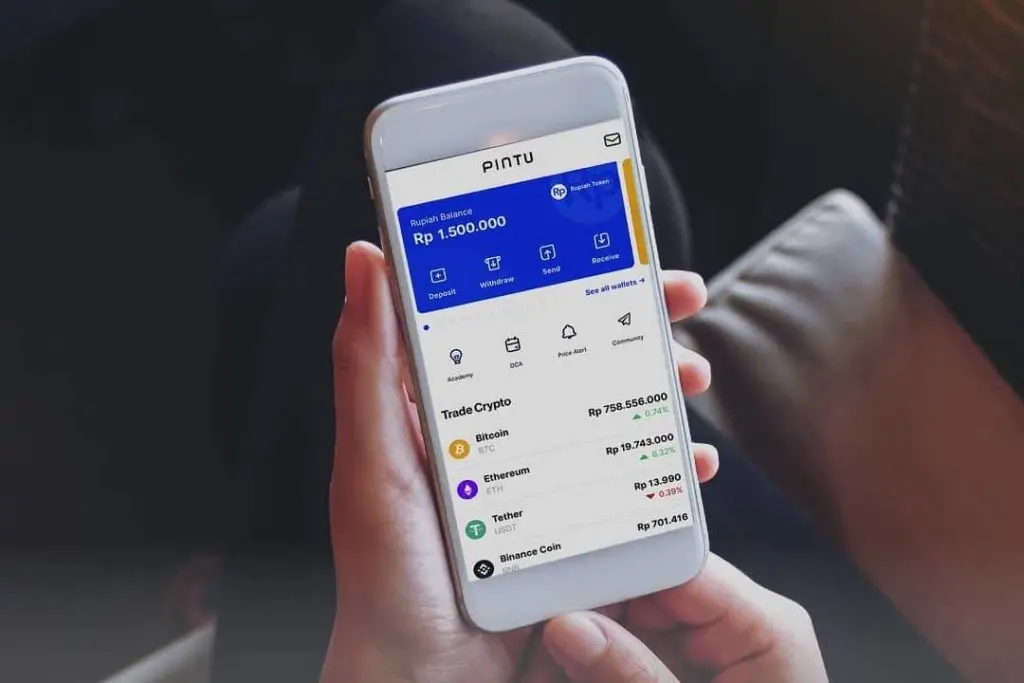 Indonesia’s crypto exchanges face fuzzy future amid new regulations





Editing by Jonathan Chew, Winston Zhang, and Jaclyn Tiu
(And yes, we’re serious about ethics and transparency. More information here.)



📅 Upcoming Events
22 October 2026
Payoneer x CSPN Summit 2026