Jonathan Chew · · 5 min read
This Singaporean real estate platform is taking blockchain Down Under

In Singapore, the real estate market hasn’t just gotten hot – it’s blazing.
Property values and private rentals have both surged in recent months, giving rise to a wealth of opportunities for investors.

With interest in the sector at a high, more investors are looking to get in but are faced with a problem: Typically, investing in real estate projects requires extremely high initial capital. But Fraxtor came in at just the right time.
The company uses blockchain tech to offer fractional investing in real estate projects. This way, instead of having to commit a large amount of capital, prospective investors can purchase blockchain tokens for as little as US$14,800.
With this solution, Fraxtor has carved out a strong growth trajectory since it raised US$1.3 million in pre-series A funding in 2021.
Oliver Siah, Fraxtor co-founder and group managing director, says that in 2022, the company closed some big projects, saw its user base double, and “raised more than S$30 million (US$21.8 million) in real estate investments.”

(Left to right) Oliver Siah, co-founder and group managing director, and Rachel Teo, co-founder and group director / Photo credit: Fraxtor
The company also tripled its year-on-year revenue from 2021 to 2022 and secured the capital markets services license in February last year.
With these achievements under its belt, the firm has set its sights on foreign shores: Australia.
“It was time for us to scale,” Siah shares. “We’re not like toddlers who only know how to crawl – we can start to walk and run around without worrying so much about funding.”
Square pegs for square holes
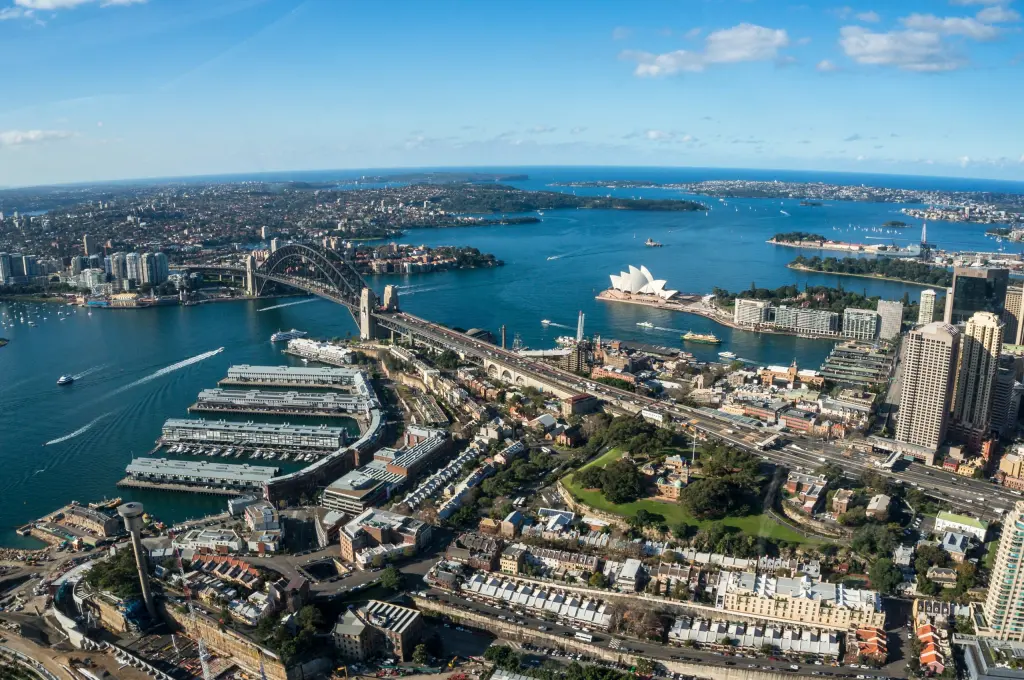
Siah originally wanted to begin Fraxtor’s Australian expansion in 2020, but was stopped short due to pandemic lockdowns. Loosening restrictions have made it possible now, allowing Fraxtor to explore the full range of opportunities it sees in the country.
First, Australia has a significantly larger population than Singapore’s by almost 5x and a correspondingly bigger real estate market due to the land size. This gives Fraxtor a wider potential user base and more projects to bring onboard.
Second, Siah says that he and his team have a good grasp of the relevant Australian laws. Its regulations on securities and blockchain tech are largely similar to Singapore’s.
“In Australia, the concept of using blockchain technology to create security tokens doesn’t seem to be a very controversial issue,” he explains.
Lastly, the Land Down Under is a place that Siah and his co-founder Rachel Teo are familiar with. Both Siah and Teo undertook their university studies there. Additionally, Teo’s family has many real estate investments in the country and knows the market well, giving Fraxtor’s leadership a leg up.
Double-sided problems
Fraxtor set out to solve two main problems faced by stakeholders in Australia.
For one, many investors don’t have enough exposure to overseas real estate investments as there are limited platforms and services that offer such information.
“Australian investors are mostly exposed to a single market and don’t really have access to high-growth properties abroad, so they’re unable to diversify their real estate risk,” Siah points out.
Apart from that, he explains that obtaining financing is more challenging for Australian property developers than their Singapore-based counterparts. In Singapore, banks often fund the majority of a project.
“In Australia, this is different. The banks don’t typically finance developers unless they have development approval or pre-sales. This makes it very difficult for them to raise money,” he shares.
If real estate developers cannot secure enough financing from banks or other sources, they may face various issues, such as material cost increases, supply chain hiccups, and labor shortages.

These are gaps that Fraxtor is well-placed to solve.
Its platform allows investors to participate in overseas projects, enabling them to diversify their portfolios beyond their local markets. Through Fraxtor, some Singaporeans have already invested in Australian properties like apartment complexes. Once the platform launches in Australia, local investors will be able to access the Singapore property market as well.
As for developers, they’ll be able to fundraise directly from accredited and institutional investors, all of whom are consolidated in one place, making the process easier. Several Singapore-based developers have already worked with Fraxtor to raise funds for projects, including one for a S$43.8 million bungalow.
Three, two, one … lift off!
With a clear view of how Fraxtor can solve the market’s challenges, Siah is looking to launch the platform in Australia in mid-2023.
To that end, Fraxtor is tweaking its client onboarding and verification process for Australian users. While Singaporean investors can use Singpass, a government-issued digital identity platform for residents, Australian investors do not have this feature. Consequently, other methods such as facial recognition will be deployed to ensure that Australia’s stringent compliance criteria are met.
Fraxtor’s legal team is already drafting the relevant documents, legal write-ups, and terms and conditions to cover all the bases before the platform’s release, Siah says. And despite the differences in the two markets, there is one strategy that Fraxtor will maintain: not “going crazy” on marketing.
“The important thing is to establish the brand name and the business first before pushing mass marketing,” he says. “We prefer the long-term approach rather than having high burn at the start of our life cycle.”
All told, Siah remains “cautiously optimistic” of this new endeavor in Australia.
“We already have partners and a base of investors, so that’s who we’re going to target first. Slowly after that, we’ll expand outwards beyond that group,” he adds. “We’re not expecting to have a boom on day one in the Australian market – we know it will take time.”
Fraxtor is a digital platform that uses blockchain technology to promote financial inclusion by enabling easy access to investments and lowering capital outlay.
To find out more about Fraxtor, visit its website.
This content was produced by Tech in Asia Studios, which connects brands with Asia’s tech community. Learn more about partnering with Tech in Asia Studios.
Stay updated on the go with our mobile app.
Get latest insights with smoother, more personalized experience through TIA mobile app.
Recommended reads
 Life’s a game, and AI agents are Animoca’s new play
 Indonesian AI startup goes global
 Forrest Li on scaling Sea, building smarter bots, and founder grit
 An AI assistant that joins sales calls and scores team skills
 Beyond the check: Why VCs need more than capital
 SGX’s CEO says it doesn’t need a unicorn to win
 SMEs want AI too, but not the kind Big Tech is selling
 Oatside’s alt-milk rise hits a profitable gear
 Alibaba’s financial health in 12 charts
 Asia’s telcos bundle AI into mobile plans. Will it pay off?





Editing by Winston Zhang and Dhania Putri Sarahtika
(And yes, we’re serious about ethics and transparency. More information here.)