Anh-Minh Do · · 4 min read
With Southeast Asian Web Entrepreneurs Eyeing The Region, You Better Learn This Stuff
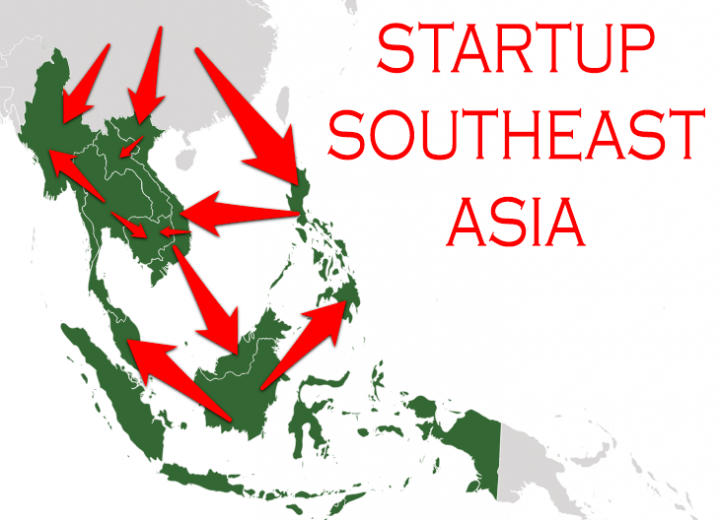
The more I write about Southeast Asia, the more I realize everybody is eyeing everybody else’s market in the region. Certainly, there have been inklings of this in the last five years, but you can really feel the momentum these days with so many elements coming into place. Let’s take a look at what Southeast Asian tech and web entrepreneurs need to do to start making it happen successfully.
Why the region is heating up
There are a number of reasons why this year and in the next two to five years (if not the next decade) there’ll be a heated battle for the web in the Southeast Asian region. But there’s a handful of key reasons why I think it’s all going down now. This includes:
-
Political stability: As diverse as this region is politically, things seem to be stable (relatively speaking) with Myanmar opening up, Thailand’s drama over, Indonesia looking solid, and the ASEAN body slowly cooperating on economic cooperation.
-
Opening borders: By 2015, the ASEAN region will start to act more and more like the EU with things like AEC, the ASEAN economic community wherein ASEAN will resemble EU, coming into play. It’s already easier to travel around the region without a visa.
-
Big companies, small domestic markets: As Chinese companies begin to encroach on the region, it’s becoming clear that China has a significant advantage over Southeast Asian businesses: a domestic market to grow in first before attacking foreign markets. In order to survive, Southeast Asian tech startups have to think regionally first. They have to treat their region the same way Chinese startups treat their entire country.
-
Rocket Internet: It’s undeniable that Rocket has placed a seed in everybody’s mind that “hey, there is one company out there that can go across the region.” Sure, it’s the company (or mafia of companies) that everybody loves to hate, but they’re trying to push a fast and reflexive model that people are envious enough to replicate. Rocket can’t be ignored as one of the biggest (and richest) consumer-oriented tech companies across the region.
-
The region is obviously a bigger pie: Investors aren’t so interested in startups that are not going global or regional now. It’s a practical concern. If your domestic market is at 30 percent internet penetration (the regional average more or less), and your population is anywhere from 30 to 100 million, it’s obvious this is nothing next to the total Southeast Asian population of 610 million people.
-
Domestic markets plateau: On top of all this, most domestic markets, as fast as they’re growing in mobile, internet adoption, and user education, are still plateauing in terms of the addressable market for specific startups.
Here’s what you need to learn, fast.
-
The key players: Go out, network, and meet all the right people in the local startup and tech community. Every startup community has hidden and visible leaders. Those people can give you insight into the local scene, insights into how your product or company may perform in the local economy, and give help when you need it. The key is to use a shotgun attack. Don’t just focus only on the VIPs because they’ll give you their perspective, meet everyone you can, up and down the ladder.
-
Local economics: Southeast Asia is arguably one of the most diverse regions for a variety of reasons. That means a business that is successful has to be able to adapt to the diversity. There are a few e-payment systems and the whole sector is really fragmented; that’s why cash on demand, though such an old-fashioned system, still dominates much of the region when it comes to e-commerce. So your product better be ready for that. Talking to a few key players will immediately give you an idea of how the micro and macro are doing. For example, Vietnam’s macro economy isn’t doing too good right now, so it’s better to wait until next year to see it bounce back.
-
How the culture and scene works: Every scene has its own peculiarities. That’s born out of the different economies, politics, cultures, and larger startups and web companies that shape the personality of the local community. The advantage in understanding this is knowing where you fit into the ecosystem – how you can help others, and how they can help you.
What am I missing?





Stay updated on the go with our mobile app.
Get latest insights with smoother, more personalized experience through TIA mobile app.