Malavika Velayanikal · · 7 min read
This new book on startups tells you how to build the next Uber for X

Uber for X, Airbnb for Y, Facebook for Z. These business models of the internet age have become all too familiar. But do we really understand what makes some of them click and not others? Why do so many companies that try the same model in different verticals – from a media website to a home services platform or food delivery app – risk biting the dust? What’s so hard about building a Medium for A?
It’s because the platform model is trickier than it appears. Many entrepreneurs jumping into it don’t have a full grasp on the fundamentals underpinning the success of a YouTube or a Twitter or an Instagram. They look at the superficial features of a LinkedIn and adopt this, that, or the other feature.
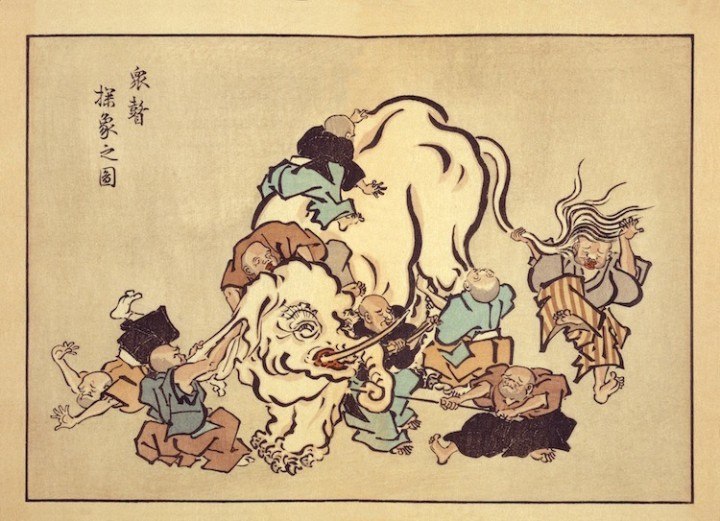
Sangeet Paul Choudary, INSEAD entrepreneur-in-residence and author of Platform Scale, likens it to an old Indian tale about six blind men and an elephant. Each one of them feels a different part of the elephant and comes up with his version of the object. The one who holds the trunk thinks it’s a snake; another one with his arms around the elephant’s leg describes it as a pillar; a third blind man with his palms on the side of the elephant visualizes a wall, and so on.
Pipes vs platforms
Choudary, who is the co-chair of MIT’s Platform Strategy Summit and an advisor to 500Startups, helps the reader step back and see the elephant in its entirety. He begins by describing two business models, which he calls “pipes” and “platforms.” Pipes represent the old way, with producers of things, services, or content at one end, and their consumers at the other. Platforms, on the other hand, use a plug-and-play model to connect multiple producers and consumers. Think of how Uber’s drivers or Medium’s writers use those platforms to reach their riders and readers.

Firstly, they’re not employed by Uber or Medium. So the platforms have to make it worth their while to plug in. Drivers make themselves available on Uber because they get more customers, more efficiently (apart from discounts, bonuses, and other incentives.) In the case of Medium, the value in it for writers is more nebulous – they get a bigger audience than they would on their own, gain social reputation, market themselves or their businesses, and so on. Tech in Asia too is now a platform for Asia’s tech community.
This brings us to one of the corollaries of adopting a platform model: curation. Unlike a piped system where content or products can be tightly controlled to fit requirements, the platform by its very nature brings in a more varied offering. This is a challenge because it can raise the noise level, flood the platform with unwanted users, and eventually dilute a brand.
A traditional business has direct control over its assets, employees, and deliverables. A platform sacrifices some of that control in exchange for an asset-light model that can scale faster. To ensure it doesn’t lose its focus and continues to give its consumers the quality they expect, it needs some form of curation. Uber does this by allowing customers to rate drivers. Medium is evolving metrics to measure the value of articles to readers, and making some of them more visible than others. YouTube has upvotes and displays the number of views a video has received.
It’s an imperfect science, and in every vertical and market, a platform has to figure out how to curate products and content. The catch is that if the curation gets too strict, then the producers – Uber’s drivers and Medium’s writers – will go elsewhere. So there’s a fine balancing act in deciding what’s acceptable for a platform and adds value. “The goal of platform scale is to ensure the simultaneous scaling of quantity and quality of interactions,” writes Choudary.
Airbnb does it by ranking hosts with good reputations higher. These homeowners who build up their reputation on Airbnb then have an incentive to stick to the platform instead of switching to a similar new platform that comes along, points out Choudary.
A problem of plenty
It’s the network, stupid
A guide for entrepreneurs





Stay updated on the go with our mobile app.
Get latest insights with smoother, more personalized experience through TIA mobile app.