 Leighton Cosseboom · · 15 min read
Blockchain tech can eradicate corruption in Asia

Oscar Darmawan, CEO of Bitcoin Indonesia, draws an illustration of blockchain technology.
Oscar Darmawan sits alone at Luciole Bistro at Central Park in West Jakarta. When I enter, he stands and shakes my hand warmly and talks a little about his past. He’s soft-spoken and young-looking. His appearance reminds me of the shy kid in science class who has all the answers in his head and will share them if only you ask nicely. As we start our conversation, he politely orders spaghetti carbonara, and tries to get a sense of how much I know. He then pulls out a laptop and shows me how to buy a brick of heroin online. A few mouse clicks later, we’re browsing for illegal arms on the dark web.
He doesn’t look like a dangerous man, but he is the smartest guy in the room. Darmawan is the CEO of Bitcoin Indonesia, an exchange where folks can buy and sell the controversial cryptocurrency known as bitcoin, a form of digital money that’s more secure than any bank in the world, all but impervious to regulation, flawless and complete in its ledger, 100 percent public, and virtually untraceable for those who use it. Darmawan graduated with an IT degree from Monash University in 2006, then went to help carry out cyber security projects for private companies, militaries, and government organizations in Indonesia and Singapore. He’s not allowed to share the details.
If you don’t know what bitcoin is, don’t worry. Chances are you’re a normal person who’s just never considered alternatives to money as we know it. Inherently, bitcoin is neither a malicious nor a benevolent thing. It’s just another currency. Just like any other form of money, bitcoin’s value and strength against other currencies fluctuates by the minute. At the moment, one bitcoin is valued at US$256, as per data from CoinDesk’s real-time charts. The real miracle, however, isn’t that the nerds have come out with a new form of currency, it’s that enough people in the world have decided bitcoin possesses intrinsic value. It’s exactly this consensus which makes it real today; a self-fulfilling prophecy.
Currently, Darmawan’s company facilitates transactions of between 200 and 400 bitcoins per day with more than 68,000 registered members. “It’s kind of funny because I don’t really care about bitcoin,” says Darmawan. “To be honest, I am not a bitcoin believer in terms of price, but I really believe blockchain technology will eventually change the way the system works.”
The fact that you can use bitcoin for semi-anonymous trans-national crime is less of an indictment of the tech itself, and more of a reflection of how the world is about to change. Arguably, most banks, governments, and regulators don’t seem to get it, and are perhaps even afraid of its disruptive potential. But again, the real disruption isn’t bitcoin itself. It’s the little-understood technology behind it: the blockchain.
The building blocks of democracy
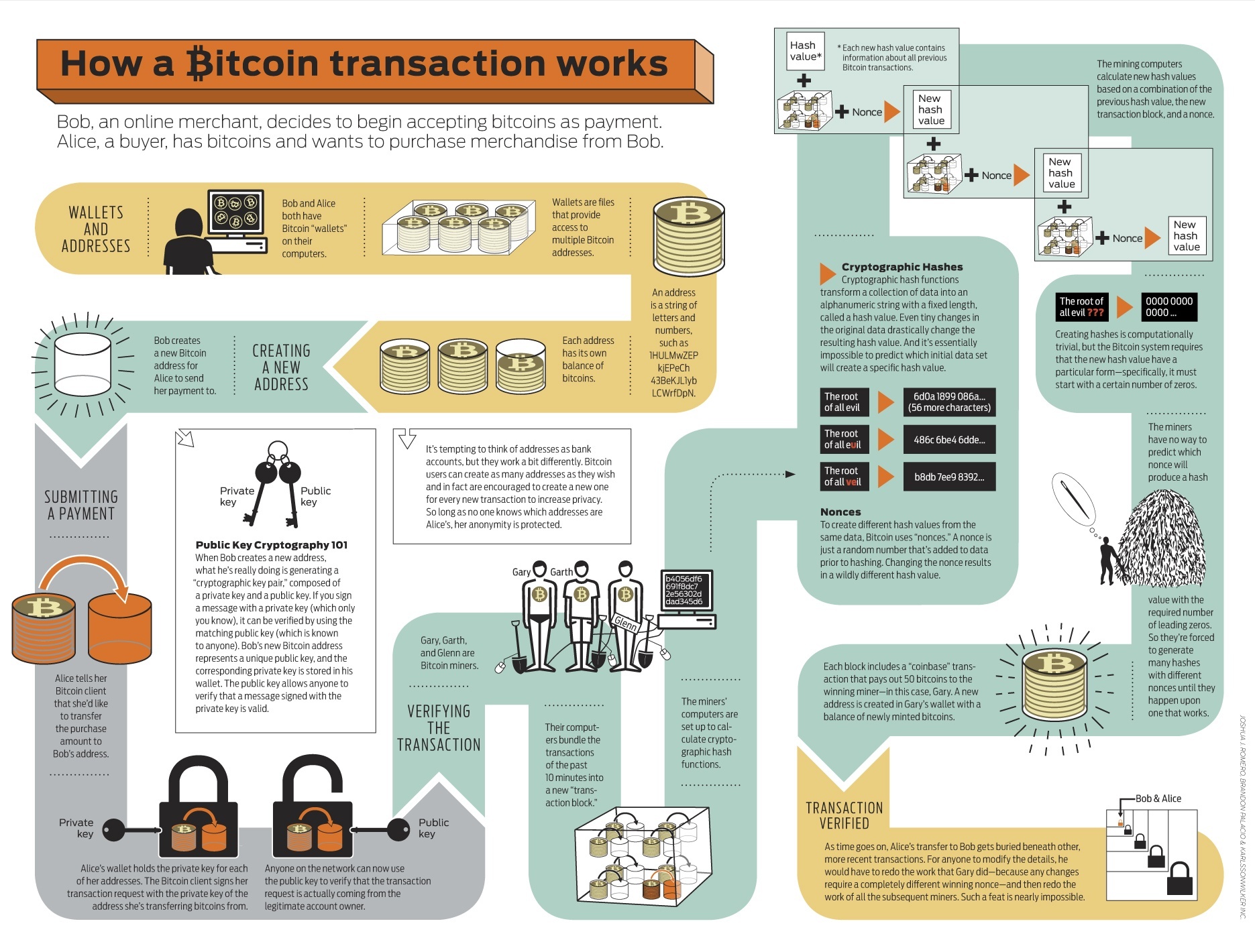
I’ll try to break it down as simply as I can. A blockchain is nothing more than a record of online events. The ledger is public, and shared among all the different parties on a network – nodes on the blockchain. It can only be updated by consensus from a majority of the users in the system. Additionally, once entered, the history is permanent and can never be deleted… ever.
Still with me? Because of this, the bitcoin blockchain contains a verifiable record of every transaction ever made. The key thing to remember is that blockchain tech decentralizes everything. There is no master data center where you’ll find the blockchain’s brain or stacks of overheating servers. It’s designed to mirror and replicate transactions to thousands of other participants, and is therefore everywhere. This has huge implications for emerging markets in Asia Pacific, particularly for governments in places like Indonesia with long histories of corruption and ongoing problems with government transparency.
See: I just bought my first bitcoin. Here’s what I learnedBecause any given blockchain (yes, there are others outside of bitcoin) lacks central leadership, there’s no single person or entity to hold responsible for the stuff it’s used for. Even if you shut one node down, the blockchain will persist without a hiccup. As our friends in the media recently put it, “a blockchain is a highly-distributed, leaderless, jurisdictionless, identityless, nearly anonymous, decentralized architecture for managing ownership.” Sounds a bit like Skynet from Terminator, right? Maybe not yet, but perhaps one day.
What many people — even tech founders — don’t fully understand is that blockchain technology also has profound implications for a variety of sectors, not just cryptocurrency and fintech. Legendary VC and founder of Netscape Marc Andreessen calls blockchain “the most important invention since the internet itself.” It has potential to rework or soup up nearly every industry. A few prime examples include the stock market and traditional banking. But it can also be applied to broader issues like government transparency, smart contracts, legal proceedings, and genome mapping. The virtual sky’s the limit.
There are already a few mad scientists around the world using blockchain outside of currency. With an office in San Mateo, California, Bitproof replaces traditional notary services with a way for anyone to instantly create proof of ownership that is verifiable.
Blockchain can also be applied to the Internet of Things. It can help identify devices so no cyberattack is possible. Devices can turn into nodes that are plugged into a blockchain. From a consumer standpoint, this could mean each appliance in your house can be aware of the others, and carry out functions accordingly. IBM recently did a project with Samsung on how to implement blockchain (in this case Hyperledger) in smart devices like washing machines and TVs.
A volatile ingredient for Southeast Asia
When big banks bet big
The multiplier effect
A new nervous system





Stay updated on the go with our mobile app.
Get latest insights with smoother, more personalized experience through TIA mobile app.








📅 Upcoming Events
22 October 2026
Payoneer x CSPN Summit 2026