Nadine Freischlad · · 6 min read
This Indonesian company designed the most energy efficient building in Southeast Asia
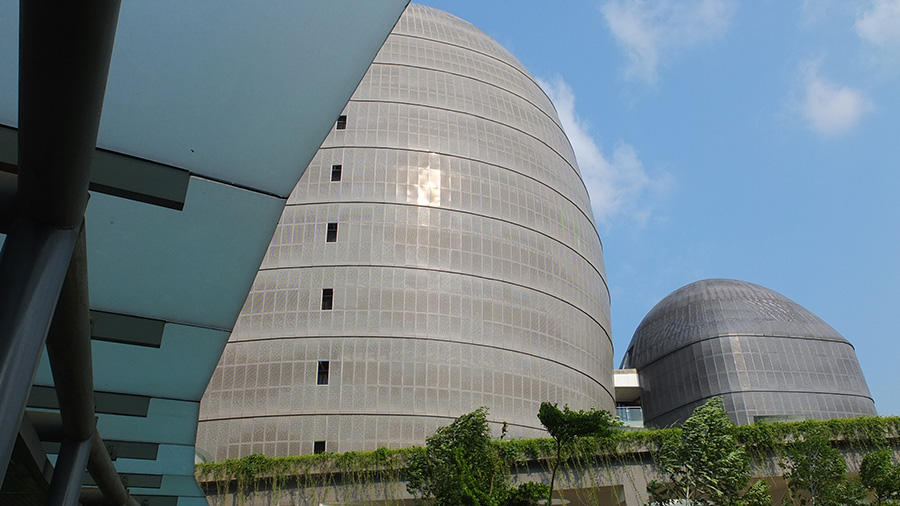
Remember that futuristic-looking building I wrote about some months back? The tall grey egg-shaped tower is home to SkyStar, one of Jakarta’s fanciest co-working spaces and startup incubators.
This is what it looks like inside:
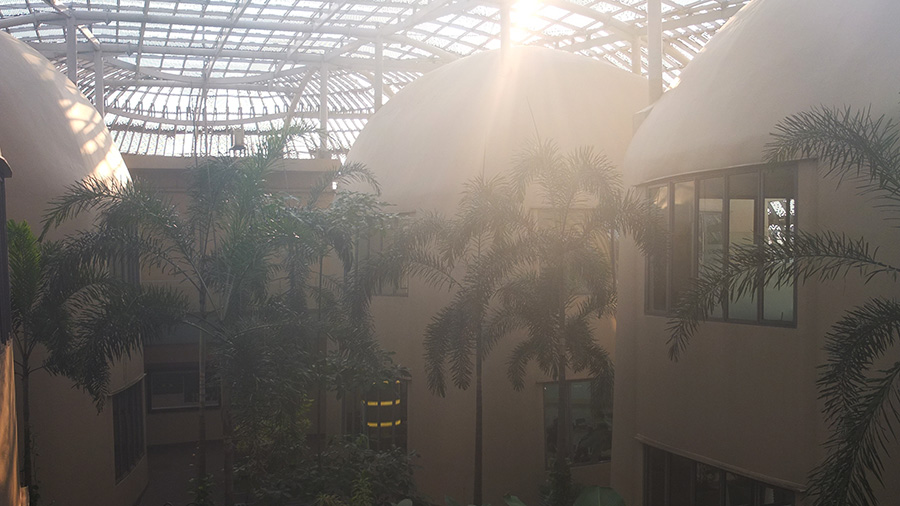
The building was named the most energy efficient building in Southeast Asia last year. It also resembles a set straight out of Star Wars’ Cloud City. The towers are part of the Universitas Multimedia Nusantara complex, a university associated with Indonesia’s Kompas Gramedia publishing group.
But this story isn’t about the startups in SkyStar’s incubation program (I’ll get to them another time). It’s about the tech company that designed the structure. Its name, Synergy Efficiency Solutions (SES), is a mouthful, but it solves a straight-forward problem. SES helps existing buildings, like hotels, hospitals, or universities save energy, and it designs new buildings with optimal energy efficiency in mind.
An extended surf trip
SES was founded seven years ago by Steve Piro, a Californian who ended up settling in Indonesia after what was intended to be a one-year surf trip.
At home, he studied environmental science and economics. His first job in Indonesia was as a biology teacher, but he soon found his way into the energy sector by doing carbon audits, which means assessing and quantifying a company’s total carbon dioxide emissions.
“One day a client pulled me aside and said ‘we don’t really care about this carbon stuff. Just help us be more energy efficient so we can save money,’” Piro recalls.
That stuck with him. He recognized the way to get companies to commit to energy efficiency is not through a cleaner environmental conscience – it’s through saving money. When this key marketing message materialized, he founded SES. The company now counts 15 employees as it upgrades and designs buildings all over Indonesia, and internationally.
Piro knew saving energy wasn’t as complicated as is sounds. In Indonesia, where buildings don’t tend to be built on principles of energy efficiency, he found a lot of low hanging business fruit.
“Sometimes changes as subtle as placing anti-glare film on windows can lead to noticeable savings,” he explains. Often, it’s old equipment like cooling systems, or pumps, which need replacement.
SES primarily deals with hardware. It enters a building with measuring equipment and identifies and upgrades the big energy wasters. But the company also relies on sophisticated tech solutions, like 3D modelling to study energy flows, and sensors to monitor energy consumption in real time.
Pay me when you start saving
Technology agnostic
Crowdfunding in the future





Stay updated on the go with our mobile app.
Get latest insights with smoother, more personalized experience through TIA mobile app.