
Welcome to The Offset! Delivered once a month via email and through the Tech in Asia website, this free newsletter breaks down the biggest stories and trends in greentech. Get it in your email inbox by registering here.
Dear readers,
Climate action is big business nowadays and no longer the preserve of a fringe element of society. That means the bottom line has to add up for crucial climate projects to hit their goals.
Just look at today’s Deep Read, which dives into why the offshore wind power industry needs to adjust to some new realities for it to achieve the environmental good many hope it can.
Today’s issue also looks at a promising development on the path to fusion energy.
— Peter
THE BIG STORIES
1️⃣ Indonesian startups work to clear the air as pollution grips capital city

Photo credit: Shutterstock
You can’t help but notice the haze and pollution that regularly blankets the city when you fly into Jakarta. So it comes as no great surprise that air pollution has led to more than 8,100 deaths this year in Indonesia’s capital.
Fortunately, all manner of startups are tackling the problem and reckon they can become profitable companies doing it, whether they be selling air monitors or electric vehicles, or tackling waste management problems.
2️⃣ Selex Motors bets on battery swapping to lead Vietnam’s EV revolution
VinFast may be Vietnam’s most famous EV manufacturer, but it’s not the only player in the burgeoning industry. Selex Motors is approaching the industry in a slightly different way – by focusing on the B2B market and delivery drivers with its battery-swapping stations.
DEEP READ
The struggles of the offshore wind industry
For the world to replace fossil fields with renewable energy, wind power will have to produce a lot more energy. In fact, some NGOs think offshore wind capacity will have to go up from an output of 70 gigawatts globally to more than 2,000 gigawatts by 2050.
However, the offshore wind industry faces an increasingly difficult business environment that may make it hard to reach that goal. This year, the sector has suffered a double whammy of rising interest rates – making financing more expensive – and increasing materials costs.
Wind power project developers have complained that equipment manufacturers are passing on their higher costs to them. Chinese manufacturers supplied 60% of the world’s installed wind power capacity last year.
Despite these rising costs, governments in the west have prioritized keeping electricity prices low for consumers, making it harder for developers to recoup their investment. The owners of wind power projects typically sign long-term contracts dictating the price they will sell their electricity for, but these deals now look out of line with construction costs.
Equinor, Norway’s majority state-owned energy company, develops offshore wind projects in markets including Vietnam and has called the market conditions today “the first significant hurdle for offshore wind.”

Image credit: Timmy Loen
TRENDING NEWS
Also check out Tech in Asia’s coverage of Asia’s ecommerce scene here.
1️⃣ Tesla joins GM, Ford in slowing EV factory ramp as demand fears spread
Tesla, General Motors, and Ford have all signaled caution over expanding their EV manufacturing capacity, blaming economic uncertainty and fears of a dip in demand. Pricing and affordability could be culpable for the drop in demand rather than a rejection of such vehicles, according to analysts.
Why it matters:
Carmakers and governments alike have billions of dollars invested in the EV supply chain. The end products need to keep rolling off factory floors to justify those investments, and to replace internal combustion engines as a whole.
2️⃣ ‘We’re losing money to climate change’: Corporates push for fossil fuels phase-out ahead of COP28
A total of 131 companies worth US$987 billion in combined annual revenue have called on world leaders to push for a full phase-out of fossil fuels. Firms including Unilever, Danone, Nestlé, Bayer, Heineken, Hewlett-Packard, Volvo, and IKEA signed the open letter ahead of the COP28 conference.
Why it matters:
The signatories have said climate change is hurting their businesses, and they believe ending the use of fossil fuels could boost the global gross domestic product by 4%. They’ve made both the environmental and business case for renewables.
3️⃣ BlackRock warns investor disdain for mining threatens green transition
The world’s efforts to shift to greentech could be hampered by investors’ hesitance to put their money into the mining industry, BlackRock has warned. Valuations of some of the world’s biggest mining companies are lagging behind where they should be, said Evy Hambro, global head of thematic and sector-based investing at the US group.
Why it matters:
Vast amounts of materials like copper, iron ore, and nickel are needed to fuel green technologies. A scarcity of those materials would severely hamper the green transition.
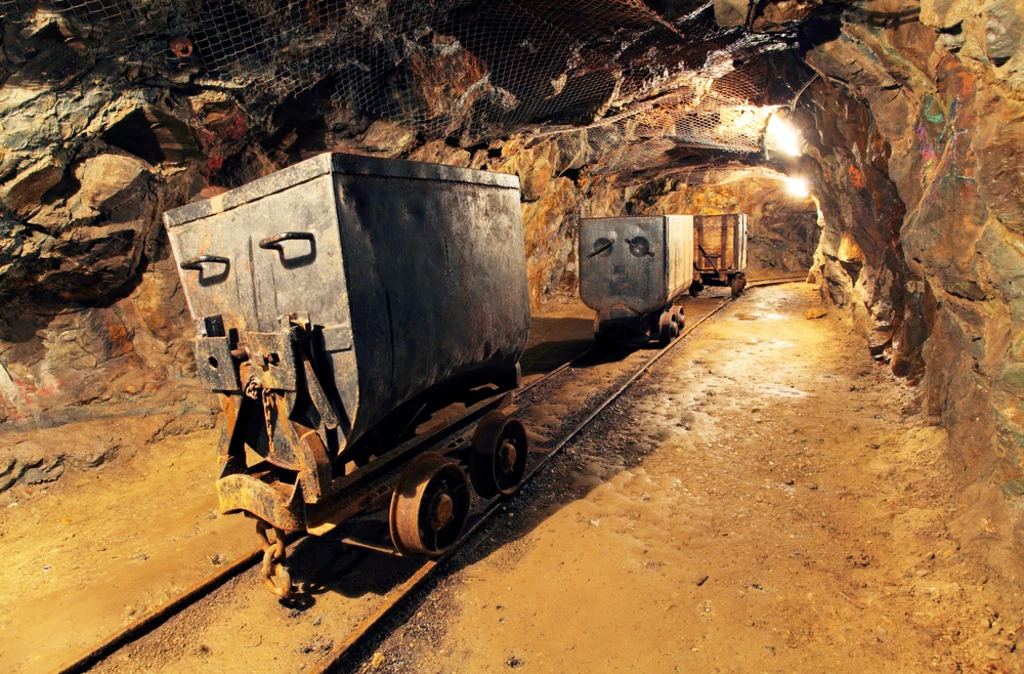
Mining carts / Photo credit: TTstudio / Shutterstock
4️⃣ GIC and Petronas to invest in green ammonia project in India
Singapore’s sovereign wealth fund GIC and Malaysian energy giant Petronas have teamed up to invest in a project that aims to produce 5 million tonnes of green ammonia annually in India. AM Green, which was established by the founders of Indian clean energy firm Greenko Group, is managing the project.
Why it matters:
Green ammonia means ammonia that has been produced in an environmentally friendly manner. Ammonia is widely used in agriculture, so switching to a green version of the chemical could massively reduce farming’s carbon footprint.
5️⃣ Japan’s fusion power project reaches plasma milestone
Researchers at the JT-60SA research facility have made a breakthrough in efforts to harness a potential next-generation energy source. Located northeast of Tokyo, the facility has produced what is known as “first plasma,” which is one step on the way to producing power via nuclear fusion.
Why it matters:
Power produced by nuclear fusion doesn’t emit any greenhouse gasses. The process also generates less radioactive waste than nuclear fission reactions.
STARTUP WATCH
1️⃣ Singapore EV charging firm secures funding to grow network across SEA
Having raised an undisclosed amount of series A funding in a round led by Trive Ventures, Charge+ plans to use the funds to accelerate the growth of its EV charging infrastructure in Singapore and other Southeast Asian countries. The company has deployed more than 1,000 charging points in the city-state.
2️⃣ Three APAC alt-meat companies get this VC firm to take a bite
Better Bite Ventures has invested in three Asia-Pacific startups as part of First Bite, its early-stage investment program. They are Fattastic, which makes plant-based fats to improve the taste of vegan meat; Pivot Eat, which is working to speed up the scalability of plant-based whole-cut meat; and Everything But, which makes cultivated meat for pet food.
3️⃣ Spanish green propulsion firm raises seed round
Arkadia Space has netted US$3 million in a seed funding round led by Draper B1, a Spanish VC firm. Arkadia focuses on the use of more eco-friendly propellants, such as hydrogen peroxide and a proprietary fuel, as alternatives to hydrazine for spacecraft.
4️⃣ Temasek’s deeptech arm leads series A round of SG solar cell innovator
Cosmos Innovation has bagged US$16.8 million in a series A round led by Temasek’s early-stage investment platform for deeptech companies. Cosmos provides an AI-powered platform to help expedite the development of solar power cells.
5️⃣ Startup wins $2.11m for hybrid wind and solar innovation
France-based Wind My Roof has received US$2.11 million in funding to develop its patented product. The company’s WindBox includes two solar panels and a turbine designed to capture wind power from the edges of roofs.
That’s it for this edition – we hope you liked it! Do subscribe to continue receiving The Offset.
See you next month!
The Offset is made possible thanks to Taiwan Mobile.
The company earned the best telco title in the Global Views CSR Awards.
Taiwan Mobile is on a mission to transition to 100% green energy by 2040.
Stay updated on the go with our mobile app.
Get latest insights with smoother, more personalized experience through TIA mobile app.
Recommended reads
 Indonesian AI startup goes global
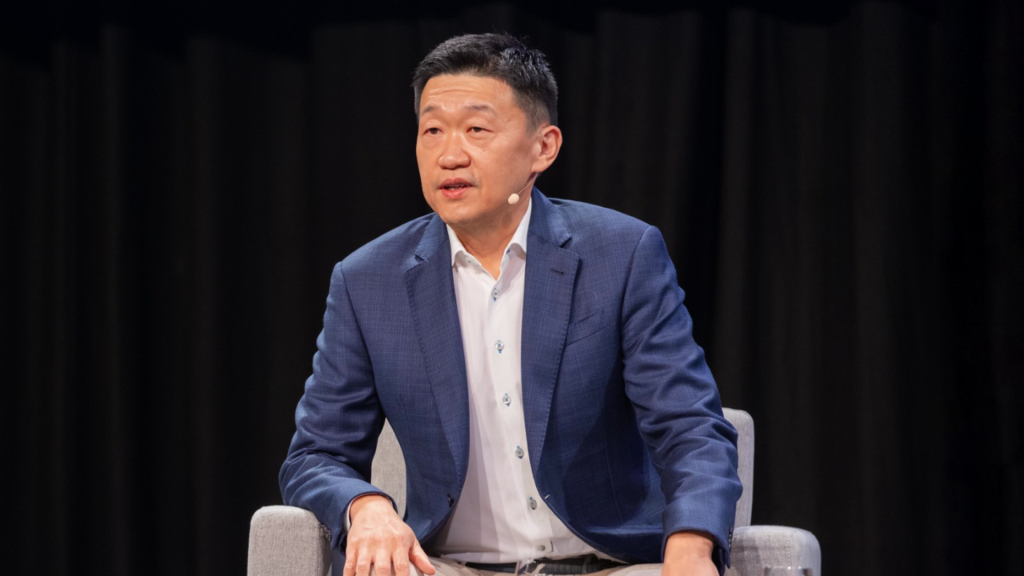 Forrest Li on scaling Sea, building smarter bots, and founder grit
 An AI assistant that joins sales calls and scores team skills
 Beyond the check: Why VCs need more than capital
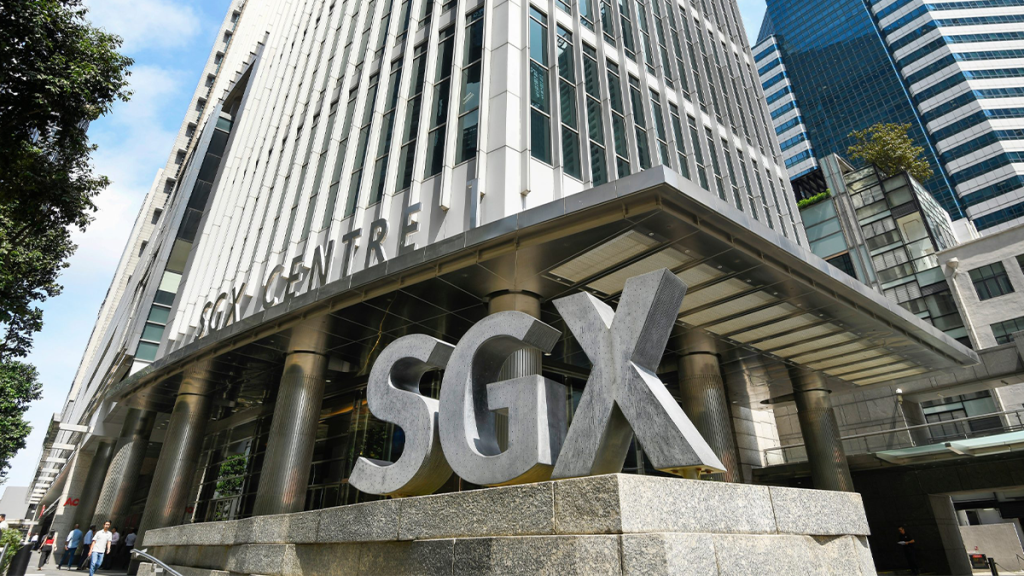 SGX’s CEO says it doesn’t need a unicorn to win
 SMEs want AI too, but not the kind Big Tech is selling
 Oatside’s alt-milk rise hits a profitable gear
 Alibaba’s financial health in 12 charts
 Asia’s telcos bundle AI into mobile plans. Will it pay off?
 M-Daq chases bigger clients as revenue falls, losses grow





Editing by Collin Furtado and Dhania Putri Sarahtika
(And yes, we’re serious about ethics and transparency. More information here.)