- Premium Content It takes our newsroom weeks - if not months - to investigate and produce stories for our premium content. You can’t find them anywhere else.
 Thu Huong Le · · 5 min read
Selex Motors bets on battery swapping to lead Vietnam’s EV revolution
On July 20, US Secretary of State Janet Yellen visited the factory of a Vietnamese EV manufacturer. It was not VinFast but Selex Motors, which builds electric bikes and batteries as well as operates a network of homegrown battery-swapping stations.
Before Yellen’s visit, Selex Motors was relatively under the radar.
“We don’t really spend money on marketing,” co-founder and CEO Nguyen Nguyen tells Tech in Asia in a recent interview. “We also don’t raise funds just to boast about it.”
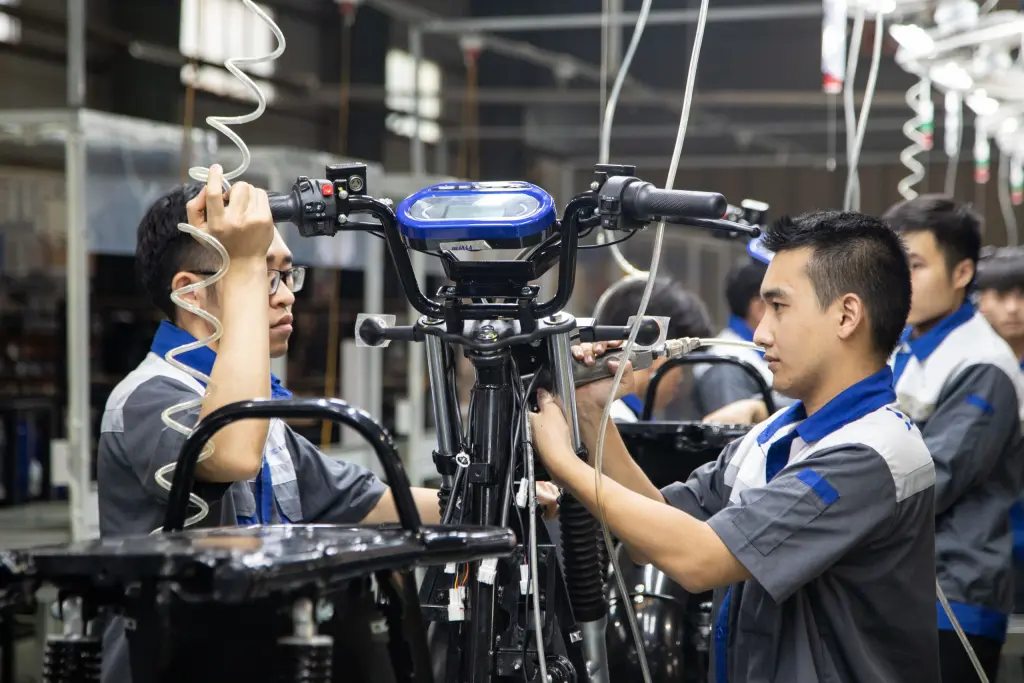
Engineers at Selex Motors’ factory in Hanoi, Vietnam / Photo credit: Selex Motors
Following his mechanical engineering studies in the US and a stint at a Vietnamese state-owned corporation, Nguyen founded Selex Motors in 2018.
The startup was born out of his strong conviction that Vietnam eventually has to do something about the 50 million gasoline motorbikes zigzagging and polluting the streets. But how can the country electrify its roads when EVs are costly and time-consuming to charge?
Nguyen believes that untethering the battery can potentially make electric two-wheelers (2W) more accessible. “Eventually, we’ll need to treat batteries like utilities. They need to be part of a separate service,” he adds.
‘Battery vending machines’
At first glance, a Selex Motors battery-swapping station resembles a vending machine. It has 19 compartments but only holds 18 batteries at maximum, leaving a slot for used ones. Drivers unlock the machine with the Selex Motors app and grab a fully-charged battery within two minutes.
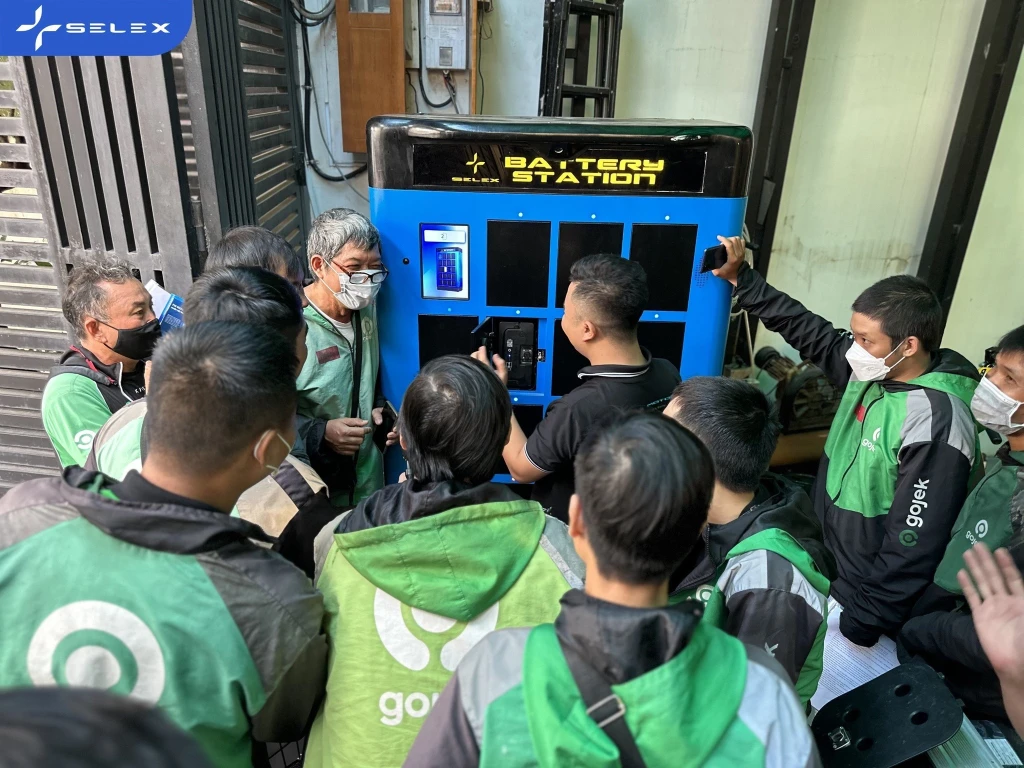
A Selex Motors staff explains to Gojek drivers in Vietnam how to use its battery-swapping station. / Photo credit: Selex Motors
For now, these stations are mostly used by delivery drivers. This represents how Selex Motors’ strategy differs from its local EV peers.
Instead of targeting premium customers like Dat Bike and releasing new models quickly like VinFast, the startup currently focuses on the B2B segment almost exclusively.
“For delivery workers, time is money. They can’t afford to wait several hours to charge their batteries for a 200- to 300-kilometer daily trip,” Nguyen says.
Some of its notable B2B partners are Grab, Lazada, and Gojek. These firms either buy Selex Motors’ EVs – which it says can carry up to 225 kilograms of cargo – or provide financial incentives for drivers to purchase them.
The iPhone of 2W electric vehicles?
Stay ahead in Asia’s tech landscape
This is premium content. Subscribe to read the full story.
The electric vehicle startup is raising a US$20 million series A round to scale its ecosystem of e-bikes and battery-swapping stations.
We know this is not ideal. ⌛ Sign up in 20 seconds. Cancel anytime.
Our subscriber community includes professionals from these companies:





Stay updated on the go with our mobile app.
Get latest insights with smoother, more personalized experience through TIA mobile app.








📅 Upcoming Events
22 October 2026
Payoneer x CSPN Summit 2026