Avanish Tiwary · · 7 min read
In India, mom and pop stores are proving to be the holy grail for tech startups
On a Tuesday morning, 24-year-old Mumbai resident Amol Patil, who runs a small neighborhood store, couldn’t be more excited as he was going to host one of the world’s richest men, Jeff Bezos, founder and CEO of Amazon, in his store.
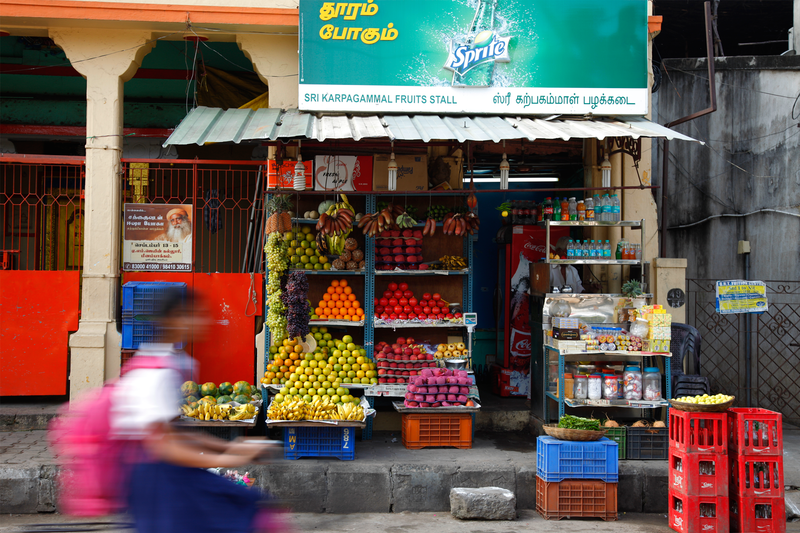
Photo credit: Vinoth Chandar
Apart from meeting Bollywood celebrities, Bezos took out time to visit Patil’s family-run store in the city that doubles up as a last-mile delivery hub for the online retailing giant in a 2-kilometer radius. Pictures of Bezos hand-delivering an Amazon package while standing behind a counter lined up with glass jars full of chocolates and other condiments were all over Indian media last month.
The network of over 15 million mom and pop stores, locally known as kirana stores, is the backbone of India’s everyday grocery supply. It will not be an exaggeration to say that in almost every single lane in the world’s second most populous country, one can find at least one such store that sells household products like soaps, shampoos, dairy products, fruits, and vegetables, including rice and pulses.
The sheer number of kirana stores present in the country and the kind of relationships they have with the neighborhood residents who transact with them at least once a day has given Indian technology startups reasons to explore partnerships with them in myriad ways.
Piyush Kharbanda, partner at Vertex Ventures, said that this is the third wave of companies trying to leverage on the huge network of neighborhood stores. In the first two phases, Kharbanda said companies tried to provide them with automation tools to increase their efficiency, give them digital payment tools, and sell products to them.
“One of the most well-funded models is the B2B company that provides products to kiranas. Then there are companies that are enabling them with B2B payment models as well as assisting them by lending working capital,” Kharbanda told KrAsia.
Bengaluru-based Jumbotail is one such company. It works with neighborhood stores to maintain their inventory and provide them products directly from brands. “We have created an entire ecosystem of services to improve their livelihood. The primary business is to provide an ecommerce marketplace to provide them with the supplies that they want to sell in their store. We manage the supply chain and payments for that process. We have our own private brands and we also work with top FMCG companies and different millers,” said Ashish Jhina, co-founder of Jumbotail.
While companies like Jumbotail work with kirana stores to provide them services directly related to their core business, a number of companies are trying to leverage the network of kiranas to help push their own business or create new demand.
“The level of intimacy with customers is unparalleled. This is why so many tech companies are trying to find out ways to work with them and leverage their network,” Jhina said.
As technology companies such as Flipkart, Amazon India, PhonePe, and Paytm seek to make their presence felt in smaller cities in India, partnering with kirana stores is not only advisable but has become necessary.
According to Kharbanda, kirana shops form a fairly large distribution system utilized by every Indian. Hence if a company wants to target the mass market, apart from online means, this channel has the potential to reach every Indian. “That’s why lots of people are going after them in ways and forms,” he added.
These are the five ways companies are utilizing the kirana network:
1. Bread, butter, and EV
The huge network of neighborhood stores is also on the radar of electric vehicle (EV) startups as they are partnering with these stores to charge vehicle batteries.
2. Making an ATM out of it
3. Digitizing the ledger
4. Providing working capital
5. Storage and last-mile delivery hub





Stay updated on the go with our mobile app.
Get latest insights with smoother, more personalized experience through TIA mobile app.