- Premium Content It takes our newsroom weeks - if not months - to investigate and produce stories for our premium content. You can’t find them anywhere else.
 Apoorva Dutt · · 5 min read
From Silicon Valley copycat to CEO of Meituan-Dianping: How Wang Xing did it
They called him The Cloner. Wang Xing (pronounced “Wang Shing”) made his mark on the early Chinese internet as a serial copycat, a bizarre mirror image of the revered serial entrepreneurs of Silicon Valley.
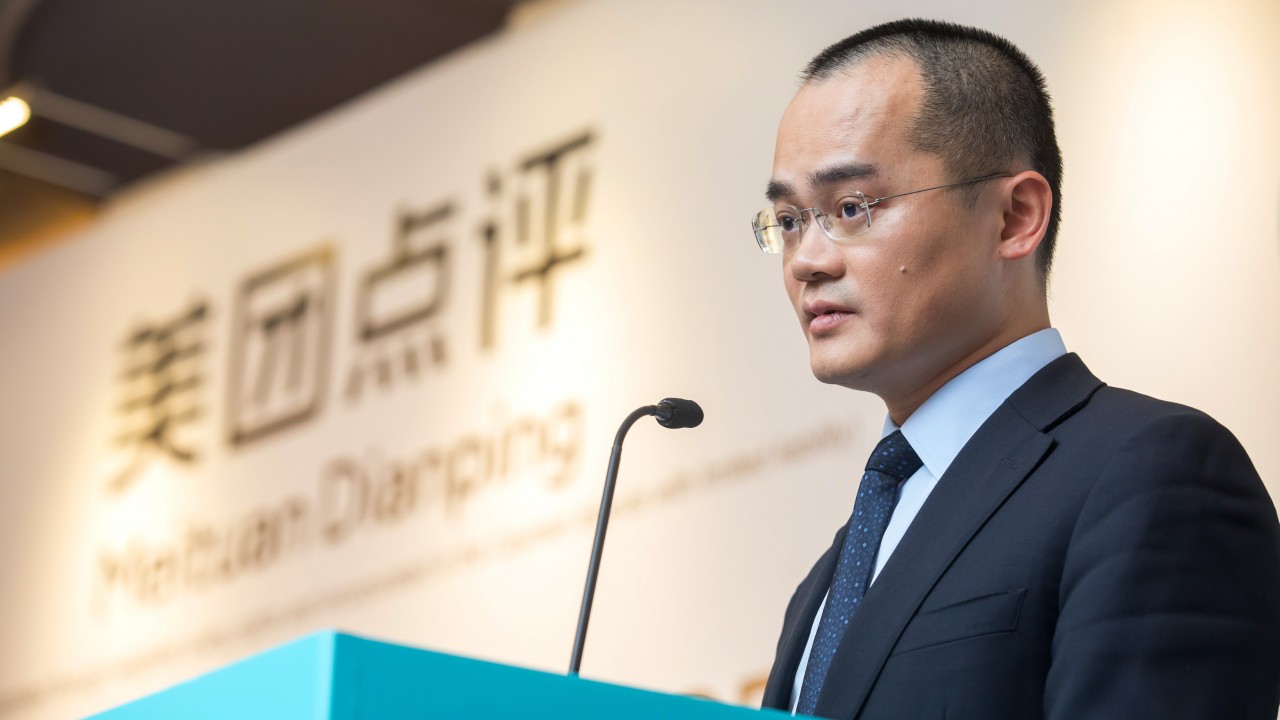
The following is an edited excerpt from AI Superpowers: China, Silicon Valley, and the New World Order by Kai-Fu Lee. The excerpt was provided by Houghton Mifflin Harcourt Publishing. You can buy a copy of the book here.
They called him The Cloner. Wang Xing (pronounced “Wang Shing”) made his mark on the early Chinese internet as a serial copycat, a bizarre mirror image of the revered serial entrepreneurs of Silicon Valley. In 2003, 2005, 2007, and again in 2010, Wang took America’s hottest startup of the year and copied it for Chinese users.
It all began when he stumbled on the pioneering social network Friendster while pursuing an engineering Ph.D. at the University of Delaware. The concept of a virtual network of friendships instantly clicked with Wang’s background in computer networking, and he dropped out of his doctoral program to return to China to recreate Friendster. On this first project, he chose not to clone Friendster’s exact design. Rather, he and a couple of friends just took the core concept of the digital social network and built their own user interface around it.
The result was, in Wang’s words, “ugly,” and the site failed to take off. Two years later, Facebook was storming college campuses with its clean design and niche targeting of students. Wang adopted both when he created Xiaonei (“On Campus”). The network was exclusive to Chinese college students, and the user interface was an exact copy of Mark Zuckerberg’s site. Wang meticulously recreated the home page, profiles, tool bars, and color schemes of the Palo Alto startup. Chinese media reported that the earliest version of Xiaonei even went so far as to put Facebook’s own tagline, “A Mark Zuckerberg Production,” at the bottom of each page.
Xiaonei was a hit, but one that Wang sold off too early. As the site grew rapidly, he couldn’t raise enough money to pay for server costs and was forced to accept a buyout. Under new ownership, a rebranded version of Xiaonei—now called Renren, “Everybody”—eventually raised $740 million during its 2011 debut on the New York Stock Exchange. In 2007, Wang was back at it again, making a precise copy of the newly founded Twitter.
The clone was done so well that if you changed the language and the URL, users could easily be fooled into thinking they were on the original Twitter. The Chinese site, Fanfou, thrived for a moment but was soon shut down over politically sensitive content. Then, three years later Wang took the business model of red-hot Groupon and turned it into the Chinese group-buying site Meituan.
To the Silicon Valley elite, Wang was shameless. In the mythology of the valley, few things are more stigmatized than blindly aping the establishment. It was precisely this kind of copycat entrepreneurship that would hold China back, or so the conventional wisdom said, and would prevent China from building truly innovative technology companies that could “change the world.”
Even some entrepreneurs in China felt that Wang’s pixel-for-pixel cloning of Facebook and Twitter went too far. Yes, Chinese companies often imitated their American peers, but you could at least localize or add a touch of your own style. But Wang made no apologies for his mimic sites. Copying was a piece of the puzzle, he said, but so was his choice of which sites to copy and his execution on the technical and business fronts.
In the end, it was Wang who would get the last laugh. By late 2017, Groupon’s market cap had shriveled to $2.58 billion, with its stock trading at under one-fifth the price of its 2011 initial public offering (IPO). The former darling of the American startup world had been stagnant for years and slow to react when the group-buying craze faded. Meanwhile, Wang Xing’s Meituan had triumphed in a brutally competitive environment, beating out thousands of similar group-buying websites to dominate the field. It then branched out into dozens of new lines of business. It is now the fourth most valuable startup in the world, valued at $30 billion, and Wang sees Alibaba and Amazon as his main competitors going forward.
In analyzing Wang’s success, Western observers make a fundamental mistake. They believe Meituan triumphed by taking a great American idea and simply copying it in the sheltered Chinese internet, a safe space where weak local companies can survive under far less intense competition. This kind of analysis, however, is the result of a deep misunderstanding of the dynamics at play in the Chinese market, and it reveals an egocentrism that defines all internet innovation in relation to Silicon Valley.
In creating his early clones of Facebook and Twitter, Wang was in fact relying entirely on the Silicon Valley playbook. This first phase of the copycat era – Chinese startups cloning Silicon Valley websites – helped build up baseline engineering and digital entrepreneurship skills that were totally absent in China at the time. But it was a second phase – Chinese startups taking inspiration from an American business model and then fiercely competing against each other to adapt and optimize that model specifically for Chinese users – that turned Wang Xing into a world-class entrepreneur.
Wang didn’t build a $30 billion company by simply bringing the group-buying business model to China. Over five thousand companies did the exact same thing, including Groupon itself. The American company even gave itself a major leg up on local copycats by partnering with a leading Chinese internet portal. Between 2010 and 2013, Groupon and its local impersonators waged an all-out war for market share and customer loyalty, burning billions of dollars and stopping at nothing to slay the competition.
Stay ahead in Asia’s tech landscape
This is premium content. Subscribe to read the full story.
They called him The Cloner. Wang Xing (pronounced “Wang Shing”) made his mark on the early Chinese internet as a serial copycat, a bizarre mirror image of the revered serial entrepreneurs of Silicon Valley.
We know this is not ideal. ⌛ Sign up in 20 seconds. Cancel anytime.
Our subscriber community includes professionals from these companies:





Stay updated on the go with our mobile app.
Get latest insights with smoother, more personalized experience through TIA mobile app.











📅 Upcoming Events
22 October 2026
Payoneer x CSPN Summit 2026