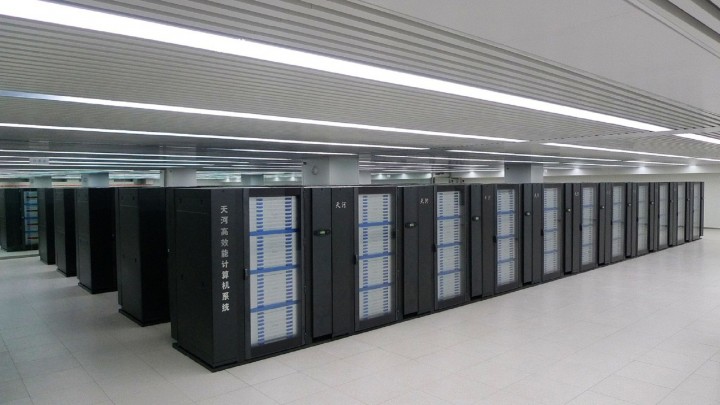
Tianhe-1A supercomputer
The smog in China is so rampant that only a supercomputer is capable of creating an accurate predictive model of what city it will ravage next. Whereas a refurbished 1999 Gateway PC can probably get the job done in most parts of the world, China needs something a bit stronger.
China’s Tianhe-1A supercomputer, ranked the fastest supercomputer in the world in 2011, will be used to forecast and analyze smoggy days in major cities, reports Xinhua.
The current number one-ranked supercomputer is actually Tianhe-1A’s little brother, the Tianhe-2.
Scientists will create a simulation in which they can pull data from monitoring points across 114 cities to predict how thick the smog will be, where it will go, for how long … and hopefully, how many days off your life you will lose, and how painful the burn in your eyes and throat will be. The project is a collaboration between the Chinese Academy of Meteorological Sciences and the National Meteorological Center.
The decision to use Tianhe-1A to assess pollution comes the weekend after Shanghai experienced smog levels more than 20 times higher than the maximum amount classified as “safe.”
Beijing residents have largely grown accustomed to living with such high pollution levels by wearing masks and pretending they are characters in a post-apocalyptic movie, but Shanghai residents likely want to turn that fucking computer on and figure out where that dreadful smog is coming from.
They clearly haven’t studied the latest report from state media describing the many benefits of high smog levels. It unites the people against a common enemy, makes them more equal, raises their awareness, teaches them about science, and even makes them funnier, according to the country’s state-run TV broadcaster.
Despite the measures proposed to curb smog – everything from only allowing half of drivers on the road to installing giant electromagnetic vacuum cleaners that suck up hazardous particles – many scientists say China still has 10 to 20 years before it can overcome its smog problem.
One solution we’ve come up with at Tech in Asia is to move everyone to China’s newest province, the moon.
(Editing by Josh Horwitz and Steven Millward)





Stay updated on the go with our mobile app.
Get latest insights with smoother, more personalized experience through TIA mobile app.