WeChat is China’s hottest social media app. But like internet services in China, discussion on WeChat isn’t entirely free – it is censored by Tencent in accordance with Chinese law. Just how censored is WeChat, and what exactly is being hidden from view? Those questions are the subject of an exhaustive new report from the University of Toronto’s Citizen Lab on WeChat censorship.
The report, published today, tracked 36,000 unique WeChat “official” accounts posts between June 2014 and March 2015. Those are the accounts run by media outlets, brands, celebrities, and small companies, and are a bit like the Twitter/Weibo aspect of the WeChat app. The team found that during the period, 1.48 percent of the official user accounts it followed were suspended, and 1.55 percent of the posts made by active accounts were censored by the system.
Censor bots
An additional 2.44 percent of posts were self-censored – posts that were made and then deleted by the user themselves. About 5 percent of the accounts Citizen Lab tracked had at least one post censored, meaning that the majority of WeChat official accounts aren’t experiencing censorship at all.
But post deletion is only one kind of censorship on China’s internet. “The data contains evidence of automatic review filters preventing posts with certain blacklisted keywords from being published,” Citizen Lab’s Jason Q. Ng tells Tech in Asia.
And so WeChat also features a list of sensitive terms that can’t be published at all – they don’t show up in the system as censored because they can’t be posted by anyone in the first place. Terms related to a certain banned religious movement and/or cult, for example, didn’t appear at all in censored or uncensored posts. Attempts to use these terms with Chinese WeChat accounts or with foreign accounts on Chinese soil resulted in “message could not be sent” errors.
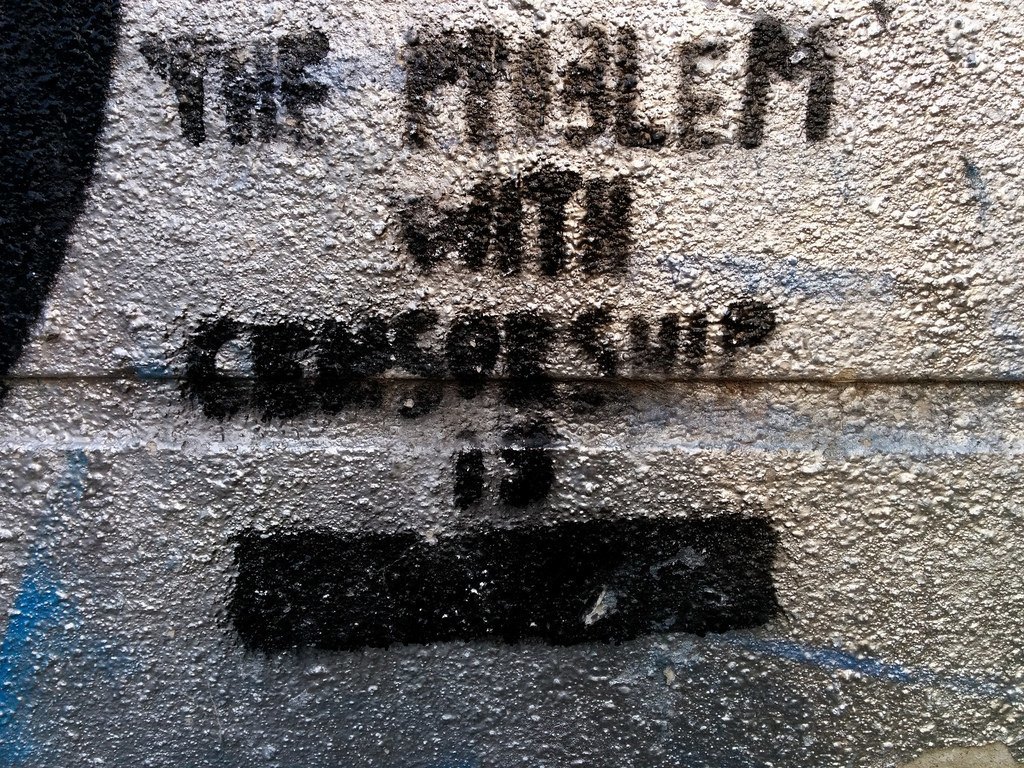
(Photo by Cory Doctorow)
While this report does not cover personal accounts that are used for private messaging and posting to WeChat Moments (like the Facebook Wall), it shows that the most public and shareable aspect of WeChat – the official accounts – are heavily locked down by both self-censorship and proactive censorship of published material, just like the rest of China’s web.
“Sensitive”
The list of auto-blocked terms probably wouldn’t surprise most China watchers, but what’s being actively censored is a more interesting question. As previous studies of the Chinese web have suggested, Citizen Lab found that calls to arms are one favorite topic for deletion. Posts with the word “protest,” for example, had higher rates of being censored than posts with neutral words. But a high number of posts with sensitive political terms got censored whether they were calls to arms or not. Terms related to corruption also threw up a big red flag; they appeared in six times as many censored posts as one would expect based on their frequency in uncensored posts. Pornography, superstition, and rumors were also being actively targeted by censors.
If you’re interested in Chinese internet censorship, this is just the tip of the iceberg. The full report is available for free over on Citizen Lab’s site.
Editing by Steven Millward
(And yes, we’re serious about ethics and transparency. More information here.)





Stay updated on the go with our mobile app.
Get latest insights with smoother, more personalized experience through TIA mobile app.