- Premium Content It takes our newsroom weeks - if not months - to investigate and produce stories for our premium content. You can’t find them anywhere else.
 Jofie Yordan · · 6 min read
Can Traveloka, AirAsia break into Indonesia’s food delivery duopoly?
It’s no secret that the Covid-19 pandemic has been rough for Indonesian unicorn Traveloka. The company saw its revenues drop by more than half, and it has shelved its plans to list via a special purpose acquisition company (though it remains committed to going public).
While domestic travel has reopened, Traveloka appears to be doubling down on its main short-term solution: its Traveloka Eats food delivery service.
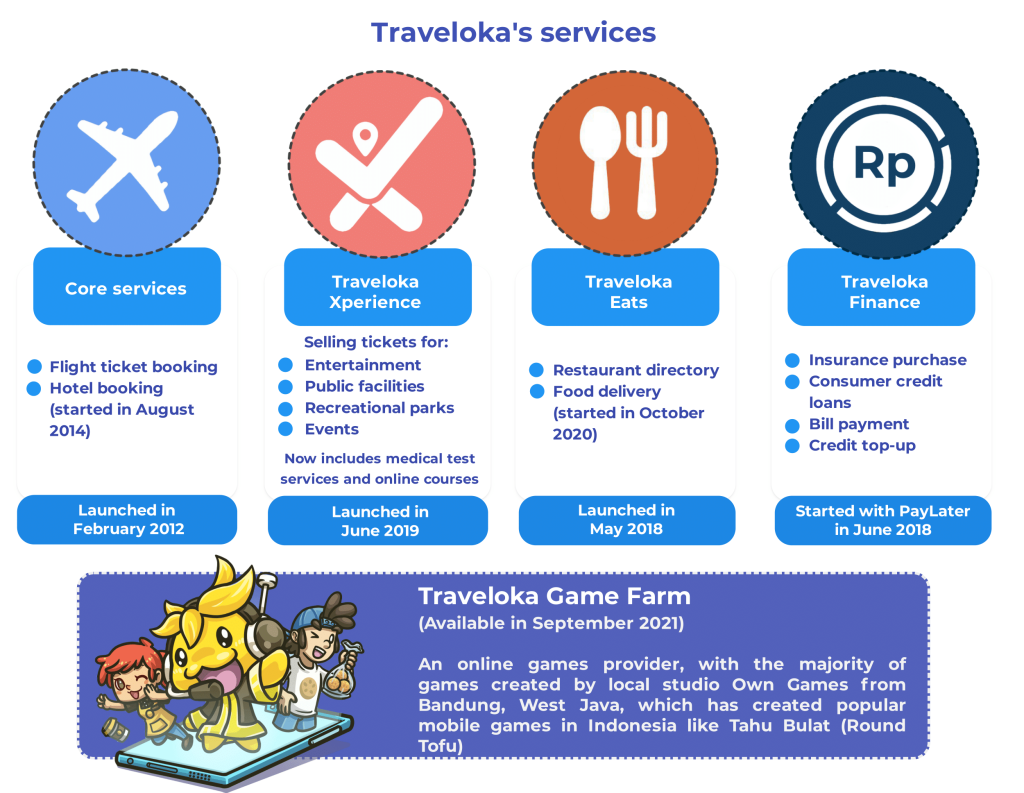
Initially a platform that contained restaurant listings and reviews, Traveloka Eats launched deliveries in November 2020. But Stephen Kohar, head of Traveloka Eats, tells Tech in Asia that the plans were already in place even before the pandemic.
“[Delivery] is in line with our mission to facilitate users with a variety of culinary services anytime and anywhere, be it dine-in or delivery,” says Kohar, adding that delivery transactions on the platform have grown over tenfold compared to Q1 2021.
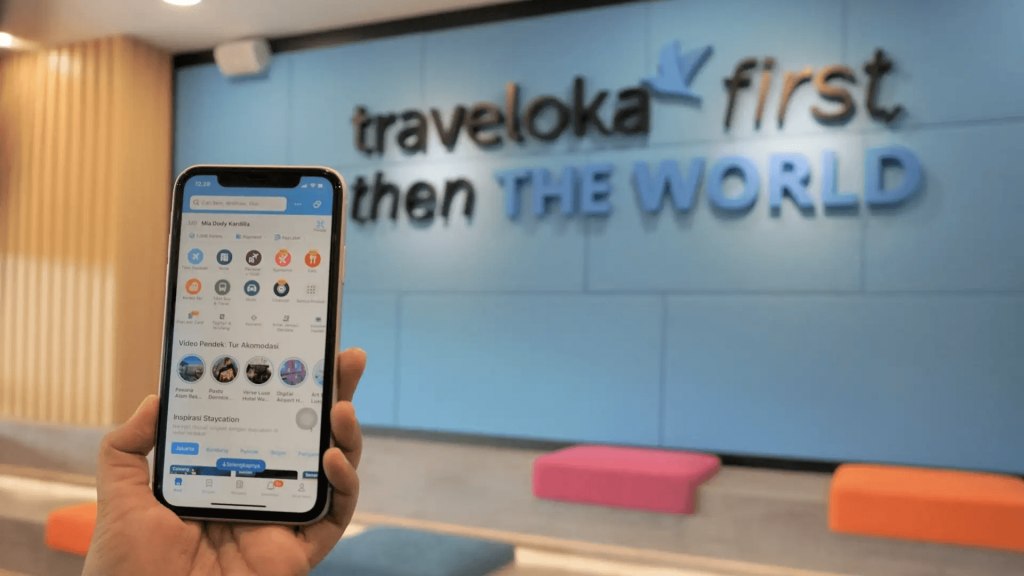
Traveloka app / Photo credit: Traveloka
Traveloka’s strategy is reminiscent of Meituan-Dianping’s move to bundle together travel bookings with food deliveries, an effort with profitable results. At the same time, Traveloka is a late entrant into a space dominated not just by heavy hitters like Gojek and Grab, but also newcomers like ShopeeFood and AirAsia Food.
“For Traveloka Eats and AirAsia Food, the question is how committed they will still be in food delivery when travel resumes post-Omicron,” says Jianggan Li, founder and CEO of the venture builder Momentum Works. “It is very hard for new players to take market share unless they are prepared to make large investments.”
Super-app ambitions
In Southeast Asia, the gross merchandise value (GMV) of online travel declined significantly, going from US$34 billion in 2019 to US$12 billion in 2020, according to the SEA e-Conomy 2021 report. In contrast, Momentum Works data shows that food delivery GMV grew almost 30% year on year to US$15.5 billion in 2021.
That has made food delivery an attractive space for many tech players during the pandemic. Notably, the segment has helped prop up Grab and Gojek’s numbers as ride-hailing slowed amid social distancing measures.
While those two super apps continue to be dominant, the crop of new players is not starting from zero. Shopee, for instance, already has relationships with restaurants through its ShopeePay partnerships, while AirAsia acquired a Malaysian food delivery startup as well as Gojek’s Thailand business (which includes food delivery).
Similarly, Traveloka already has a database of restaurants through Traveloka Eats’ first iteration. But the platform has the additional advantage of having affluent users, whose plane tickets and hotel bookings amount to substantial basket sizes. It’s a customer base that Momentum Works’ Li says F&B merchants would love to have.
“If both players [Traveloka and AirAsia] could find a way to channel the customer traffic without the burden of building and maintaining a delivery infrastructure, there might be a good opportunity,” he adds.
More than a price war
Stay ahead in Asia’s tech landscape
This is premium content. Subscribe to read the full story.
The firms are diversifying as Covid-19 batters the travel sector. But Gojek and Grab’s dominance means the war for food delivery will be an uphill climb.
We know this is not ideal. ⌛ Sign up in 20 seconds. Cancel anytime.
Our subscriber community includes professionals from these companies:





Stay updated on the go with our mobile app.
Get latest insights with smoother, more personalized experience through TIA mobile app.