 Shravanth Vijayakumar · · 5 min read
Indonesia races toward EV future, but will Tesla join?
Sign up for the Daily Newsletter, sent exclusively to our premium subscribers. We break down the big and messy topics of Asia’s tech and startup community. Get the newsletter in your inbox everyday with a premium subscription.
Hello reader,
Indonesia is not only the world’s top exporter of nickel – a key ingredient for electric vehicles’ batteries – but it is also Southeast Asia’s biggest auto market and second-largest motor vehicle producer.
There is little surprise then that Tesla is reportedly closing in on a deal with the country, which has over a million skilled autoworkers, to build an EV plant that could produce 1 million cars a year.
There are no two ways about it: The archipelago has all the necessary qualities needed for success in the EV sector, and the government has recognized this by giving processing commodities such as nickel a central role in its downstreaming ambitions.
However, Southeast Asia’s largest economy continues to face significant hurdles on the path towards its EV future, including a dispute with the European Union (EU) over the ban of nickel ore exports as well as the lack of homegrown brands and locally sourced powertrains.
Today’s featured piece assesses how Indonesia can fulfill its potential in the EV space and highlights the missing tools on its journey to the top of the sector. Further, we run a feasibility check on four-wheeled EV vehicles and explore the viability of e-motorcycles in the world’s third-biggest market for motorbikes.
Today we look at:
- The roadblocks on Indonesia’s EV path
- Grab moves Singapore politician to corporate development
- Other newsy highlights such Yahoo’s job cuts and Zomato’s calling time on its spell in Indonesia
Premium summary
Making EV inroads
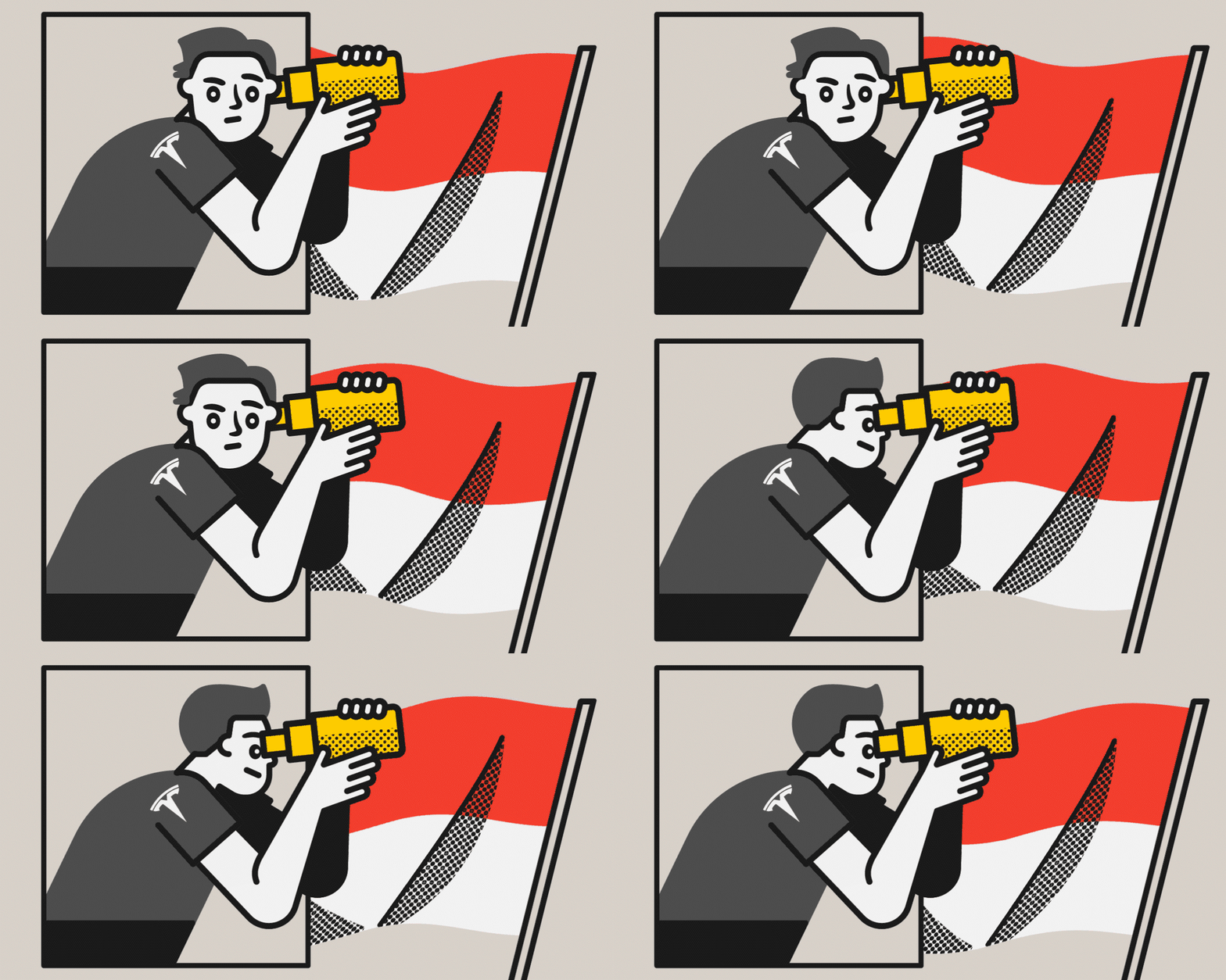
Image credit: Timmy Loen
Indonesia’s ambitions in the EV space is evidently beginning to filter through to its streets. Easily spotted around Greater Jakarta in its various shades of pastel, the Wuling Air EV from the Chinese carmaker had 8,000 units sold in just three months after its launch in September 2022.
- No homegrown heroes: Indonesia doesn’t have a locally grown car brand yet. “For a country of our size, that is a tragedy,” says Ilham Habibie, chairperson of aircraft manufacturer Regio Aviasi Industri. The main obstacle to building a homegrown brand is the unavailability of a locally sourced powertrain.
- Put a wrench in it: Indonesia wanted to stop exporting raw materials, including nickel, to attract investors for domestic processing. However, the EU claimed that the export ban unfairly harmed the region’s stainless steel industry. The World Trade Organization backed the EU, though Indonesia is appealing against the ruling.
- Different entry points: An Indonesia-based consumer who buys an e-motorbike can expect to recoup their investment in two to three years, Habibie estimates. That doesn’t apply to electric cars yet and Habibie says it’s possible that even within 10 years, driving a conventional car could still be more feasible.
Read more: Indonesia courts Tesla but faces EV roadblocks
Not a U-turn, but a bend
Join us and share the hardest challenges you’ve faced as a founder
Quick bytes





Stay updated on the go with our mobile app.
Get latest insights with smoother, more personalized experience through TIA mobile app.









📅 Upcoming Events
22 October 2026
Payoneer x CSPN Summit 2026